Cosmic Dreams Take Flight: The Launch of the Roman Space Telescope
Countdown to Launch
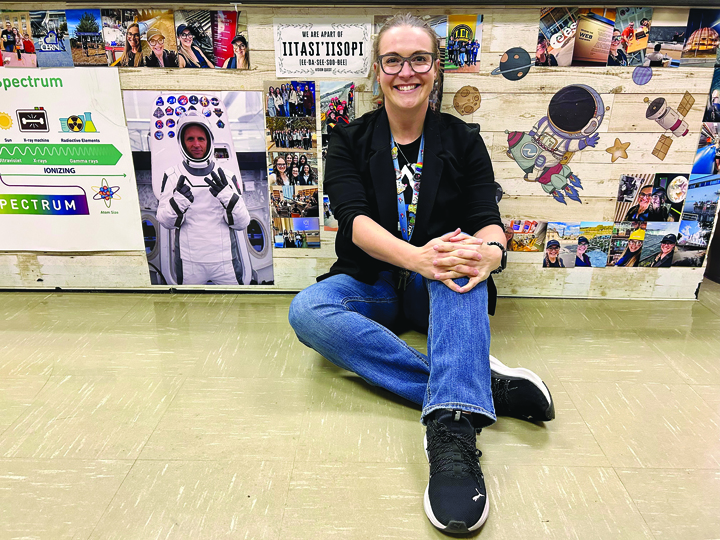
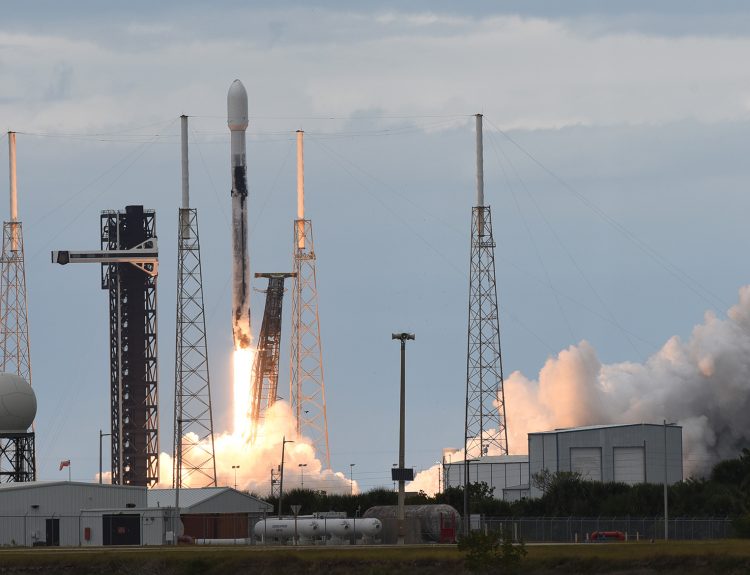
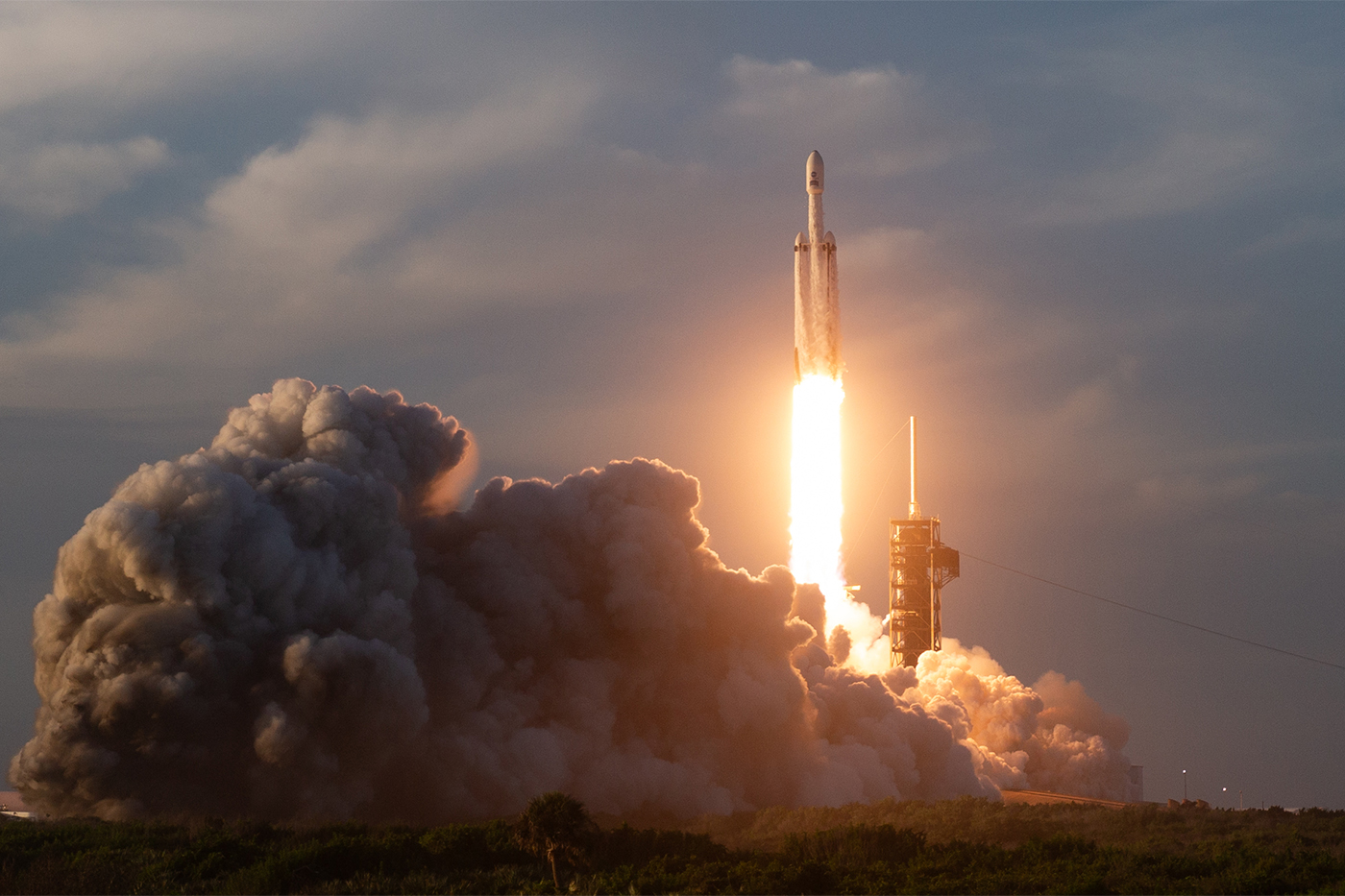
“10…9…8…” The excitement in the air was palpable as Jacqueline McCleary, an observational cosmologist at Northeastern University, focused intently on the celestial horizon. The SpaceX Falcon Heavy rocket was set to launch the Nancy Grace Roman Space Telescope, a mission poised to unlock the secrets of exoplanets, dark matter, and the broader universe, over a million-mile journey into space.
This particular Sunday marked a pivotal moment for McCleary and her colleague, Jonathan Blazek, as it was their first experience attending a rocket launch in person. Invited as members of the Roman Science Collaboration, they were part of a community of experts committed to utilizing the data from this transformative mission.
A Historic Moment
The launch took place approximately 17 miles from Alan Shepard Park in Cocoa Beach, Florida, where McCleary watched with anticipation. Blazek, getting a closer view from a NASA platform a mere four miles away, recounted the thrill of witnessing such a monumental event. As the countdown neared its end, McCleary’s pulse quickened; little did she know the official broadcast was lagging, and the rocket was already ascending.
“Being at a launch for a new transformative mission like the Roman space telescope reminds us why we’re in this field,” McCleary expressed, reflecting on their shared motivation and passion for astrophysics.
The Legacy of Nancy Grace Roman
The telescope bears the name of NASA’s first chief astronomer, Nancy Grace Roman, whose pioneering vision helped bring the Hubble Space Telescope to life. Roman revolutionized space observation and established a legacy that would empower future astronomers.
With technology more advanced than its predecessors, the Roman telescope aims to capture vast portions of the universe quickly. Its wide-angle lens will provide insights into everything from supernovas to the elusive dark matter shaping galaxies.
The Power of Collaboration and Discovery
For McCleary and Blazek, the launch was a reminder of the unity within the scientific community, where engineers, physicists, and astronomers converge to decode the universe’s mysteries. The camaraderie was evident as they discussed the potential ramifications of Roman’s discoveries—data that would be made available for all, facilitating collaborative research and wider understanding.
The excitement was contagious. Blazek described the atmosphere among spectators, noting the collective enthusiasm, reminiscent of a child’s wonder during a rocket launch.
The Science Ahead
Roman is set to work alongside the James Webb Space Telescope to enhance cosmic understanding. While Webb focuses on infrared astronomy, Roman will probe broader swathes of the universe, delivering a treasure trove of data. McCleary emphasized the distinct yet complementary capabilities of the two telescopes.
For Blazek, the mission involves analyzing galaxy shapes to gauge dark matter presence, while McCleary will uniquely explore intergalactic dust, a factor that can skew measurements of the universe’s expansion. Their projects encapsulate diverse dimensions of astrophysical research, all hinging on the telescopes’ groundbreaking data.
A Lifelong Dream Fulfilled
Both McCleary and Blazek reflected on their journeys to this moment, driven by childhood fascinations with space. The launch served not only as a professional milestone but also as a fulfillment of their early dreams of exploring the cosmos.
“This experience reminds us of the initial joy that brought us into this field,” Blazek noted, resonating with many in attendance who eagerly gaze upward, yearning to unlock the cosmos’ secrets.
Conclusion
As the Roman Space Telescope embarks on its mission, it carries with it the hopes and aspirations of countless scientists and dreamers. The research derived from this mission promises to illuminate aspects of the universe that remain elusive, reaffirming our quest for knowledge in the boundless expanse of space.
Author: Hannah Morse, News Reporter at Northeastern Global News