Inside the Numbers of the 100m Sprint
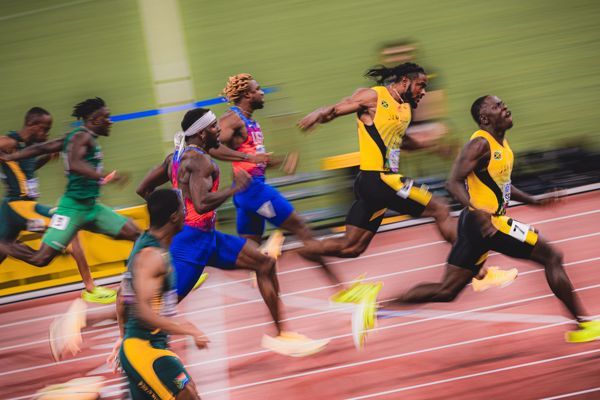
World Athletics delves into the intricate dynamics of the 100m sprint, featuring insights from Edrick Floreal, coach of Olympic champion Julien Alfred, and Craig Pickering, Director of Performance Sustainability at Australian Athletics.
Overview
Pickering likens the 100m to a mathematical equation, emphasizing that victory hinges on achieving the highest average velocity rather than just top speed or acceleration. Floreal describes the event as a “fast-paced jigsaw puzzle,” highlighting its complexity and the various components involved, comparing it to different sprint distances.
In the Blocks
Sprinters strive for a quick start, with elite athletes having reaction times between 0.120 and 0.150 seconds. Pickering explains that the initial seconds require sprinters to generate maximum power, noting that stronger athletes often excel in this crucial phase.
Acceleration Phase
Following the immediate start, the acceleration phase can last up to 65 meters. Pickering mentions that top male sprinters aim to complete certain distances in specific times: around 10m in 1.9 seconds, 30m in roughly 3.7 seconds, and 60m between 6.40 and 6.50 seconds.
Managing Deceleration
All sprinters reach a top speed that inevitably declines. Floreal points out that success depends on minimizing deceleration, highlighting Usain Bolt’s exceptional ability to maintain speed towards the end of the race.
Keeping in Step
Surprisingly, step frequency remains consistent among runners, with both elite athletes and average individuals taking about 4.5-5 steps per second. The key to speed lies in stride length, with elite athletes achieving a striking 2.5 meters per stride.
Run Your Own Race
Throughout the race, it’s crucial for sprinters to focus on their own performance rather than being distracted by competitors. Floreal emphasizes patience and adherence to one’s race plan, especially when lagging behind early on.
The Upper Body
There’s debate on the role of the upper body in sprinting. Pickering notes contrasting views on its significance, suggesting that while some believe it plays a minor role, others contend it aids balance and stability during running.
Don’t Burn Out
Successful 100m sprints require careful energy distribution. Floreal warns against expending too much energy too early, comparing it to spending too much of a budget upfront: pacing oneself is vital to maintain strength for the final stretch.
This in-depth analysis of the 100m sprint reveals a blend of biomechanics, strategy, and mental discipline essential for success in this storied event.