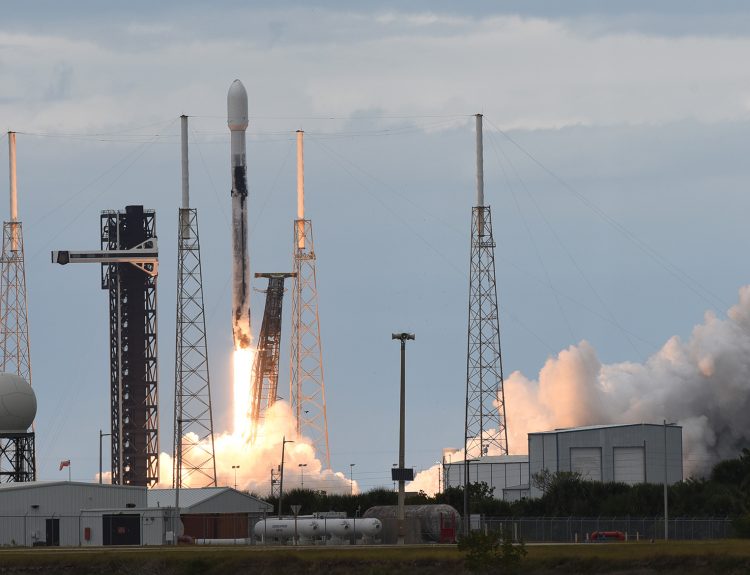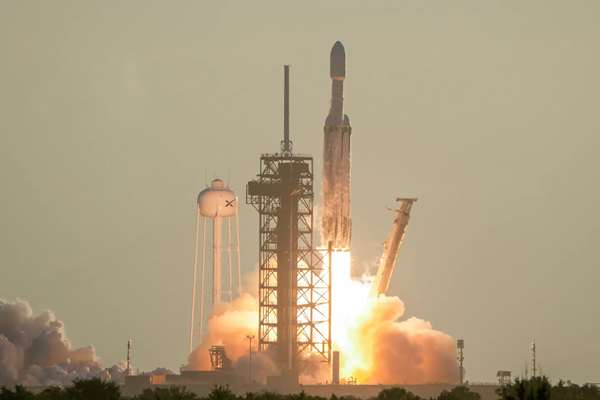
NASA’s newest telescope, the Roman Space Telescope, successfully launched from Cape Canaveral, Florida, with ambitious goals to discover planets around other stars, study dark energy, and survey the universe in unprecedented detail. The telescope, named after Nancy Grace Roman—the first chief astronomer at NASA—will journey to an observation point near the Webb Space Telescope, a distance of 1 million miles.
This $4.3 billion instrument has a field of view over 100 times wider than that of the Hubble Space Telescope, enabling it to detect thousands of supernovae, planets, billions of galaxies, and numerous stars within our galaxy, enhancing our understanding of the cosmos much faster than previous telescopes.
The launch was celebrated with excitement, highlighted by President Donald Trump congratulating NASA staff shortly after liftoff. Roman is expected to work alongside Hubble and Webb, as well as other observatories, to unravel cosmic mysteries, including dark matter and dark energy.
One of Roman’s standout features is its speed: it can complete a month’s worth of observations in one day, and it’s equipped with a coronagraph that allows it to directly image distant planets. The telescope’s mirror is a repurposed component from a spy satellite, underscoring the innovative approaches used in its design.
Roman is the first space telescope named after a woman, a fitting tribute to someone who inspired many in the field. As it embarks on its mission, expectations are high for groundbreaking discoveries that could answer fundamental questions about our universe.