Merchants will soon be required to pay fees to utilize the Unified Payments Interface (UPI) for the first time in a decade since its inception. Speculation suggests that there may be governmental influence behind this decision.
In September, the Indian government, led by Prime Minister Narendra Modi, announced a significant shift in its UPI—India’s instant digital payment system. For the first time since its pilot launch in 2016, fees will be introduced. The National Payments Corporation of India (NPCI) has declared that a 0.4% fee will apply from October 15 for UPI payments exceeding 2,000 rupees ($21) made to businesses by customers.
This initial announcement raised concerns that the new fees would increase operational costs for businesses, potentially leading them to pass these expenses onto consumers and discouraging broader usage of the system. Responding to these concerns, authorities made a partial reversal by postponing the fee rollout until after the Diwali festival, but this is merely a temporary measure.
UPI stands as the world’s largest real-time payments system, boasting over 500 million users. In August alone, it facilitated 24.51 billion transactions worth ₹29.82 trillion ($314 billion). This remarkable success can be largely attributed to UPI’s zero-cost nature, which attracted many vendors who initially embraced it as a convenient, free payment solution.
Launched in 2016 through a public-private partnership, UPI enables instant money transfers via mobile applications, akin to Brazil’s Pix system. Its speed and user-friendliness have made it an essential component of the Indian economy, utilized by entities ranging from small vendors to large corporations. As noted by Business Times, “paying for goods no longer involves handling grubby old currency notes.”
The infrastructure supporting the system is managed by the National Payments Corporation of India (NPCI), a not-for-profit organization established with the support of major banks. The underlying protocol allows for real-time bank-to-bank transfers, ensuring that any bank or wallet can communicate with another seamlessly without closed systems.
This framework has enabled private companies to develop consumer and merchant applications that operate on top of these public payment rails. To date, the costs of running and expanding this system have been covered by the government, banks, and payment companies, with UPI transactions largely dominated by two foreign-owned applications: Walmart’s PhonePe and Alphabet’s Google Pay, which together account for approximately 80% of transaction value.
The newly introduced charge, termed the Merchant Discount Rate (MDR), is anticipated to assist in covering some operational costs and will be allocated among payment system providers—including banks—to facilitate ongoing operations and expansion, as stated in a finance ministry press release. This official motivation raised questions about other potential influences, including pressures from the U.S. government.
Interesting Timing
The announcement of introducing the MDR coincided with negotiations between India and the U.S. to finalize a bilateral trade agreement, intensifying speculation that the Modi government faced pressure from the Trump administration to implement this fee. Earlier this week, Congress’ general secretary Jairam Ramesh questioned whether the government had acted in the interest of U.S. firms at the expense of UPI users.
While definitive evidence for such assertions remains elusive, Washington has consistently urged its trade partners to level the playing field in their digital transaction ecosystems. India Express reports that:
Since UPI’s inception, U.S. payment intermediaries Visa and Mastercard have expressed concerns regarding lost business opportunities as consumers increasingly opt for cost-free UPI payments over card usage.
The Delhi-based think tank Global Trade Initiative (GTRI) noted that these companies oppose the “Zero transaction charges for UPI and RuPay, and the government’s promotion of RuPay, which has weakened revenue for U.S. card companies.”
It further explained that U.S. companies operate under a model where banks and payment networks derive fees from merchant transactions. A widely accessible, interoperable payment platform like UPI, which imposes no MDR, limits this revenue pool. An MDR is typically charged to merchants by banks processing payments to cover transaction processing and infrastructure costs.
Furthermore, RuPay challenges the status quo by providing an Indian card network that aligns with domestic policy goals, GTRI emphasized.
Earlier this year, the United States Trade Representative (USTR) categorized India’s digital payment policies favoring domestic players as a foreign trade barrier, highlighting issues under the proposed U.S.-India trade agreement.
The USTR expressed concerns regarding the exclusion of U.S. electronic payment service providers from participating in the UPI ecosystem, particularly in relation to credit transactions processed through UPI.
“In November 2020, the NPCI announced a market share cap of 30% for third-party app providers facilitating UPI payments. Although the enforcement of this limitation was initially set for January 2023, it has now been deferred to December 2026,” stated the USTR. By the end of 2025, two U.S.-owned payment providers will likely dominate over 80% of UPI transactions, namely PhonePe and Google Pay.
To put it differently, the USTR is worried not only about the potential erosion of Visa and Mastercard’s market shares due to UPI and RuPay, but also about India’s aim to mitigate the influence of U.S. payment apps in the UPI ecosystem.
Parallels With Brazil
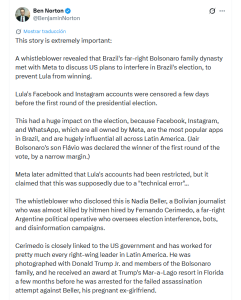
This is not the first instance of the U.S. exerting pressure on a nation to modify its payment system. As previously reported, Brazil’s establishment of Pix—a publicly owned digital payment system—has lessened the country’s reliance on both Visa and Mastercard’s global dominance and the mobile payment applications of U.S. tech giants. This development has stirred unease on Wall Street and in Silicon Valley, ultimately reaching Washington.
Last year, the U.S. Trade Representative initiated an investigation into Pix, claiming Brazil unfairly favored its digital payment system by mandating all banks offer it. According to the NY Times, U.S. trade officials are also concerned that the protection of consumer data collected by Pix could disadvantage American companies using such data for business strategy and product development.
“U.S. companies view this data as critical,” asserted Ignacio Carballo, a senior consultant at Payments and Commerce Markets Intelligence, based in San Francisco. “This grants significant control to the Brazilian government.”
By developing a largely publicly controlled digital payments infrastructure, Brazil has fundamentally shifted financial innovation. In more advanced economies, the dominance of cash in retail payment systems has been supplanted by digital alternatives, primarily from the private sector, including contactless debit and credit cards. The rise of mobile wallets operated by U.S. tech giants has also been notable.
This trend has been highly beneficial for Visa and Mastercard, who have dedicated efforts to eliminate cash as their main competitor. In Brazil, however, Pix has not only surpassed cash but has outperformed every other transaction method combined, including debit and credit cards, bank transfers, and checks.
One significant distinction between Pix and UPI is that Pix is a public payment system managed by Brazil’s Central Bank (BCB), whereas UPI is a public-private hybrid already heavily influenced by U.S.-owned applications. Additionally, Brazilian President Luiz Inácio Lula da Silva has resisted U.S. pressures to modify Pix. Recently, he firmly stated that Pix would remain public and unprivatized, asserting:
“We protect Pix from any attempts at privatization. Pix belongs to Brazil. It’s public, it’s free, and it will stay that way.”
Nevertheless, Lula may not remain in office if recent election polls indicate a trend. He has already lost the first round to Flavio Bolsonaro, who has signaled a willingness to alter certain aspects of Pix. Bolsonaro enjoys backing from both the U.S. and Israeli governments, as well as support from U.S. tech firms like Meta.
A Sticky Dilemma
Domestically, the introduction of UPI fees presents Indian business owners with a challenging choice: absorb the additional costs or transfer them to consumers. Consequently, these transaction fees are anticipated to elevate prices on basic goods and services, affecting everyday items such as food and fuel, especially for transactions over 2,000 rupees.
Alternatively, consumers might revert to cash as a payment option, which continues to hold a significant role in India’s economy despite a surge in digital transactions. Interestingly, the volume of cash in circulation is still rising even as its share among everyday transactions decreases, as reported by the BBC:
The Reserve Bank of India (RBI) currently has 176 billion banknotes in circulation, printing 28-30 billion new notes annually while retiring approximately 21 billion. This represents a vast logistical endeavor.
Interestingly, as UPI digital transactions approach one billion a day, cash in the economy keeps rising.
The underlying issue is not merely that Indians continue using cash—94% of transactions were cash-based as recently as 2019, according to new research—but that cash usage is increasing even as its share of daily payments diminishes.
“This cash paradox has drawn global interest, and India serves as a unique case study given the vast scale of both cash and digital payments,” stated economist Anirudh Tagat.
Tagat highlights that currency serves three roles: as a means of payment, a store of value, and a safeguard against adversity. Digital apps are replacing only the first role, which explains why digital payments alone do not encapsulate the demand for cash.
The repercussions of introducing fees into the UPI system remain to be fully seen. The Modi administration has historically taken significant strides to foster digital payments, more than any previous government in India and many globally.
The Modi government initiated India’s demonetization campaign in 2016, which received backing from the Bill and Melinda Gates Foundation, leading to significant upheaval, as covered extensively by Jerri Lynn Scofield. Furthermore, UPI was launched just months before the demonetization effort, and Aadhaar, India’s biometric digital identity system, was introduced years prior.
Whispers suggest that USAID, the CIA’s soft power entity, played a crucial role in promoting UPI. Curiously, within months of UPI’s launch, USAID announced an initiative titled “Catalyst” in conjunction with the Indian finance ministry, aimed at enhancing digital payment systems in India.
A Brief Delay in Implementation
On Tuesday, the NPCI communicated its decision to postpone the execution of UPI fees until after the Diwali festival. According to Reuters:
“Diwali, celebrated on November 8, signifies the peak season for consumer spending in Asia’s third-largest economy, as customers indulge in purchasing cars, clothing, and home appliances.”
The previously proposed fee would bring an end to over six years of no-cost UPI payments in India, triggering opposition from retailers.
This implementation delay allows payment firms to enhance their systems without passing expenses to consumers, while addressing retail challenges during the festive shopping period, according to reports.
Following this news, shares of digital payment firms Paytm, Pine Labs, and One MobiKwik Systems rose by 1%, 1.8%, and 1.3%, respectively.
“The announcement…provides clarity that the MDR will be instituted, and no further objections will be raised…compared to the earlier uncertainty surrounding the timeline,” remarked Rahul Jain, director of research at Dolat Capital.
“This is a positive sign for these companies,” he added.
It can be inferred that among these companies are VISA and Mastercard.