In the realm of medicine, a phantom limb refers to the continued sensation of a limb that has been amputated, causing individuals to feel as though the missing arm or leg remains in its usual position, can move, or sometimes even experiences pain. This phenomenon occurs because the nervous system retains memories of a body that has changed, creating a neurological attachment to a lost limb.
Similarly, modern military strategy is grappling with a parallel dilemma. The introduction of nuclear weapons has dramatically shifted the landscape of warfare for major powers, yet the ideal of achieving a clear-cut conventional victory remains ingrained in military cultures, political narratives, and popular media. While the strategic backdrop has transformed significantly, traditional notions of military triumph continue to persist.
This analogy does, however, have its limitations. Conventional warfare still plays a vital role, and traditional military capabilities are far from irrelevant. What now seems to be a phantom expectation is the belief that a substantial conflict between nuclear-armed nations can end in a definitive victory, compelling one side to impose its will on the other. This belief endures despite the reality that modern weaponry holds the potential to turn conventional loss into mutual destruction.
WWII: The Last Great U.S. Victory
The most significant example of decisive military victory among major powers occurred in 1945. After an extensive six-year global conflict, both Germany and Japan were thoroughly defeated, rendered occupied, disarmed, and subjected to comprehensive political reformation. Their governments were either dismantled or brought under foreign control, their armed forces dismantled, and their capacity for organized resistance completely eradicated. The victorious allies, thus, dictated peace terms and laid the groundwork for a new international framework.
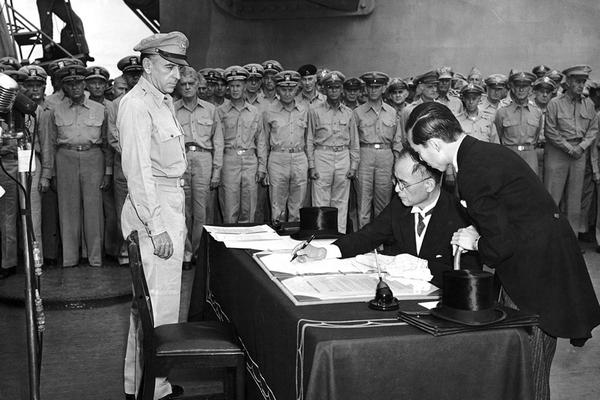
Signing of the Japanese surrender document in 1945
This outcome reinforced a long-standing model of warfare that has influenced military thought for centuries. It suggested that superior military might bolstered by industrial capabilities, technological advancements, strategic skill, and national resolve could overpower an adversary’s political will. Regardless of the costs involved, decisive victory seemed to promise strategic benefits that justified any sacrifices made to achieve it.
The legacy of World War II deeply ingrained this model into military institutions, political ideologies, and national consciousness. Military strategists focused on industrial mobilization, technological advancements, and sustained offensive operations. Political leaders inherited a powerful illustration of the successful application of overwhelming force. Popular culture celebrated the heroism, sacrifices, and eventual triumph of the victorious powers.
However, the conflict that solidified the ideal of decisive victory simultaneously ushered in the technology that would undermine its future application. On July 16, 1945, the first nuclear explosion took place in the New Mexico desert at Trinity, marking the pinnacle of an extraordinary scientific endeavor, yet also showcasing the destructive capability of a new kind of warfare.
Some scientists from the Manhattan Project had already acknowledged the implications of this technology. The Franck Report, submitted in June 1945, cautioned that the United States could not expect to maintain a permanent monopoly on nuclear weapons and advocated for international agreements to avert an atomic arms race. J. Robert Oppenheimer famously reflected the weight of this reality with the words from the Bhagavad Gita: “Now I am become Death, the destroyer of worlds.”
The irony of this moment was striking. As the Allied powers were on the brink of achieving the most decisive military victory in modern history, a groundbreaking development was simultaneously challenging the very foundations of military strategy that had made such victories feasible. The capability to defeat an adversary was reaching a point where the defeated could still wreak catastrophic vengeance against the victor.
The emergence of thermonuclear arms, intercontinental delivery systems, and resilient retaliatory forces would underscore this pivotal shift. Military superiority could no longer be assumed to guarantee national safety, and the aspiration for decisive victory could not be divorced from the specter of devastating retaliation.
Significantly, the nuclear revolution was recognized widely. While some scientists foresaw its implications for warfare, the necessary evolution of cultural, political, and institutional frameworks lagged behind. Military victory continued to be perceived as the ultimate benchmark of national power, allowing the phantom ideal of conventional warfare to survive despite its obsolescence.
Anatomy of the Phantom Limb
This phantom limb of conventional warfare comprises two interrelated elements. Martial valor provides the emotional strength, while military proficiency and the promise of victory lend it agility. The former embodies the moral power associated with warfare; the latter offers military force its clear objectives and practical efficacy. Together, these aspects foster the belief that armed conflict can resolve political disagreements through organized violence.
The Muscle: Martial Courage
Valued human traits such as bravery, sacrifice, endurance, loyalty, and camaraderie often find their most dramatic expression in warfare. Soldiers face life-threatening dangers and risk their lives for their companions, exhibiting qualities that can inspire admiration, independent of the justness of their cause or the ultimate outcome of the battle.
Cultural representations of war highlight this distinction. Films like Das Boot, Cross of Iron, and Letters from Iwo Jima depict German and Japanese soldiers whose courage resonates despite the outcome of their nations. The Deer Hunter delves into the psychological toll of the Vietnam War, while The Hurt Locker reveals the dangers and stresses of military life in Iraq. The documentary Restrepo showcases the determination of American soldiers in Afghanistan, without claiming that their sacrifices would result in any strategic success.
While these narratives vary in perspective, they share a common thread: admiration for soldiers does not necessitate endorsement of the conflict or trust in its merits. The valor of soldiers remains remarkable even amid failure, thereby providing enduring strength to the phantom limb. The honor accorded to military courage persists because the valor of combatants and the wisdom of deploying them are fundamentally distinct concepts.
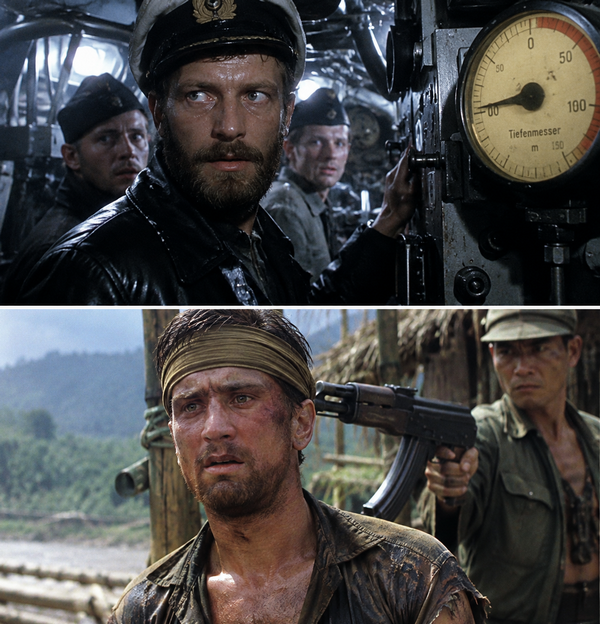
Films like Das Boot (1981) and The Deer Hunter (1978) exemplify narratives showcasing the heroism, resilience, and suffering experienced during war, regardless of the strategic merits of the conflicts.
The Dexterity: Military Proficiency and the Prospect of Victory
The second component involves the effective use of military force. Warfare rewards organization, discipline, innovation, technological progress, and operational proficiency. Military institutions develop increasingly refined means of maneuvering troops, identifying targets, concentrating firepower, and defeating enemy forces.
These capabilities impart dexterity to the phantom limb. Unlike martial courage, which possesses intrinsic moral value, military proficiency serves a functional purpose: its worth is determined by what it affords a nation. However, an army can achieve victories against opposing forces without securing favorable peace. A navy may decimate an adversary’s fleet without coercing political compliance. An air force may wreak havoc on military infrastructure without breaking the enemy’s resolve to resist.
Nonetheless, enhancements in weapons, intelligence, training, and command structures give rise to a compelling narrative of progress. Increased operational effectiveness can create the illusion that decisive victory is closer to realization. Herein lies the phantom limb’s most dangerous trait: military capabilities may continue advancing even as their political utility diminishes. Facing a nuclear-armed opponent, conventional superiority could produce severe losses while simultaneously increasing the likelihood of catastrophic nuclear retaliation.
The Persistence of the Phantom Limb
The phantom limb of conventional warfare endures because cultural and institutional forces reinforce one another. National memory, education, literature, cinema, and patriotic traditions sustain the reverence for martial courage and sacrifice, even in less favorable war outcomes. Military institutions perpetuate these ideals through professional training, doctrine, procurement, and technological advancement, fostering the expectation that superior military might will yield decisive political results.
These influences ripple through generations and societal levels, from everyday citizens to the highest echelons of political and military leadership. This phenomenon requires no deliberate deception or overt militarism. Citizens honor sacrifices, soldiers pursue professional excellence, defense sectors innovate more advanced weapons, and governments seek security. Each action serves a logical purpose, yet collectively, they can uphold strategic premises that none has rigorously scrutinized.
This system resists reform because its internal performance metrics differ from its ultimate objectives. Enhancements in weapon accuracy, operational readiness, and destructive capacity stand as measurable achievements. However, military capability is meant to serve political and security goals, not combat prowess alone. Armed forces can thus become increasingly adept in combating foes without effectively achieving desired strategic outcomes.
When operational setbacks occur, improvements in weapons, training, and doctrine often follow, while political failures are frequently blamed on insufficient resources, flawed execution, or lack of determination. The expectation of decisive victory persists because the institutions fostering it can continue to thrive by their standards, even as the fundamental strategic assumptions behind their actions grow increasingly dubious.
Lessons Not Learned
The limitations of conventional military superiority have been clearly demonstrated since World War II. The United States and its allies have launched campaigns where significant advantages in armament, technology, logistics, and operational effectiveness fell short of achieving desired political results. Yet these experiences have not diminished the belief that greater military capability can yield decisive outcomes. The disparity between military achievements and strategic successes is evident in numerous significant U.S. military engagements.
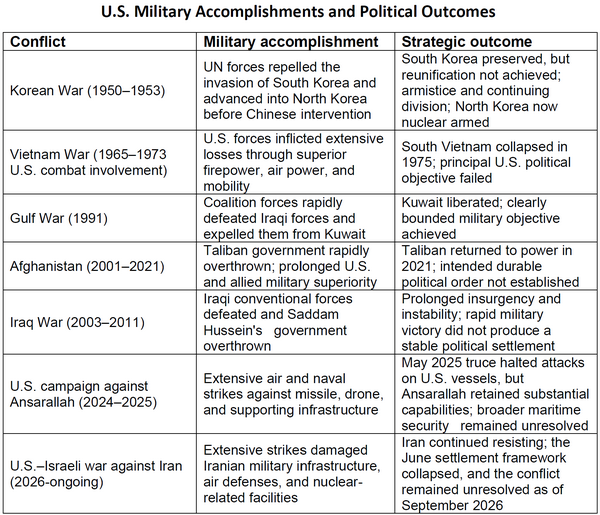
These conflicts differ vastly in their contexts and goals. They do not indicate that conventional forces are inherently ineffective. The liberation of Kuwait in 1991 demonstrates how military might can achieve a clear and attainable objective. Similarly, the defense of South Korea shows limited yet meaningful strategic success. The issue arises when military victories fail to fulfill broader political objectives. Dismantling armed forces, occupying territory, or toppling a government doesn’t necessarily compel political compliance or establish lasting strategic gains.
Repeated setbacks might have prompted reevaluation of the link between military superiority and strategic achievement. Rather than reassessing, unsuccessful campaigns are often rationalized by perceived execution flaws: insufficient resources, poor intelligence, political meddling, overly restrictive rules of engagement, or lack of commitment. While some of these explanations hold water in specific cases, their institutional allure lies in preserving the assumption that victory could have been secured if the war had been carried out differently.
Technological advancements bolster this inclination. Precision arms, stealthy aircraft, advanced reconnaissance, unmanned systems, and intricate command networks promise to overcome prior operational deficiencies. Each iteration enhances the capability to pinpoint, strike, and obliterate enemy forces without necessarily addressing the political quandaries that thwart earlier strategies. The core lesson is not that conventional forces cannot prevail, but rather that military supremacy does not guarantee strategic success. This distinction becomes critically important when adversaries possess nuclear capabilities that threaten catastrophic retaliation even in the face of conventional failure.
When the Phantom Limb Writes the Doctrine
The persistence of the phantom limb becomes particularly apparent when the pursuit of military superiority evolves into the guiding principle of strategic doctrine. Operational dominance, initially a means of achieving political ends, can transform into an end itself. A case in point is Joint Vision 2020, published by the U.S. Joint Chiefs of Staff in 2000. This document’s central tenet, Full Spectrum Dominance, envisioned American forces capable of overcoming any foe and managing military operations across the entire spectrum of conflict. The doctrine emphasized information superiority, precision strikes, dominant maneuvering, and focused logistics as foundations for overwhelming operational efficiency.
These aspirations were understandable responses to advancements in military technology and evidence of American capabilities. However, the sheer ability to dominate a battlefield does not inherently establish the capacity to achieve a politically acceptable settlement. Military superiority can dictate the actions of combat without resolving the adversary’s willingness to fight back or the repercussions of its defeat. This distinction becomes especially critical when the opponent wields nuclear arms. Conventional dominance could threaten vital capabilities that a nuclear state deems essential for its survival, making escalation more appealing precisely as its conventional position wanes.
Joint Vision 2020 did not advocate for nuclear war or openly call for the unconditional defeat of nuclear-armed nations. Its significance lies elsewhere: it exemplifies how military institutions can frame their aspirations in terms of progressively enhanced operational dominance while leaving the ultimate political usefulness of that dominance contingent on circumstances beyond military oversight. The phantom limb crafts the doctrine at the point where combat efficacy is mistaken for the ability to achieve strategic victory.
Conventional Warfare and Nuclear Entanglement
The primary challenge of conventional warfare between nuclear powers is not that nuclear arms preclude traditional battle. Rather, it is that the divide between conventional and nuclear combat lacks both physical security and political reliability. A conflict may begin with limited aims, yet evolve in ways that jeopardize the survival of one or more parties. Nuclear escalation is thus not merely a peripheral concern of conventional operations—it is a built-in risk within the strategic interactions between combatants.
Conventional actions seek to overcome enemy resistance and secure political concessions. In contrast, nuclear deterrence maintains a state’s ability to inflict intolerable harm even if its conventional defenses crumble. The conventional aggressor attempts to strip away the adversary’s capacity to resist, while the defender’s nuclear arsenal presents a means to endure even in the face of apparent conventional defeat.
Modern warfare relies on integrated networks covering surveillance, communication, navigation, command structures, and precision arms, many of which serve both conventional and nuclear purposes. For example, satellites facilitate military communication and strategic warning; radar systems monitor both conventional and nuclear threats; command networks may assist in routine operations while also supporting nuclear capabilities.
An attempt to disrupt conventional operations can inadvertently endanger crucial nuclear deterrent assets. Hitting a communication node, disabling an early-warning system, or targeting a command post might have implications extending well beyond immediate tactical goals. Uncertainty exacerbates this danger; the attacker may see their operations as limited and carefully calibrated, while the defender interprets the destruction of vital infrastructure as a prelude to a disarming nuclear strike. Neither possesses complete insight into the other’s intentions or decision-making processes.
Technological enhancements amplify these risks. Long-range precision weapons threaten strategic targets that were traditionally only accessible through nuclear assault. Cyber warfare and operations against satellites can disrupt communication and warning systems. The use of artificial intelligence and automated decision-support systems could quicken military actions while limiting avenues for political intervention. While each capability offers operational benefits, their interactivity multiplies the avenues through which conventional conflict can jeopardize nuclear stability.
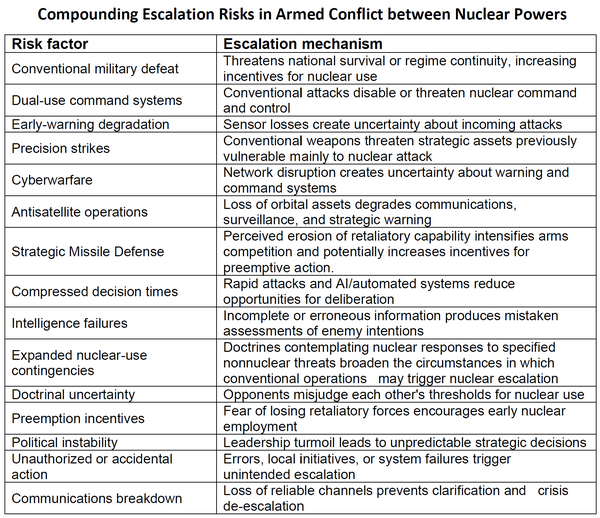
These dangers are dynamic. As conventional threats escalate, political pressures mount and essential military capabilities diminish, an endangered nation may find itself increasingly reliant on its nuclear arsenal. A campaign aimed at achieving decisive victory can therefore progressively heighten the risk of nuclear escalation. The more successful a conventional offensive, the stronger the incentive for a desperate defender to unleash its most devastating weapons.
The Uncertain Threshold of Nuclear War
Throughout the Cold War, nuclear doctrine has never posited an unbreachable divide between conventional and nuclear combat. NATO once entertained the prospect of nuclear first use in response to overwhelming conventional aggression. Contemporary doctrines continue to vary regarding the circumstances under which nuclear deployment might be warranted, leaving adversaries uneasy about the boundaries of conventional conflict.
Russia offers an explicit illustration of this phenomenon. Its updated nuclear doctrine as of November 2024 expanded the stated conditions in which nuclear action might be justified, including conventional aggression against Russia or Belarus that poses a critical threat to their sovereignty or territorial integrity. This revision also broadened the framework to encompass assaults involving states backed by nuclear powers.
The United States, too, has retained the possibility of nuclear engagement in extreme circumstances involving substantial non-nuclear strategic attacks, although its stated policy prioritizes deterrence and stipulates constraints on nuclear use. Meanwhile, China continues to maintain a policy of no first use, underscoring the doctrinal discrepancies among nuclear states.
These distinctions hold significance but do not restore a reliable boundary between conventional and nuclear warfare. An aggressor must consider not only the adversary’s declared doctrine but also how its leadership might interpret deteriorating military conditions. Consequently, the threshold for nuclear use is neither a rigid operational limit nor a boundary whose location can be clearly discerned from declared policy.
The Asymptote Fallacy
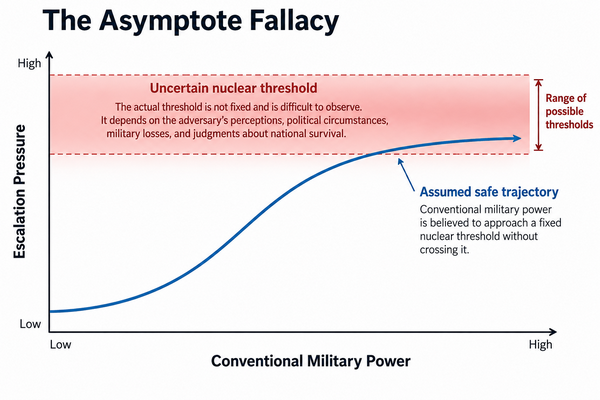
Conventional military planning operates on the premise that increasing superiority enhances prospects for victory. Advances in armament, intelligence, logistics, and operational skill enable forces to inflict greater losses while sustaining fewer casualties. Continuous improvements should bring decisive victory nearer. However, against a nuclear-armed adversary, this expectation encounters a crucial discontinuity. The willingness of the opponent to resist does not necessarily diminish as its conventional forces are obliterated. As defeat looms, the incentive to employ nuclear weapons may actually increase.
The asymptote fallacy embodies the erroneous notion that conventional military operations can approach the brink of nuclear escalation indefinitely without crossing it. Progress in intelligence, precision capabilities, and escalation management may lead to the misguided belief that military pressure can be intensified without provoking nuclear retaliation. However, this threshold is neither fixed nor reliably ascertainable. It hinges on the adversary’s perceptions and decisions, which may shift rapidly as military defeat comes into view.
“Understanding when you’re heading for the border, Lord, you’re bound to cross the line.” — Kris Kristofferson
The Vanishing Prospect of Capitulation
Imagine a hypothetical conflict where American forces decimate much of China’s navy and air force, gain control over vital maritime channels, and enforce a stringent blockade. Would China concede to American political demands, or would its leadership perceive the destruction of its military and economic security as existential threats worthy of escalation? A similar scenario unfolds in a conventional war between NATO and Russia. Even overwhelming NATO superiority would not guarantee that Russia would accept the eradication of its military establishment or threats to its territorial integrity without contemplating nuclear response.
These examples do not imply that nuclear escalation is unavoidable. They highlight that conventional military superiority cannot reliably compel a nuclear-armed great power to capitulate. The more thorough the defeat inflicted, the more challenging it may become to propose terms the adversary considers compatible with its survival. The traditional belief that overwhelming military superiority renders surrender increasingly appealing may, in fact, be reversed. Conventional defeat could push a defender toward nuclear escalation as a last resort to avert an intolerable fate.
The Illusion of Escalation Control
Military strategists are aware of these risks and employ limitations on objectives, targeted strikes, graduated responses, diplomatic signaling, and communication channels to mitigate escalation risks. Such approaches are beneficial, yet escalation control is not an exclusive capability. It is contingent upon how an adversary interprets events and makes decisions amid uncertainty, fear, and potential catastrophic loss.
A conventional action intended as a limited show of force may be perceived as preparation for a disarming assault. The destruction of communications systems may seem operationally critical to one party while appearing existentially threatening to another. Even when both governments wish to avert nuclear conflict, their actions may produce pressures neither side foresees. Thus, the belief that escalation can be managed is reliant on adversary decisions that no military planner can dictate.
Catastrophic Victory
The traditional aim of military victory is to secure a politically favorable outcome for the victor. Territories can be defended, threats neutralized, and concessions coerced. However challenging the war, sacrifices are justified by the expectation that the ensuing peace will leave the victorious nation more secure. But when the opponent is a nuclear-armed great power, do the resulting strategic gains outweigh the risk of catastrophe?
The world where the Allied powers secured decisive victories in 1945 was far less economically interconnected than today’s globe. International trade was significant, yet industrial production, financial frameworks, and technological capabilities were primarily contained within national economies and imperial trade groups. The dismantling of an opponent’s economic power could therefore be regarded as an achievable strategic advantage for the victor.
Contemporary economic interdependence complicates this calculation. Major powers are entwined through global supply chains, financial markets, energy networks, transport systems, and technological industries. Their economies do not function in isolation but as components of a global system reliant on substantial cooperation between political rivals.
A large-scale conventional conflict among these nations would disrupt this interconnected system, even if nuclear weapons were never deployed. The devastation of ports, factories, power grids, transport networks, and communication infrastructure would generate economic fallout far beyond the nations directly involved. Trade disruptions, financial turmoil, scarcities of crucial resources, and the collapse of production networks could inflict significant costs on both belligerent and neutral nations.
The manifested victor would not escape these repercussions. Destroying an adversary’s industrial base could simultaneously eliminate vital sources of manufactured goods, components, and technological inputs that the victor itself depends on. The military annihilation of an opponent’s capabilities might inadvertently cripple the victor’s own economic stability and prosperity.
This represents a crucial shift from traditional logic concerning decisive victory. The economic harm inflicted on a rival can no longer be assumed to translate into corresponding strategic advantage. In a globally interdependent environment, undermining an enemy’s economic strength may also jeopardize the economic foundations of one’s own security.
Victory Without Security
The strategic implications extend beyond immediate economic losses. A defeated nuclear power would remain a significant political issue. Its populace, national identity, grievances, and future resilience would not evaporate with the dismantling of its conventional military forces. Even a successful campaign could leave the victor facing a destitute, resentful, and unstable adversary, compounded by a fractured international economy. The costs of rehabilitation, ongoing military obligations, hindered trade, and persistent hostility could overshadow whatever advantages were meant to be secured through victory.
The specter of nuclear escalation exacerbates this already daunting assessment. A state nearing decisive conventional defeat may still possess the means to inflict catastrophic damage vastly outweighing the political objectives sought. The victor must then accept not only the prospect of severe economic fallout but also the risk that the endeavor will breach an unpredictable nuclear threshold. The question is no longer whether decisive military victory can be achieved; it’s whether the anticipated political gains can justifiably outweigh the economic devastation, strategic instability, and nuclear peril incurred in pursuit of those objectives.
The Self-Consuming Pursuit of Victory
Symbolically, the Ouroboros—a serpent consuming its own tail—aptly represents this predicament. Its ceaseless self-consumption transmutes intentional effort into an emblem of self-destruction. The quest for decisive military victory among nuclear powers embodies a similar contradiction. Each state aims for security through military dominance, and each enhancement incites countermeasures from potential adversaries. This competitive dynamic amplifies destructive capacities while increasing the channels through which confrontation may lead to catastrophe.
This process does not necessitate that leaders desire destruction. It may stem from their resolve to avert defeat, preserve credibility, maintain superiority, and safeguard national interests. Individually rational decisions, collaterally, may foster an increasingly perilous strategic landscape.
The phantom limb sustains this contradiction. Military institutions continue to perfect their capabilities for defeat, political leaders invoke the promise of triumph, and technological advancements suggest that remaining challenges can ultimately be surmounted. Yet, the strategic environment no longer allows for the consequences of decisive victories to be reliably separated from the risk of catastrophe. The pursuit of military dominance, ostensibly aimed at ensuring national survival, can inadvertently threaten civilization itself.
Conclusion: The Courage to Abandon the Limb
The phantom limb does not indicate that conventional military power lacks utility. Nations still require the means to protect themselves, deter aggression, and uphold legitimate interests. What has dangerously become obsolete is the expectation that military superiority can consistently deliver decisive victories over another nuclear-armed power.
Escaping this quandary necessitates a different kind of bravery. Martial valor has long held a significant place in national ethos, yet the nuclear era demands equal intellectual courage from policymakers. Political and military leaders must be prepared to scrutinize inherited doctrines, recognize the limitations of military power, and subordinate operational aspirations to achievable strategic ends.
This transformation calls for a recalibration of national priorities. Military effectiveness should be evaluated based on its contribution to lasting security and political stability, not merely its capacity to destroy enemy forces or dominate battlefields. Diplomacy, arms control, conflict prevention, and alleviating mutual insecurity must become integral components of national strategy rather than last-choice options considered only after military efforts fail. The challenge is not to diminish the courage of combatants, but to demonstrate similar courage in discussions where decisions regarding war and peace are made. Rejecting unnecessary confrontations, letting go of unattainable goals, or reaching out to an adversary may demand more intellectual and political fortitude than launching another military operation.
The phantom limb endures because its cultural strength and institutional agility remain formidable, even as the strategic context in which they once thrived becomes increasingly disconnected from reality. Preserving an outdated notion of victory does not showcase strength but rather highlights a failure to recognize that the landscape of national survival has fundamentally transformed. Just as the loss of a limb may be essential for survival in medicine, relinquishing the phantom limb of decisive conventional warfare may be vital for preserving something far more precious: our global civilization.