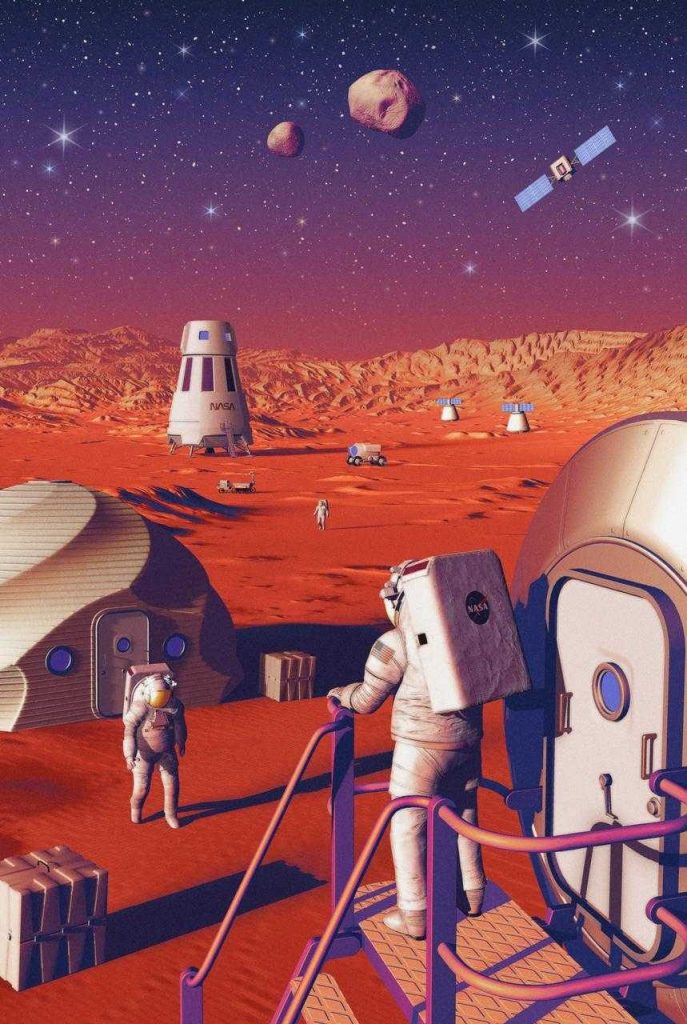
NASA and the Department of Energy have signed an agreement to enhance their collaboration on nuclear power and propulsion technologies, aimed at supporting more extensive missions to the moon, Mars, and beyond. This partnership was formalized during the Golden Age Summit in Washington, with a focus on advancing nuclear technology for space exploration.
Key Details:
- Agreement Launch: Effective November 1, titled “Accelerating American Leadership in Space Nuclear Power and Propulsion.”
- Focus Areas: The collaboration will include research, fuel production, testing, and safety protocols in nuclear technology.
- Statements: NASA Administrator Jared Isaacman emphasized that this marks the beginning of a “Nuclear NASA-era,” enabling longer and more capable space missions. Energy Secretary Chris Wright highlighted the partnership as a pivotal step in America’s nuclear renaissance, facilitating exploration of uncharted territories.
Future Objectives:
- Lunar and Mars Missions: A goal is to develop a launch-ready lunar surface reactor by 2030 and to transition nuclear propulsion from research to operational status with missions planned for 2028.
- Power Systems: Nuclear and radioisotope systems will provide energy for habitats and equipment in low-sunlight environments, supporting sustained missions on the moon and Mars.
Additional Initiatives:
- Dragonfly Mission: Launching in 2028, this mission will utilize advanced radioisotope systems to explore Titan, Saturn’s largest moon.
- Collaboration with ESA: The partnership will also supply radioisotope heater units to the European Space Agency for the Rosalind Franklin Mars rover.
This agreement lays the groundwork for a new era of space exploration, utilizing nuclear technology to broaden humanity’s reach into the cosmos.


