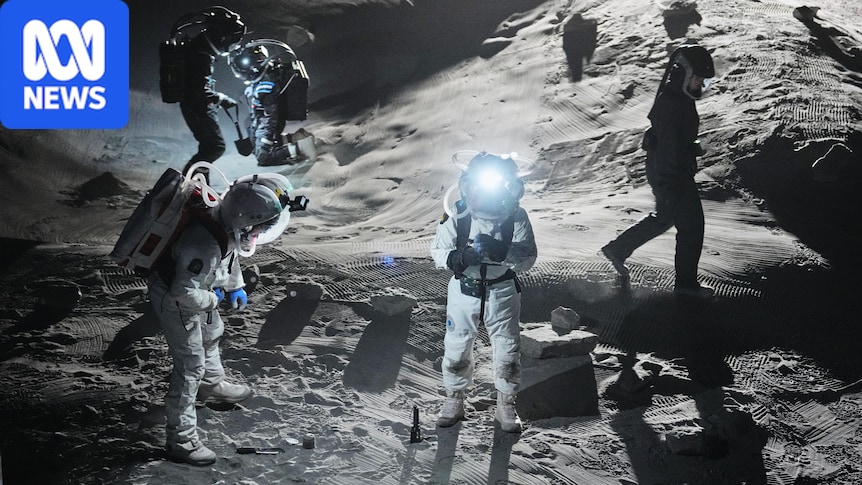
The 20th century sparked a space race between the US and USSR, leading to a new century where billionaires like Elon Musk and Jeff Bezos vie for lunar control. Musk aims to create a self-sustaining city on the Moon, though experts deem this nearly impossible due to water scarcity. Meanwhile, Bezos envisions lunar colonization. Rising geopolitical tensions echo the Cold War as the US faces a Russia-China alliance, particularly regarding plans for nuclear reactors on the Moon.
Ownership of the Moon raises complex questions. According to the 1967 UN Outer Space Treaty, the Moon should remain for peaceful use, and no nation can lay claim to it. However, gaps in the treaty concerning lunar mining complicate matters. The 1979 Moon Agreement tried to assert that the Moon’s resources belong to all humanity, but was ratified by only 18 countries, excluding major powers like the US and Russia.
Concerns about private companies controlling lunar resources grow. As Dr. Badreddine of the University of Sydney notes, companies like SpaceX could monopolize access to valuable lunar real estate, leading to fears about resource ownership and control. The US’s Artemis Accords aim to establish guidelines for lunar exploration, but have been rejected by Russia and China.
Experts argue for a new UN treaty to address military, resource extraction, and environmental issues in space. While the Outer Space Treaty has faced scrutiny, some see it as a constitutional framework for space governance. The need for peace on the Moon is increasingly vital as nations and corporations venture into the new frontier of celestial competition, where influence may equate to control.


