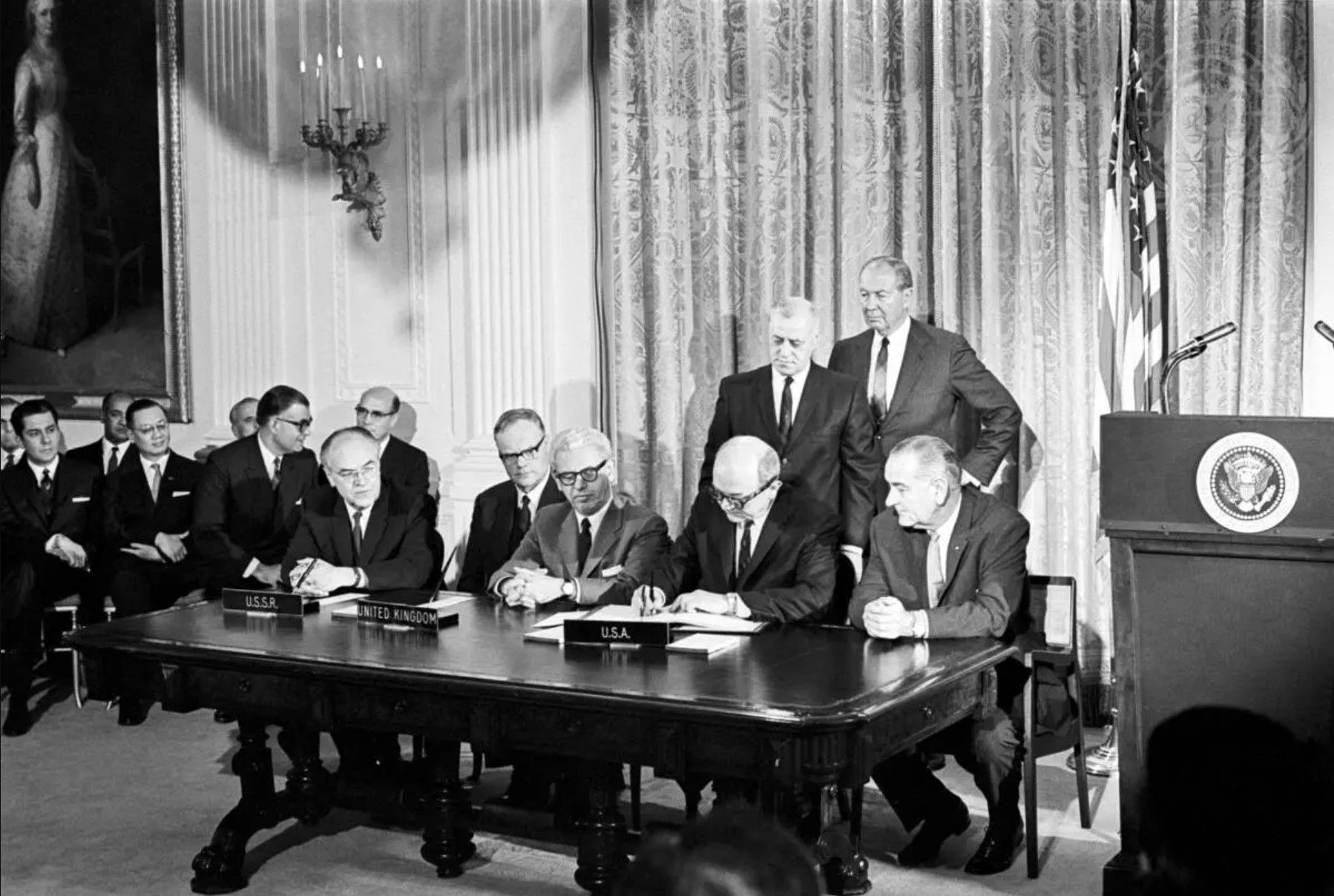
The Outer Space Treaty: A Milestone in Space Law
Ratification Date: October 10, 1967
The Outer Space Treaty was created to establish the governing principles for the exploration and use of outer space by various nations. Key points include:
-
Benefit for All: It emphasizes that space exploration should be conducted for the benefit and interest of all countries, asserting that outer space is the province of all mankind.
-
No Territorial Claims: Countries cannot claim sovereignty over any celestial body.
-
Peaceful Use: The treaty mandates that outer space must only be used for peaceful purposes, prohibiting military installations, testing of weapons, and military maneuvers in space.
As of now, over 100 countries have ratified the treaty, marking it as a cornerstone of contemporary space law. Its provisions extend to the ownership of spacecraft, facilitate international cooperation in space exploration, and ensure assistance to astronauts in distress.
Impact: The treaty has not only shaped future activities in space exploration but has also laid down the framework for modern spaceflight regulations, advocating the peaceful use of space resources.
For a deeper exploration of space history, check out the On This Day In Space stories.


