Asteroid 2024 YR4: A Close Call for Earth
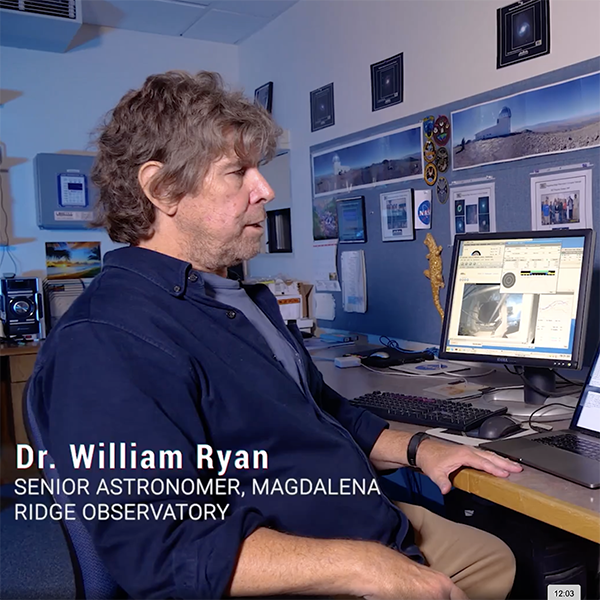
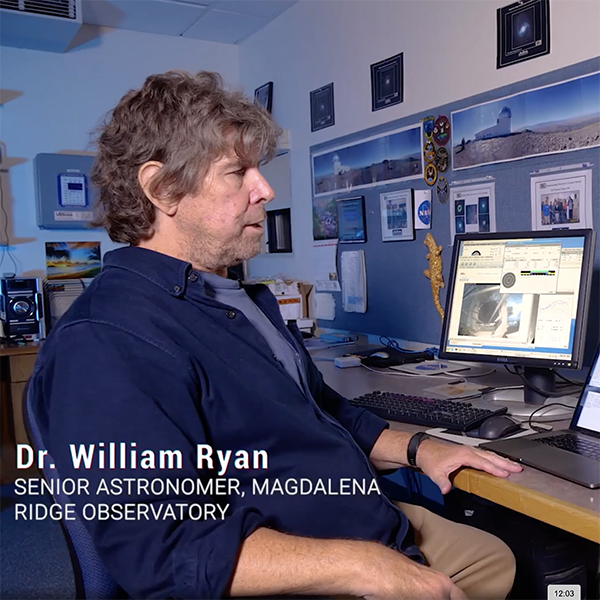
Dr. William Ryan, Senior Astronomer at the Magdalena Ridge Observatory.
An asteroid measuring up to 90 meters (nearly 300 feet) is hurtling through space at approximately 38,000 miles per hour. Its trajectory suggests a potential collision with Earth, which could lead to catastrophic consequences. A recent documentary titled Planetary Defenders: This Is Not an Exercise chronicles the discovery of asteroid 2024 YR4 and the ensuing concerns regarding its trajectory and potential impact.
Featuring key members from NASA’s Planetary Defense network, including Drs. William and Eileen Ryan—senior astronomer and director at the Magdalena Ridge Observatory (MRO) at New Mexico Tech—the documentary highlights their close monitoring of the asteroid. Both researchers have been involved in hazardous asteroid assessments since 2008.
Following the asteroid’s discovery on December 25, 2024, when it appeared to be just another Near-Earth Object (NEO), mathematical modeling later indicated an emerging risk. On January 27, 2025, the probability of a strike crossed the 1.2% threshold, raising alarms among NASA and its global team of observers.
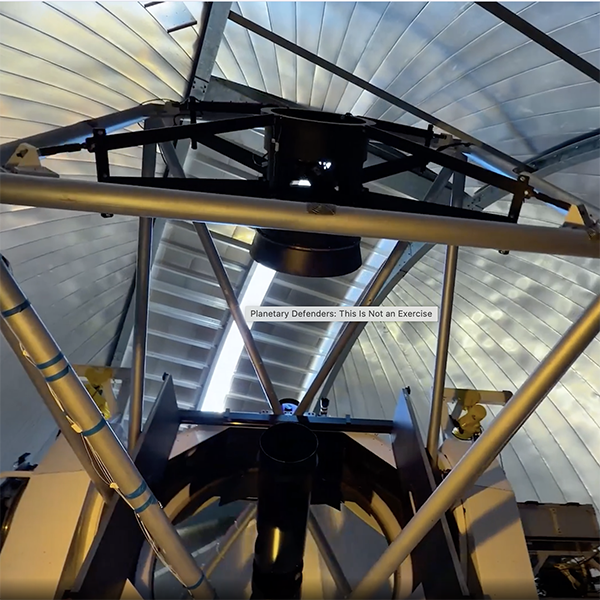
Scope located at the Magdalena Ridge Observatory.
From the mountain-top MRO overlooking Socorro, New Mexico, the Ryans utilized the observatory’s 2.4-meter telescope to track 2024 YR4 from January to March 2025. Astronomers collected critical data, such as the asteroid’s spin rates and spectral composition, to better assess its potential danger.
Dr. Eileen Ryan noted, “The Magdalena 2.4-meter telescope is among the largest in NASA’s Planetary Defense network and was well-suited for ground-based observations of 2024 YR4.”
As the observatory and other international telescopes collected data, the risk of impact was eventually downgraded from 3.1% to just 0.27% by early February, allowing astronomers to confidently assert that the threat of a direct strike was effectively eliminated.
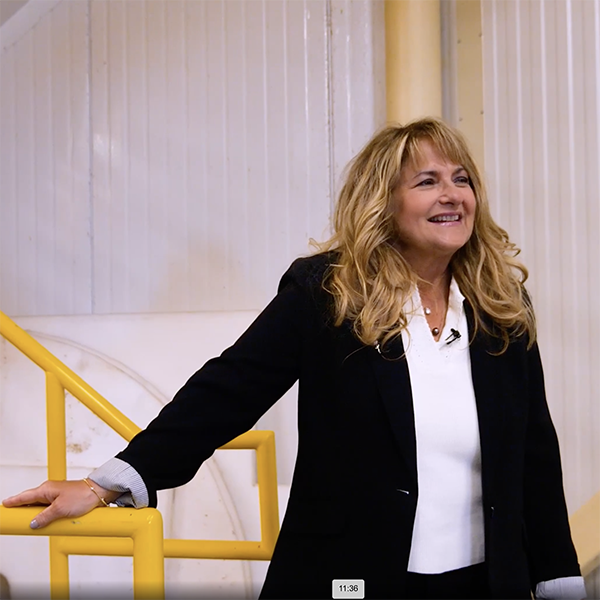
Eileen Ryan in the documentary.
Dr. Ryan expressed satisfaction with the outcome: “This was an excellent demonstration of NASA’s Planetary Defense network performing its job.”
While asteroid 2024 YR4 turned out not to be the enormous threat initially feared, vigilant monitoring of NEOs continues to be critical, as experts believe another Earth-impactor is still out there, waiting to be discovered.
NASA’s Planetary Defense network has evolved into a collaborative global system, employing ground-based telescopes and space-based assets to identify and mitigate potentially hazardous NEOs. This initiative, originating in the 1990s and previously known as “Spaceguard,” is vital for enhancing emergency preparedness and understanding potential impact scenarios.
Dr. Eileen Ryan leads MRO’s technical and operational efforts, focusing on scientific and military initiatives related to space threats. Dr. William Ryan specializes in asteroid characterization studies and both were participants in NASA’s recent Double Asteroid Redirect Test (DART) mission, which successfully demonstrated an ability to alter an asteroid’s orbit.
By Kimberley Clementi


