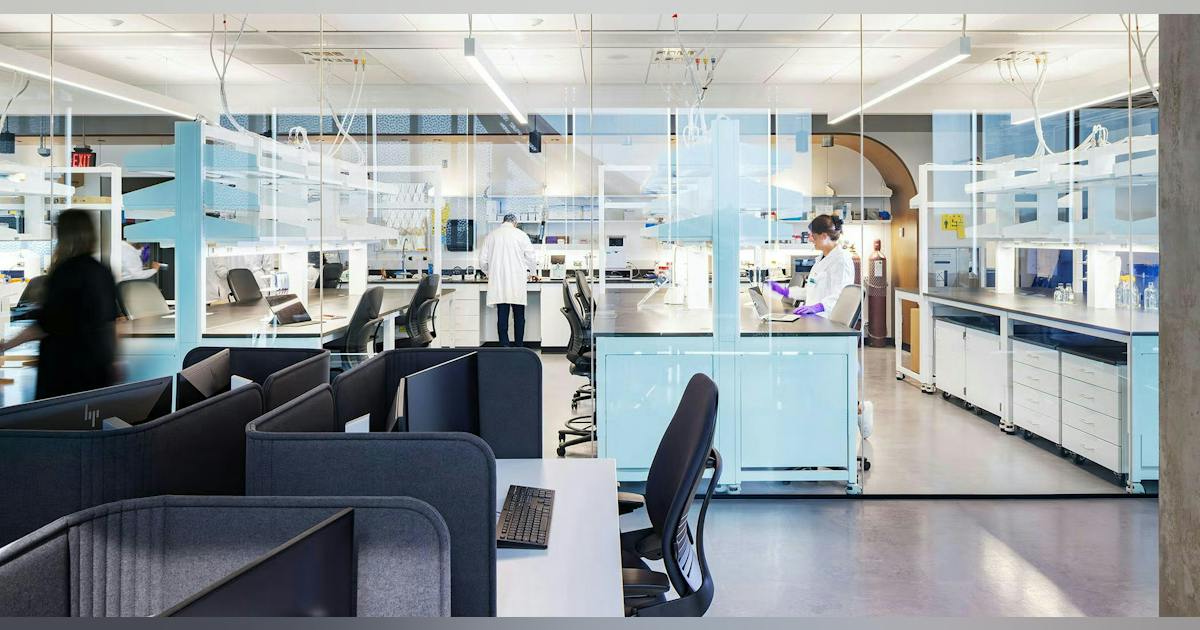
Benefits of a 10-Foot Module
Material Efficiency
Adopting a 10-foot module can significantly reduce the amount of steel and concrete required for construction. This not only lowers embodied carbon but also cuts construction costs.
Energy Savings
By minimizing the building’s footprint, the facility requires less energy for heating, cooling, and ventilation. Even small reductions in floor area can lead to considerable operational savings, particularly in high-intensity lab environments.
Modular Coordination
The 10-foot module aligns seamlessly with standard 2-foot construction systems. This compatibility helps reduce material waste and simplifies the construction process.
Right-Sizing for Research
Recent research indicates a decrease in the number of scientists working in labs, from 30-40 to typically fewer than 10. This shift is influenced by the rise in dry research and advanced automation, making tighter grids more suitable for modern laboratory needs.
Planning Ahead
Implementing a 10-foot module requires collaborative planning among various disciplines. It serves as the smallest dimension for ensuring safe, functional, and efficient workflows in laboratories. An integrated architecture/engineering firm with expertise in high-tech research environments, like HDR, fosters this collaborative effort and ensures adherence to strict quality assurance protocols.


