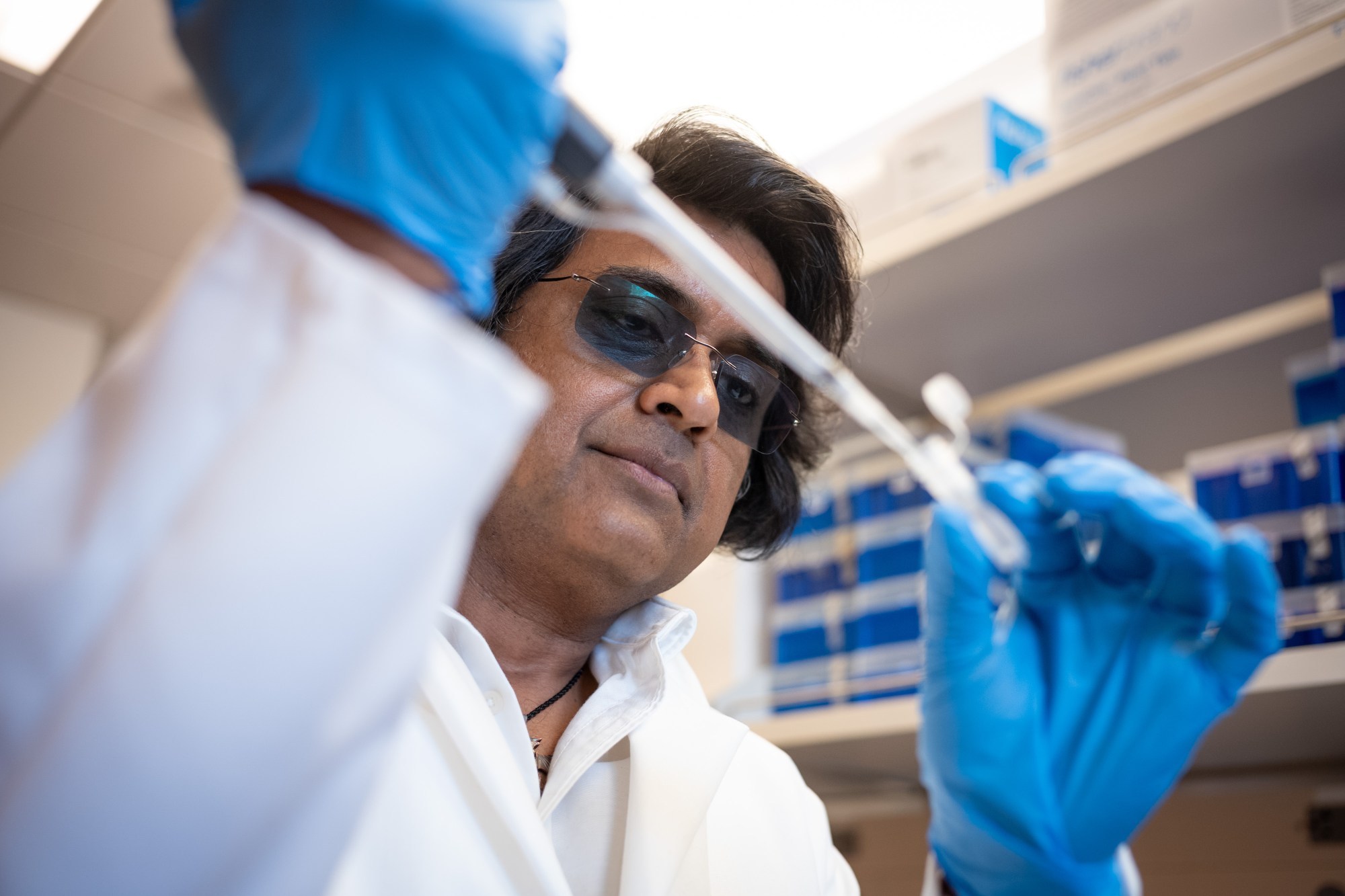
A biology professor at Cal State Northridge, Chhandak Basu, has secured two NASA grants totaling $700,000 for research on growing leafy greens in space and studying a salt-tolerant microbe’s survival in hostile conditions.
The latest grant, worth $400,000, focuses on how microgravity and drought-like conditions impact plants, particularly leafy greens such as lettuce, spinach, and mustard greens, and aims to find ways to mitigate these effects.
Basu previously received a $300,000 grant to investigate how the microbe Halobacterium salinarum survives in extreme environments, including exposure to ultraviolet light and heavy metals. This research may shed light on the origins of life and the potential for extraterrestrial life.
Collaborating with NASA’s Ames Research Center, Basu plans to explore how plants grow in microgravity and similar drought conditions found on the Moon and Mars. He believes that growing fresh food in space could enhance astronauts’ diets and mental well-being, offering a psychological boost through nurturing living plants.
The research involves using a clinostat to simulate weightlessness for plants, allowing scientists to study their growth in conditions mimicking those of space. Potential applications of this research on Earth could address increasing drought conditions.
Additionally, the grant will fund stipends for two to three CSUN students, providing them with hands-on research experience alongside NASA scientists, described by Basu as a “once-in-a-lifetime opportunity.”


