NASA’s Nancy Grace Roman Space Telescope, launched on August 30, 2026, is embarking on an innovative mission to explore some deep astronomical mysteries. Positioned approximately a million miles from Earth, the telescope will investigate dark energy, galaxy formation, and search for exoplanets—planets orbiting stars beyond our solar system.
Unique Detection Method
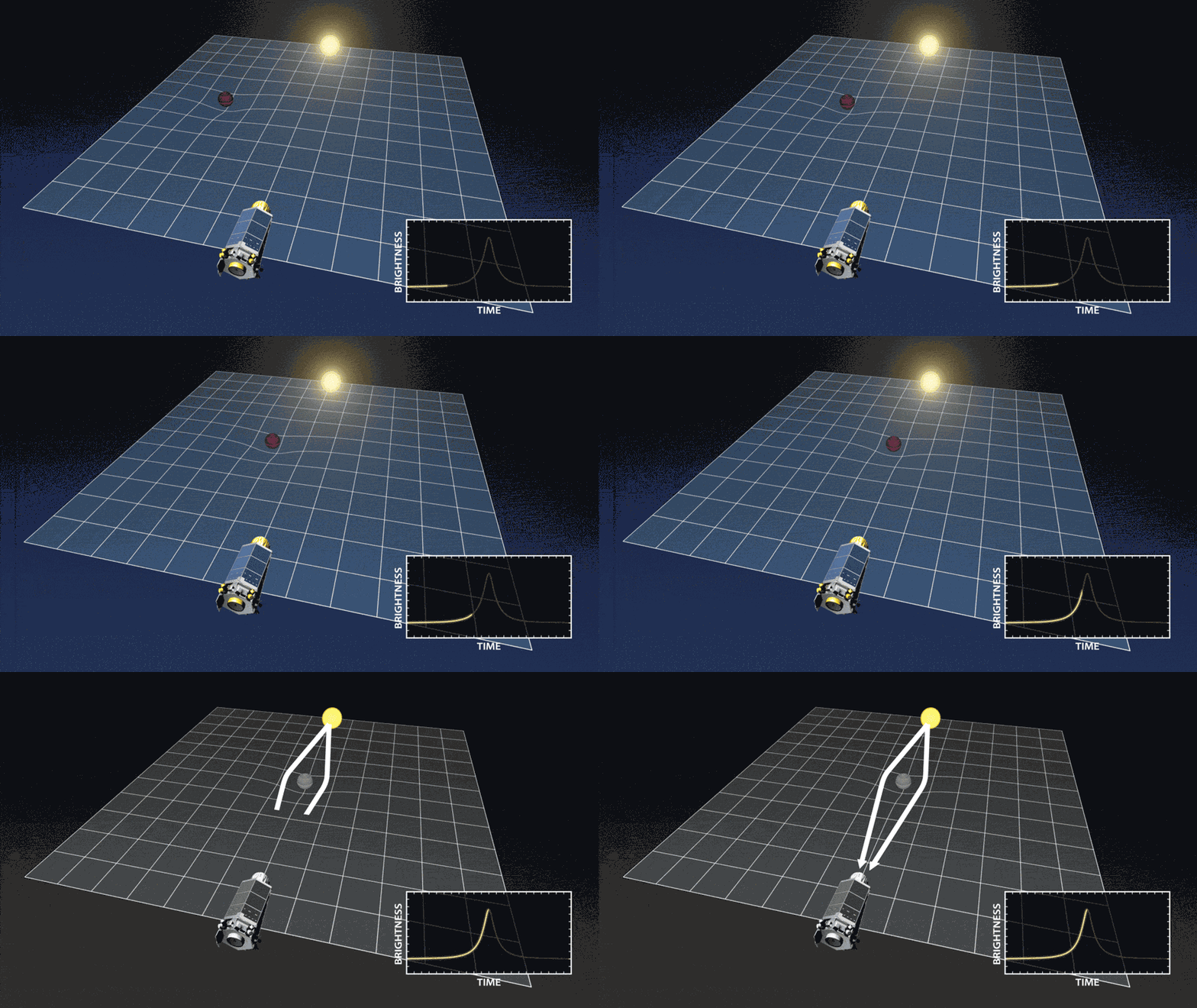
Roman’s approach to finding exoplanets is strikingly different. Rather than directly observing these distant worlds, it will utilize the phenomenon of gravitational microlensing. This occurs when a foreground celestial object, such as a star or planet, aligns perfectly in front of a more distant star. The gravity of the foreground object bends the light from the background star, causing temporary brightening that Roman can detect.
Microlensing Explained
Imagine looking at a distant star while another star passes in front of it from your perspective. Although these stars may be light-years apart, their alignment can amplify the background star’s light, akin to a natural magnifying glass created by gravity. If there is a planet orbiting the foreground star, it can cause additional, smaller spikes in brightness, allowing astronomers to infer the planet’s presence.
Observational Strategy
To maximize the chances of spotting these rare alignments, Roman will monitor hundreds of millions of stars through its Galactic Bulge Time-Domain Survey. This high-frequency observation (every 12 minutes during intensive seasons) is crucial since the alignments are transient events that won’t reoccur.
Discovering Diverse Planetary Systems
Roman is expected to discover over 1,000 planets with wider orbits than those typically found, especially because it can observe cooler, more distant regions of planetary systems. Its microlensing efforts will reveal planets that current techniques struggle to detect, like free-floating or rogue planets that do not orbit a star.
Complementary Techniques
Besides microlensing, Roman will also measure stellar brightness to identify transiting planets—those that cross in front of their stars. This dual approach allows researchers to gather a more comprehensive picture of planetary systems, which is vital for understanding the diversity of planets in our galaxy.
Conclusion
NASA’s Roman Space Telescope is set to make groundbreaking contributions to our understanding of the universe by harnessing gravity and expanding the existing frameworks of exoplanet discovery. Through innovative methodologies, this telescope will deepen our knowledge of planetary systems and ultimately answer key questions about the nature of our galaxy.


