Arizona Tribal Energy Summit Highlights Growing Relationships Between Tribes and Arizona
By Senna James, Cronkite News
September 23, 2026
PHOENIX – A bustling room of tribal leaders, state officials, and community members quieted as Hopi Tribe Chairman Lamar Keevama began a prayer in the Hopi language to kick off Arizona’s Tribal Energy Summit & Workshop.
Hosted by the Arizona Governor’s Office of Resiliency and the Arizona Governor’s Office of Tribal Relations, the meeting sought to strengthen partnerships between tribal nations and the state. Held on Tuesday, Sept. 22 at the State Capitol Executive Tower, it marked the summit’s second year.
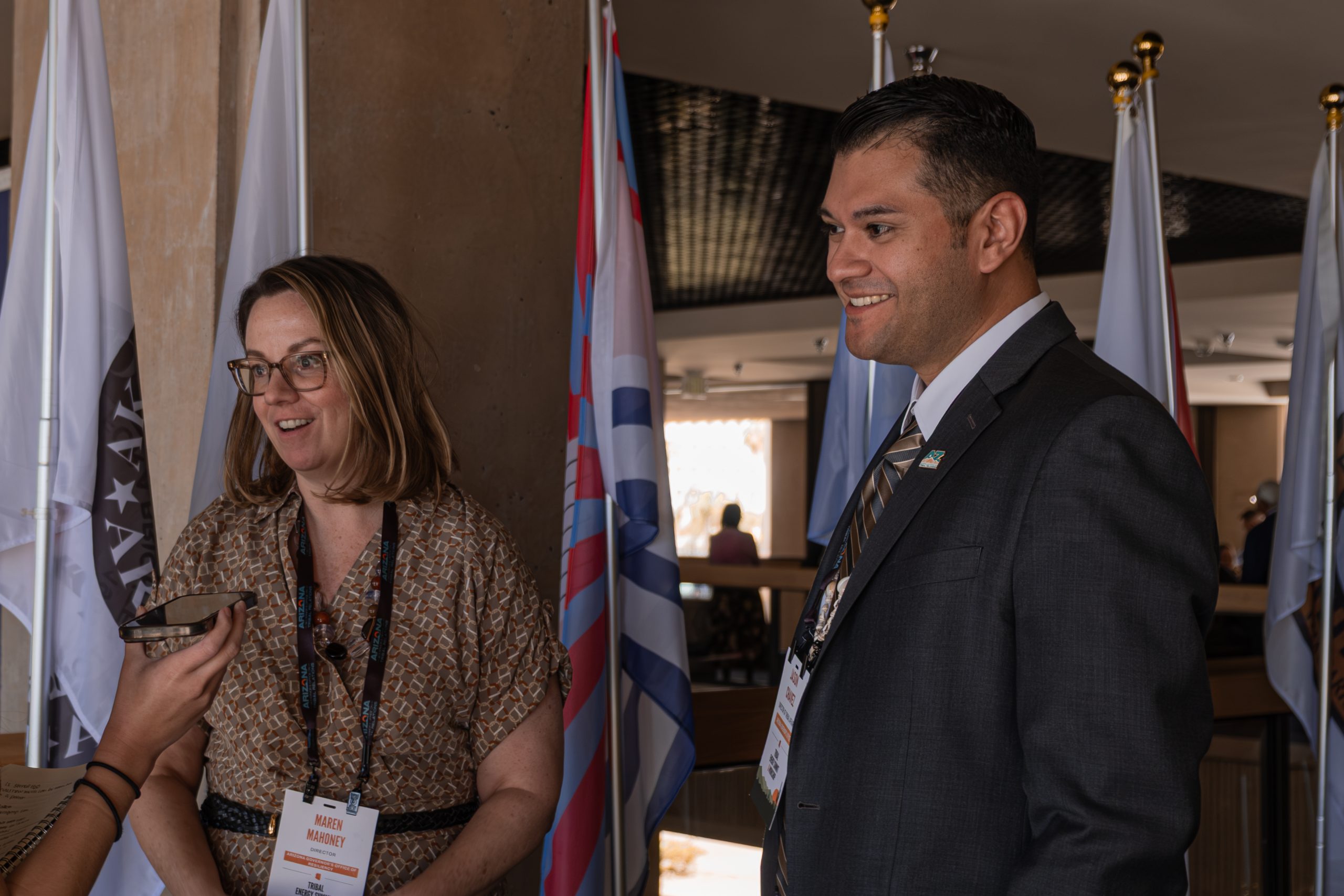
While last year’s summit brought more than 200 participants, this year’s group of around 70 allowed for more focused discussions on energy conservation efforts, community resilience, funding opportunities, and disaster management, said Jason Chavez, director of Tribal Affairs for the Governor’s Office of Tribal Relations.
“The purpose and goal today is to come together to share our vision for what energy future looks like in the state of Arizona, whether that be within the state, state trust lands, or on the 22 tribal lands within the state,” Chavez addressed attendees.
Experts ranging from adjunct professors to directors and research managers spoke during panels to share insights and possible solutions.
“These events are crucial because they bring together people who aren’t always in the same room to discuss key issues that create barriers to project planning and development,” said Maren Mahoney, director of the Arizona Governor’s Office of Resiliency.
Topics discussed included energy reliability, community resilience, and water management conservation.
“Access to water is a critical health issue,” said Ginger Sykes Torres, a Navajo Nation member and vice president of resiliency programs for Local First Arizona, a non-profit focused on equitable economic development. “During COVID, we saw how vital this issue is for our communities, and water is intricately linked to our energy systems.”
Torres emphasized that integrating water management into energy systems could address tribal water shortages, citing examples of tribal communities installing solar panels over canals to preserve water while generating electricity for irrigation.
Gabe Lavine, director of Arizona’s Department of Emergency and Military Affairs, acknowledged the diverse challenges faced by communities, from migration to emergency planning and power outages.
Additionally, tribal leaders voiced concerns about their absence in solution discussions. Often, tribal communities are unaware of plans being made, resulting in resistance to proposals from their leaders.
“Nothing happens until the (tribal) council says it happens,” said Pilar Thomas, an adjunct professor at the University of Arizona and Arizona State University. “It’s essential to educate the council on proposed plans, but buy-in from the community is equally important.”
Thomas suggested involving three groups: the tribal government, trusted councils, and communities in educational efforts surrounding plans and developments.
Some speakers addressed tensions between the state and tribal nations regarding tribal sovereignty. State Sen. Theresa Hatathlie, a Democrat from northeastern Arizona, questioned why Arizona does not offer tax credits for nation-building activities.
“We talk about state and tribal relations in any conversation,” Hatathlie stated. “While respecting sovereignty is crucial, it doesn’t mean we can stand aside and let tribal nations struggle to address their challenges.”
Chavez noted that the summits are significant for fostering long-term relationships and trust.
Since Democratic Gov. Katie Hobbs established the Arizona Governor’s Office of Resiliency in 2023, Chavez and Mahoney observed growth in state-tribal relationships.
The intent is for the state to support tribal efforts, exchanging ideas and building connections rather than dictating actions, Chavez explained.
“There is a widespread eagerness to engage,” Mahoney remarked. “Everyone recognizes the changing landscape of energy production and resource needs, which presents both challenges and opportunities.”
This article first appeared on Cronkite News and is republished here under a Creative Commons Attribution-NoDerivatives 4.0 International License.


