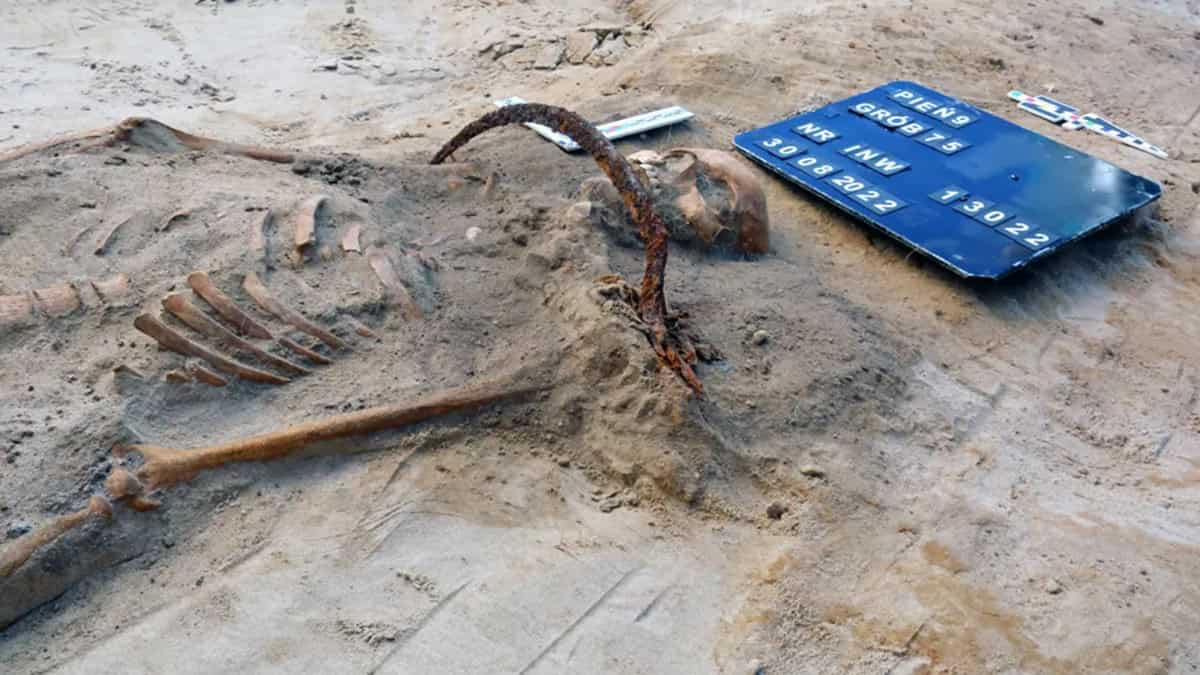
The burial of Zosia, a teenage girl from 17th-century Poland, sheds light on historical fears surrounding death and the undead. Discovered in 2022 at the Pień cemetery, Zosia’s grave contained an iron padlock around her toe and a sickle laid across her neck, purposefully positioned to prevent her from rising from the dead—a practice reflecting deep-seated beliefs in “anti-vampiric” rituals.
Zosia was likely of local origin, indicated by her tooth enamel, yet possessed a rare mitochondrial lineage that hints at potential Scandinavian ancestry. Speculation surrounds her death, as no physical trauma suggests a cause, yet her elevated status, evidenced by burial artifacts made of silk and silver, adds complexity to her story.
The grave, representing a community’s attempt to safeguard itself from perceived threats, is one of 101 discovered at Pień, where many features indicate inhabitants feared even after death. This cemetery’s obscurity in historical records implies it was designated for those cast out by society, linking Zosia’s life and death to larger narratives of fear and exclusion. The unanswered question remains: what stirred such apprehension towards someone who seemed, by all accounts, to have been a part of the community?


