PrivacyLens: An Explainable Risk-Scoring System for Data Breach Exposure
Ashvi Jain, Computer Science ’30
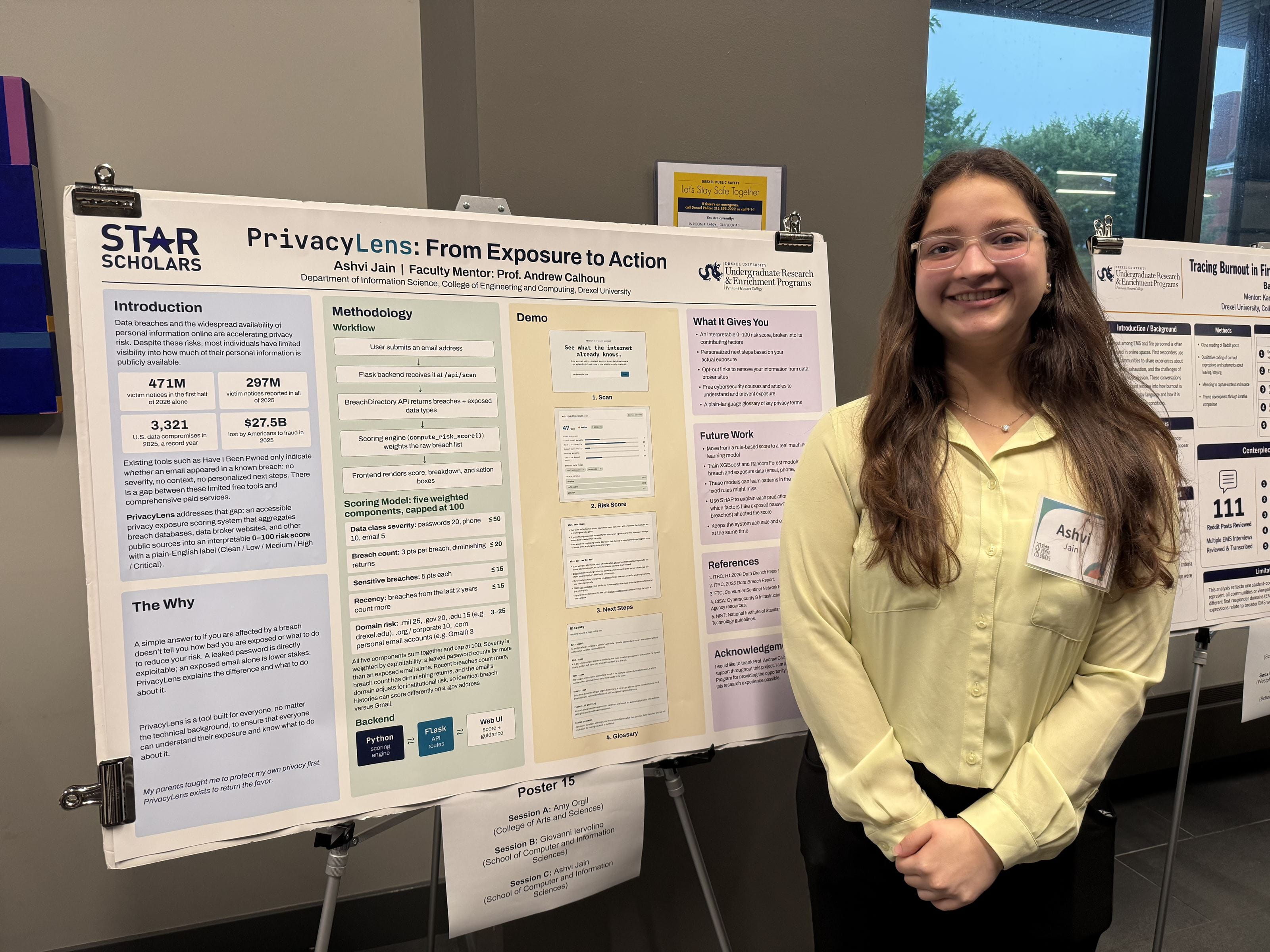
Jain’s project, PrivacyLens, aims to enhance user awareness regarding data breaches. Unlike typical websites, PrivacyLens not only checks email addresses against known breaches but also evaluates the severity of the breach by providing a risk score (0-100). This score is derived from factors such as the breach’s recency, the type of domain (personal, business, or government), and whether just the email or the password was compromised.
The tool also supplies users with resources like opt-out links, cybersecurity courses, and articles to guide them in taking appropriate actions. Inspired by her experiences with social media, Jain hopes to expand the project beyond email breaches in the future.
“This was a steppingstone towards a larger project,” Jain stated, reflecting on her experience and mentorship with Andrew Calhoun, a professor of information science at Drexel.
Evaluation of the Antibacterial Activity of Lycium barbarum Extracts Against Cutibacterium acnes
Navneeth Nalajala, Biological Sciences ’30
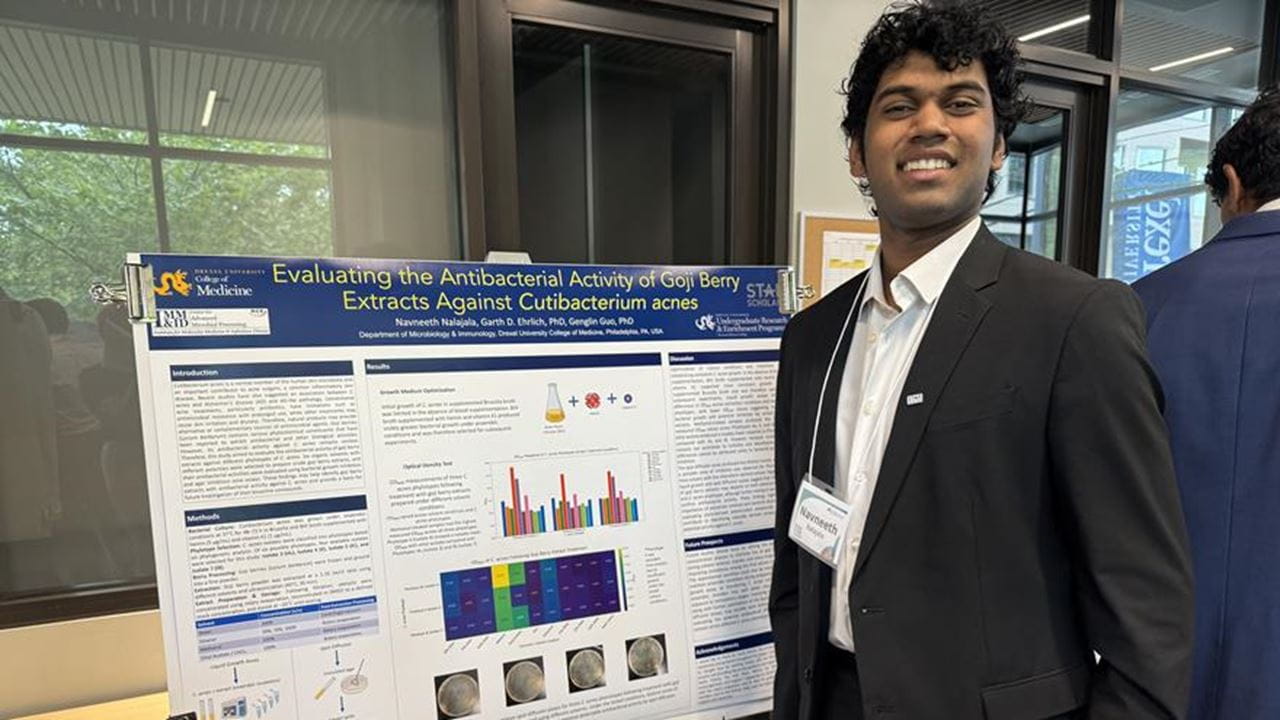
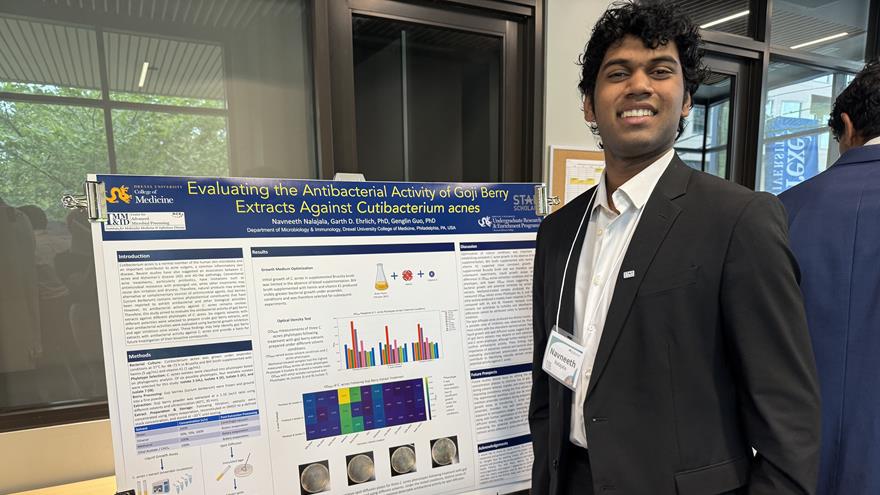
Nalajala explored the antibacterial properties of Lycium barbarum (goji berries) and their potential role in preventing symptoms of Alzheimer’s disease. His research focused on the challenging Cutibacterium acnes, which can cross the blood-brain barrier.
Through various solvent extractions, he discovered that methanol and ethyl acetate showed antibacterial activity against the bacteria. This promising research area is set to continue as Nalajala balances his BS/MD studies at Drexel.
“The most interesting part was collaborating with peers,” he noted, emphasizing the supportive environment in the lab.
The Use of Microbially-Induced Calcium Carbonate Precipitation for Self-Healing Concrete
Andy Deng, Mechanical Engineering ’30

Deng contributed to the development of self-healing concrete at Drexel, focusing on improving the manufacturing process of BioFiber, a material designed to autonomously seal cracks using a microbially-induced calcium carbonate precipitation method.
He tested the consistency of various sodium alginate solutions and examined the potential for automation in the production process. Deng aims to leverage 3D printing to enhance efficiency in manufacturing.
“This experience taught me to think independently and formulate my own plans,” he said of his research journey.
The Witnesses of Our Lives
Natalia Rose Assetto, Architecture ’30
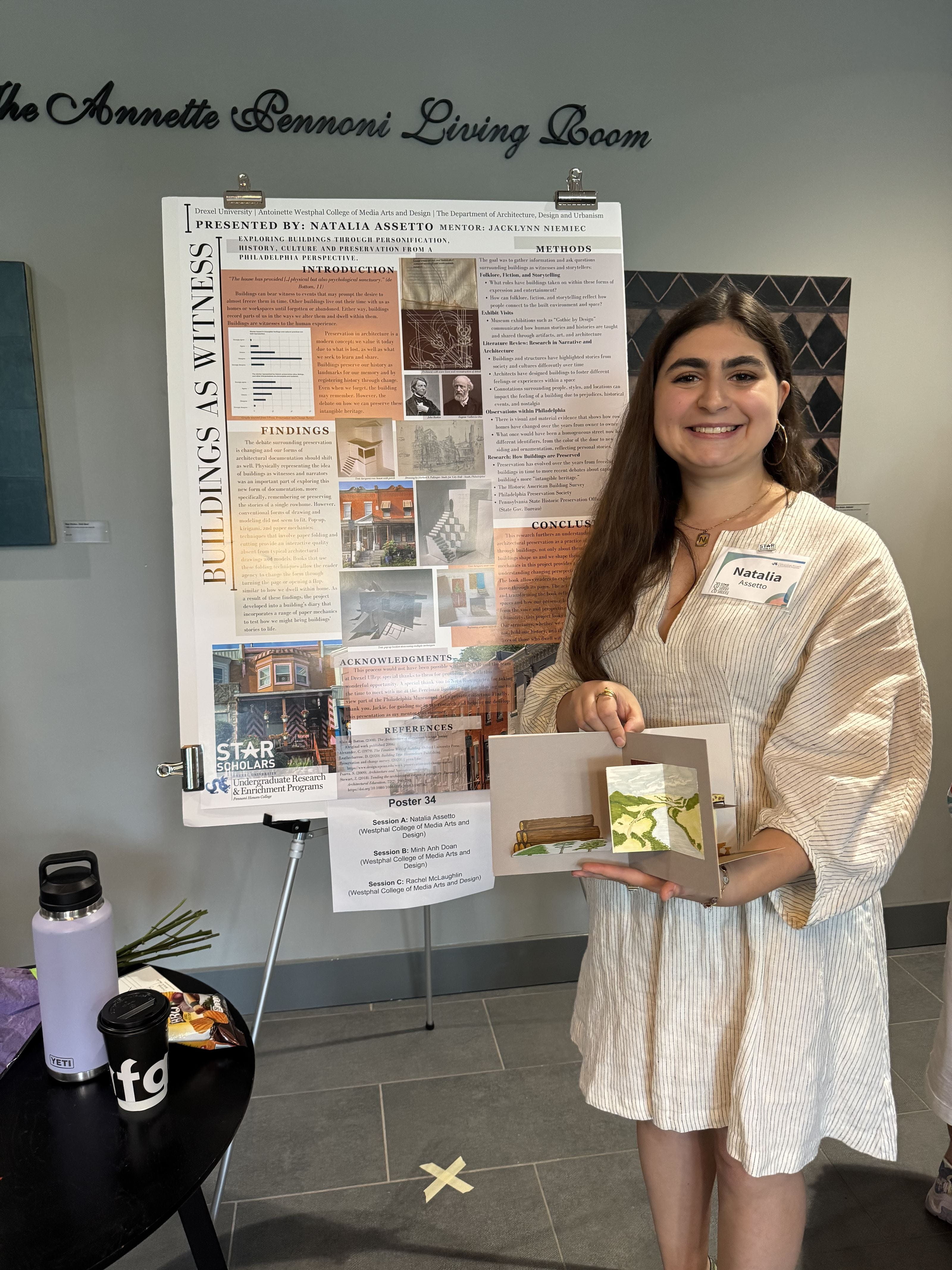
Assetto’s research focused on building preservation, emphasizing the importance of the narrative associated with historic structures. Her summer explorations included studying buildings in Philadelphia and visiting the Metropolitan Museum of Art to understand architectural storytelling.
She created a model of a fictional Philadelphia rowhome, integrating personal stories to illustrate the intimate relationship between individuals and architectural spaces.
“This experience deepened my love for storytelling through architecture and its relation to the built environment,” Assetto shared, highlighting her commitment to this field.
These projects showcase the innovative thinking and diverse research interests of Drexel University students, bridging technology, health, and architecture through applied knowledge and creativity.


