Mysterious Galaxy NGC 4698: A Cosmic Puzzle
A galaxy located 55 million light-years away in the constellation Virgo, named NGC 4698, has been found to spin in two directions simultaneously. This unusual behavior has led astronomers to hypothesize that it may have evolved this way by consuming a smaller neighboring galaxy.
Hubble’s Stunning Capture
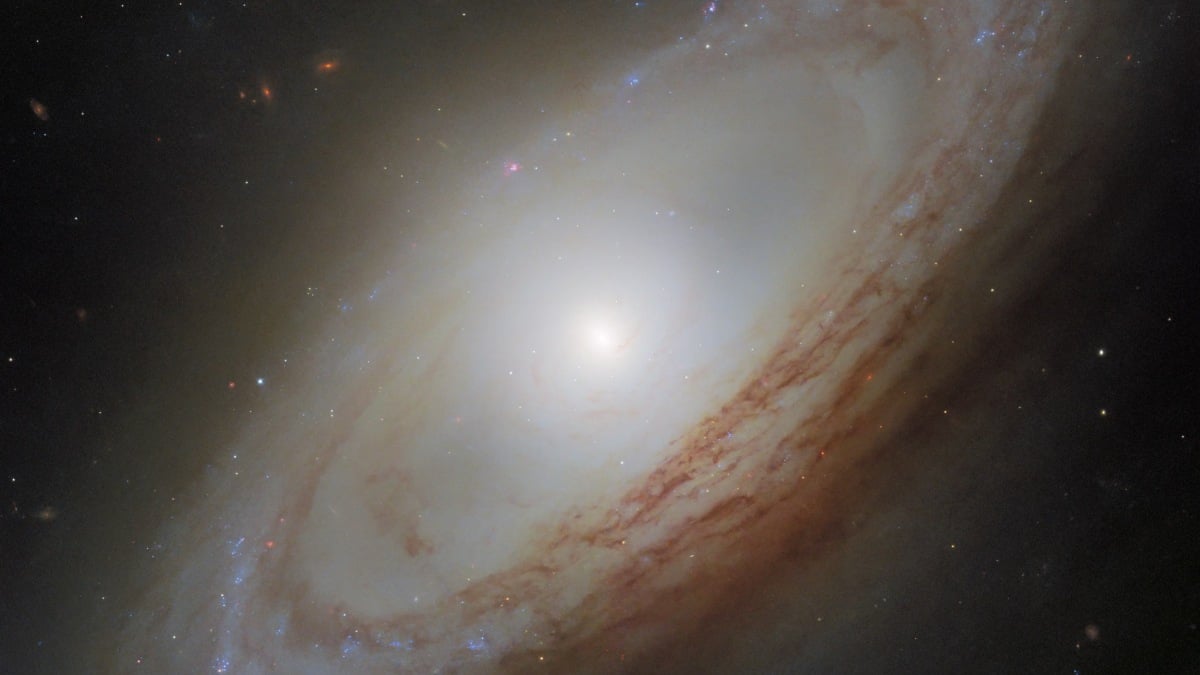
The Hubble Space Telescope, NASA’s optical light telescope orbiting Earth, captured sharp details of NGC 4698, which is one of over 1,000 galaxies in the Virgo Cluster. While galaxies typically grow by accumulating gas and smaller galaxies, NGC 4698’s dual spin suggests it has consumed another galaxy along the way. This characteristic is rare among spiral galaxies, prompting astronomers to investigate its formation further.

The NGC 4698 image comes from a Hubble project capturing features inside Virgo Cluster galaxies. (Credit: NASA / ESA)
Unique Spinning Mechanism
Imagine a doughnut spinning around your finger. NGC 4698’s bright arms form an outer ring while the center is open. A smaller “doughnut” sits in the middle, spinning differently, possibly due to gas that has fallen into the galaxy from another source. This phenomenon allows for two independent spins, where individual stars follow their own unique paths around the galaxy.
Cosmic Collisions
The suggestion that NGC 4698 may have swallowed another galaxy is supported by observations indicating a tail of hydrogen trailing from one side of the galaxy—an indication of past collisions. These interactions might have altered its structure and rotation patterns.
Scientists are also exploring what’s happening to galaxies as they navigate through busy clusters. The effects of such interactions may either lead to star formation or suppress it altogether.
Further Insights and Connections
Recent studies within our own Milky Way have unearthed ancient galactic mergers, revealing a richer history of star formation over billions of years. Similar research helps frame the broader context of NGC 4698’s development and its place in cosmic structure.
In summary, NGC 4698 stands as a fascinating case study for astronomers keen on unraveling the complexities of galaxy evolution and interaction. The pursuit of understanding these celestial structures continues to reveal the universe’s intrinsic beauty and complexity.


