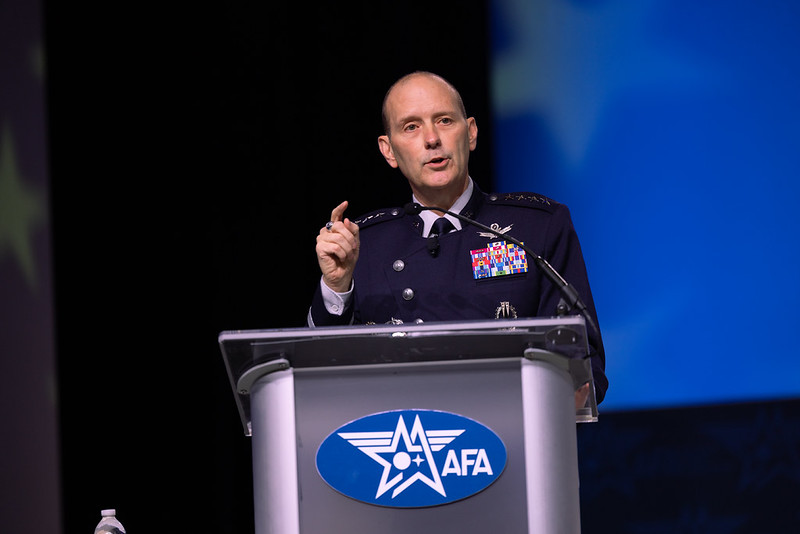
Space Force Faces Budget Challenges Amid Continuing Resolution
NATIONAL HARBOR, Md. — Chief of Space Operations Gen. Douglas Schiess has indicated that approximately 10% of the Space Force’s programs will be affected by the ongoing continuing resolution (CR) for the upcoming fiscal year. Congress recently passed a CR to fund the government through December 11, avoiding a shutdown but extending a budget stalemate that many expect to linger.
Under the CR, government agencies—including the Defense Department—will operate at previous funding levels, putting new programs on hold until a full-year appropriation is approved. While Schiess expressed gratitude for the temporary funding measure, he emphasized the urgent need for a complete budget, stating, “It’s going to slow us down, and the threat is not slowing down.”
Historically, the Pentagon has had to work within the confines of continuing resolutions, having begun fiscal years without new appropriations in 38 of the last 50 years. Schiess noted that the Space Force has operated under CR conditions for more than half of its seven-year history, but this year stands out due to a considerable budget increase that the service requested for fiscal 2027—$71.1 billion compared to $31.6 billion last year, aiming to expand its personnel from around 10,000 to 20,000 Guardians.
Chief Master Sergeant of the Space Force John Bentevigna stressed the importance of moving forward with the acquisition process to obtain necessary systems for the mission. The CR also arrives at a critical moment when the Space Force aims to accelerate its acquisition processes, including plans to deploy large fleets of new targeting, tracking, and communication satellites.
As Erich Hernandez-Baquero, the assistant secretary of the Air Force for space acquisition and integration, noted, the budget impasse will likely hinder the “ramp up” efforts initiated in fiscal ’26.
Reconciliation Challenges
Further complicating the situation is the Defense Department’s dependence on a $350 billion reconciliation package to augment a $1.15 trillion base budget request. This package, which remains stalled in Congress, encompasses key Pentagon priorities like $17 billion for Golden Dome and $12 billion for Space Force initiatives including Space-Based Air Moving Target Indication and the Space Data Network.
Air Force Secretary Troy Meink highlighted that without a budget—including both the base and reconciliation requests—achieving the intended growth of the Space Force would be difficult. While he believes there is broad support in Congress for these initiatives, he stressed the need for timely passage of the budget to keep progress on track.


