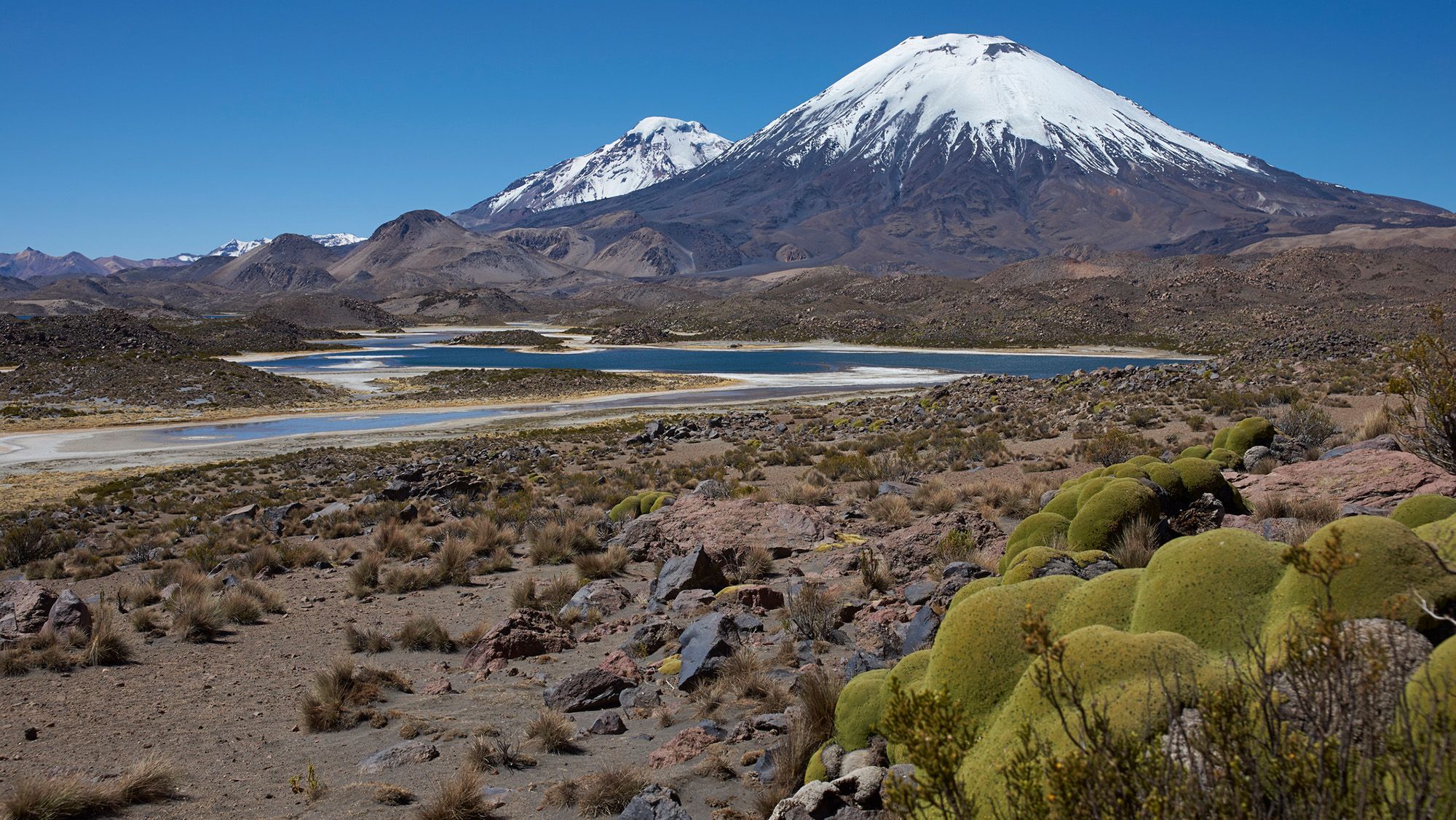
A volcanic eruption 22 million years ago captured the early formation of the Andes, showcasing a gradual rise rather than abrupt peaks. The eruption, from the Lauca Caldera in northern Chile, laid down ignimbrite, a volcanic rock from powerful pyroclastic flows akin to those that buried Pompeii.
Recent research published in Science Advances indicates that this layer covered rolling foothills rather than jagged mountains. Byron Adams, a geomorphologist from University College London, highlighted how both small and large eruptions can preserve significant historical geological moments.
The study reveals that before the eruption, the Andes were uplifting slowly—about 0.16 mile (0.26 km) per million years. This supports the theory that the Andes grew steadily over 40 to 50 million years, contrasting with the idea of a rapid rise in the last 6 to 10 million years. The method developed can potentially be applied to analyze other major mountain ranges globally.


