Exploring IC 348: Insights from NASA’s James Webb Space Telescope
Overview of Observations
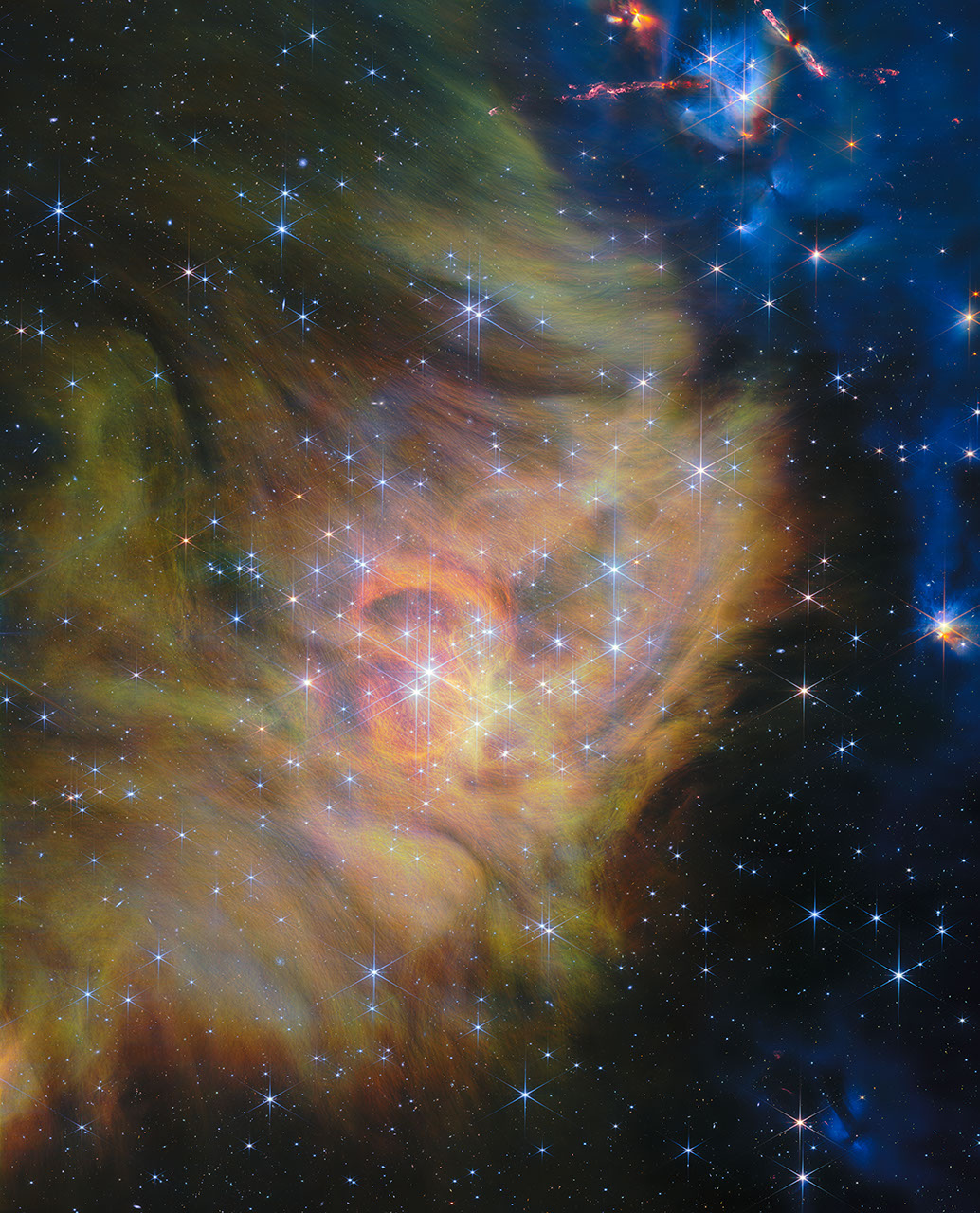
NASA’s James Webb Space Telescope (JWST) captured a stunning view of IC 348, a star-forming region approximately 1,000 light-years away in the constellation Perseus. This expansive image is one of the largest released by the telescope, showcasing the dynamic processes of star formation and the discovery of unusual astronomical objects.
Nature of Brown Dwarfs
In their pursuit of knowledge surrounding star formation, astronomers focused on the intriguing class of objects known as brown dwarfs—substellar entities with masses less than 8% of the Sun’s mass but more than that of Jupiter. Webb’s observations revealed brown dwarfs with masses as low as twice that of Jupiter, challenging previous models of star formation.
Star Formation Dynamics
IC 348 serves as an excellent laboratory for studying stellar evolution, where dense clouds of molecular hydrogen collapse to create stars. As stars form, they initiate a complex interplay of phenomena, resulting in diverse types of stellar objects ranging from massive stars to faint brown dwarfs.
Key Discoveries
- Mass Range: Webb identified brown dwarfs at unprecedented low masses, some at just 0.19% of the Sun’s mass.
- Planet Formation Indicators: One of the identified brown dwarfs was observed to have a disk structure, hinting at the potential for planetary formation around it.
- Chemical Signatures: The telescope detected unique hydrocarbon features in low-mass brown dwarfs, suggesting they may possess distinct spectral characteristics.
Detailed Imaging and Analysis
Using the Near-Infrared Camera (NIRCam) for initial imaging followed by spectral analysis with the Near-Infrared Spectrograph (NIRSpec), researchers could classify and examine the properties of the observed celestial bodies effectively.
Stellar Jets and Herbig-Haro Objects
The upper right corner of the JWST image showcases an intricate web of protostars and Herbig-Haro objects, where energetic jets from young stars collide with surrounding material. Notable examples include structures identified as HH 797 and HH 211, which demonstrate the dynamic nature of star-forming regions.
Research Initiatives
The data collected are part of the General Observer Program, aiming to deepen understanding of the population of planetary-mass objects in various star-forming regions and discover the origins of unique hydrocarbon features.
Looking Forward
The James Webb Space Telescope continues to be an unparalleled tool in unraveling the complexities of our universe, offering insights into both local and distant celestial phenomena. For further information, refer to NASA’s JWST website.
Key Images from the Study
- Main Observation of IC 348
- Collage of Features including brown dwarfs, protostars, and Herbig-Haro objects.
For more details and to download images in various resolutions, continue exploring the links provided in the original article.


