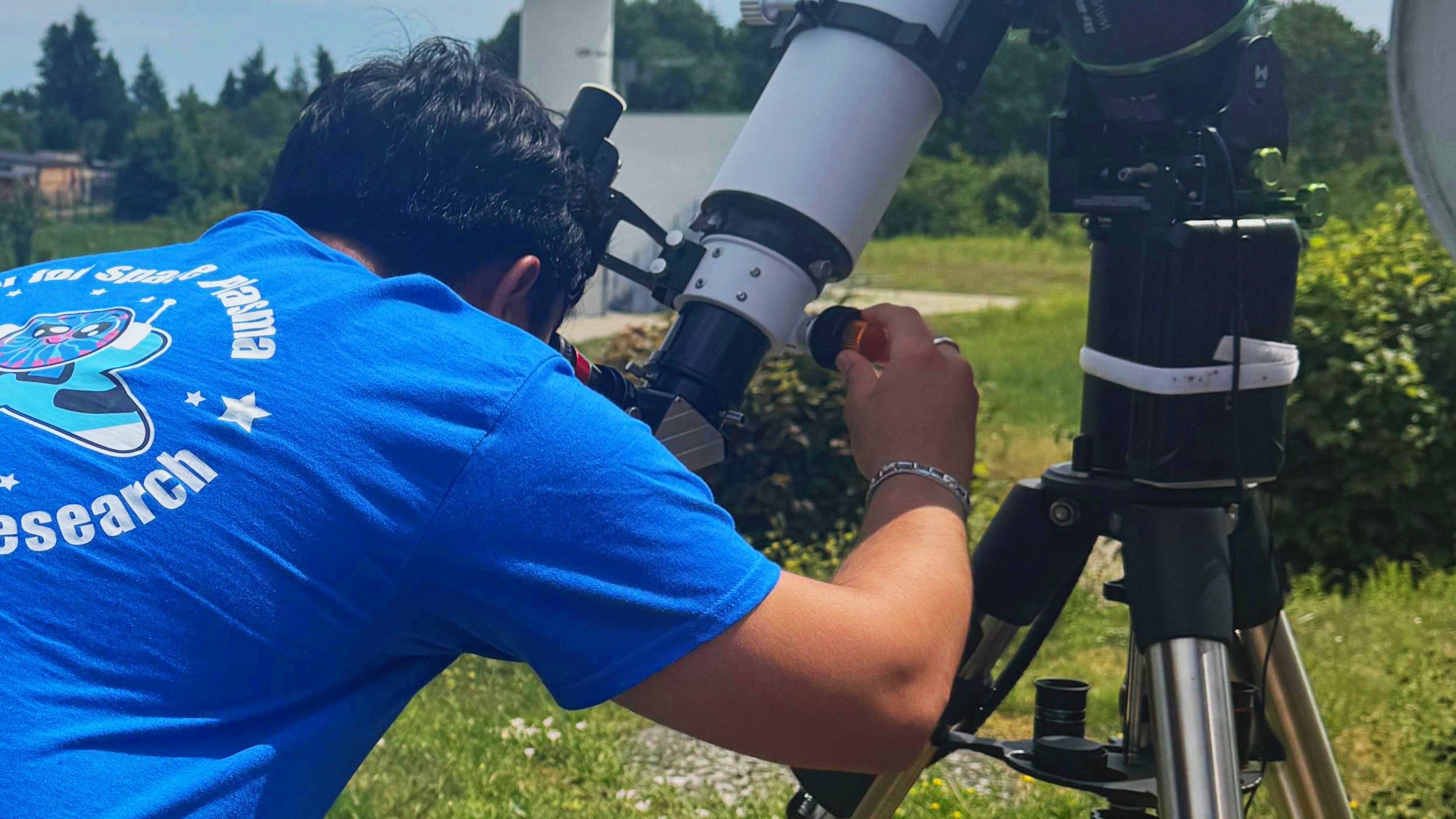
Fernando Salinas, an aerospace engineering student from Honduras at The University of Alabama, ventured into new territory this summer by participating in the International Space Weather Camp. Initially feeling overwhelmed as the only engineering major among physics students, Salinas quickly adapted to the challenges of this unique research experience.
The camp, split between Huntsville and the German Aerospace Center in Neustrelitz, Germany, allowed students to explore the specialized field of space weather. Despite having no prior knowledge about this topic, Salinas embraced the opportunity, recognizing the limitations of typical summer internships for international students.
Through the program, he completed two research projects. One involved using machine learning to predict coronal mass ejections (CMEs), which can disrupt technology on Earth. Working with a public database, Salinas and his team identified patterns that could improve predictions of these events.
During the second part of the program, he engaged in a forensic approach to studying the storm events, reconstructing details of the significant Mother’s Day storm of 2024. This experience taught Salinas the importance of collaboration across disciplines and highlighted the international nature of aerospace studies.
Salinas’s enthusiasm for his work and the insights gained reflect his belief that space exploration transcends borders, underscoring the value of global cooperation in this vital field.


