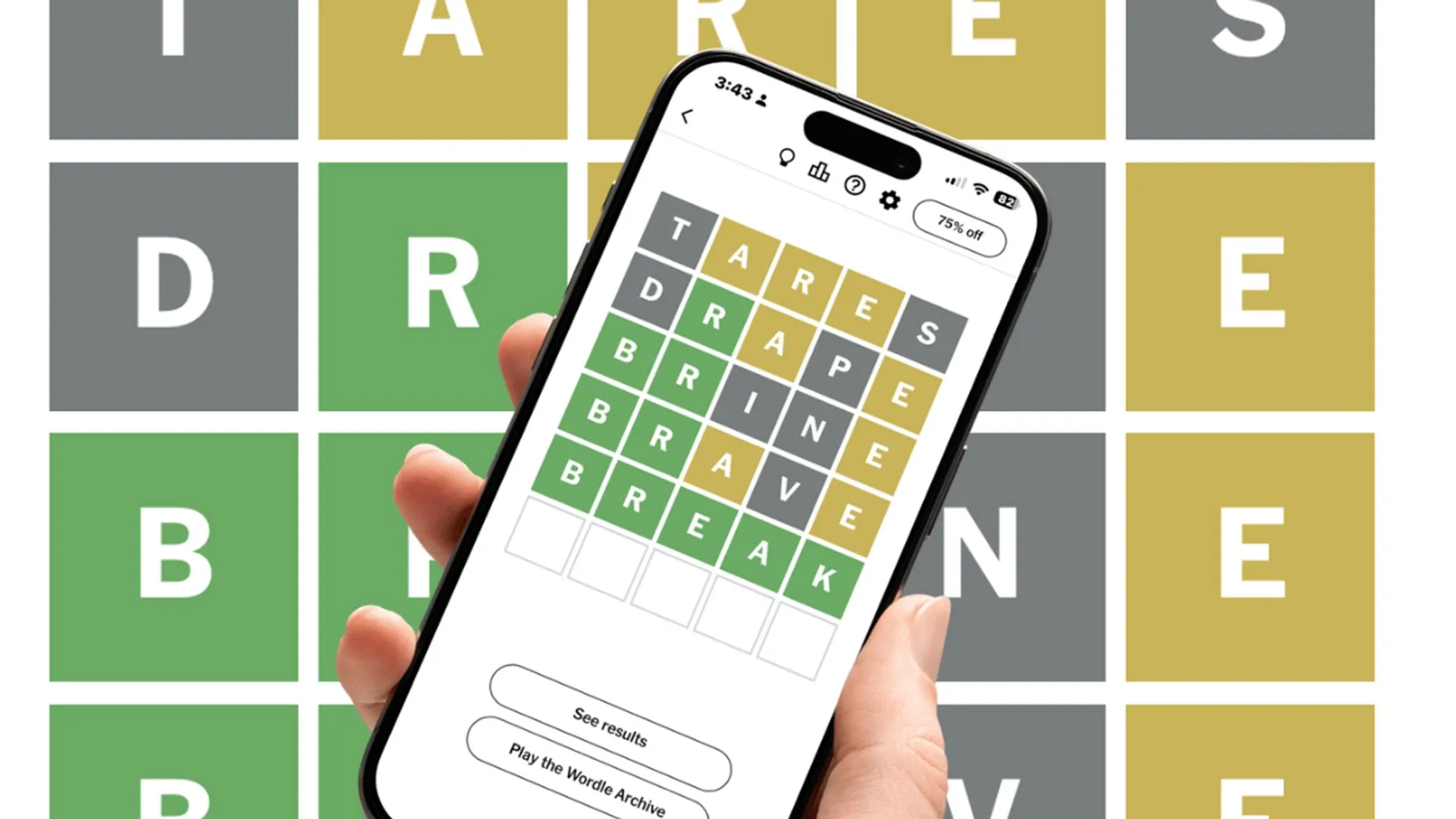
The Binghamton University research reveals how applying information theory can enhance strategies for solving Wordle puzzles, achieving a 99% success rate in simulations. Instead of guessing the most likely word, their method focuses on selecting words that provide the most useful information to narrow down options.
Key Insights:
-
Understanding Wordle: Players have six attempts to guess a five-letter word, receiving color-coded feedback after each guess:
- Grey: Letter not in the word.
- Yellow: Letter in the word but in the wrong position.
- Green: Letter in the correct position.
-
Shannon Entropy: The researchers utilized Shannon entropy, which measures uncertainty and helps determine the most informative guesses. The goal is to maximize the elimination of possibilities rather than simply aiming for the correct answer.
-
Counterintuitive Strategies: The approach suggests that seemingly unlikely guesses can still be beneficial if they narrow options effectively. The focus is on gaining maximum information for future guesses.
-
Comparison With Common Strategies: The information theory method outperformed traditional strategies, solving 99% of puzzles vs. 90% with frequent letter choices.
-
Educational Impact: Originating as a classroom project, the research exemplifies the practical application of mathematical concepts in real-world scenarios, emphasizing decision-making alongside theoretical learning.
In summary, this study transforms the approach to Wordle by prioritizing information maximization, showcasing how mathematical principles can enhance problem-solving in everyday tasks.


