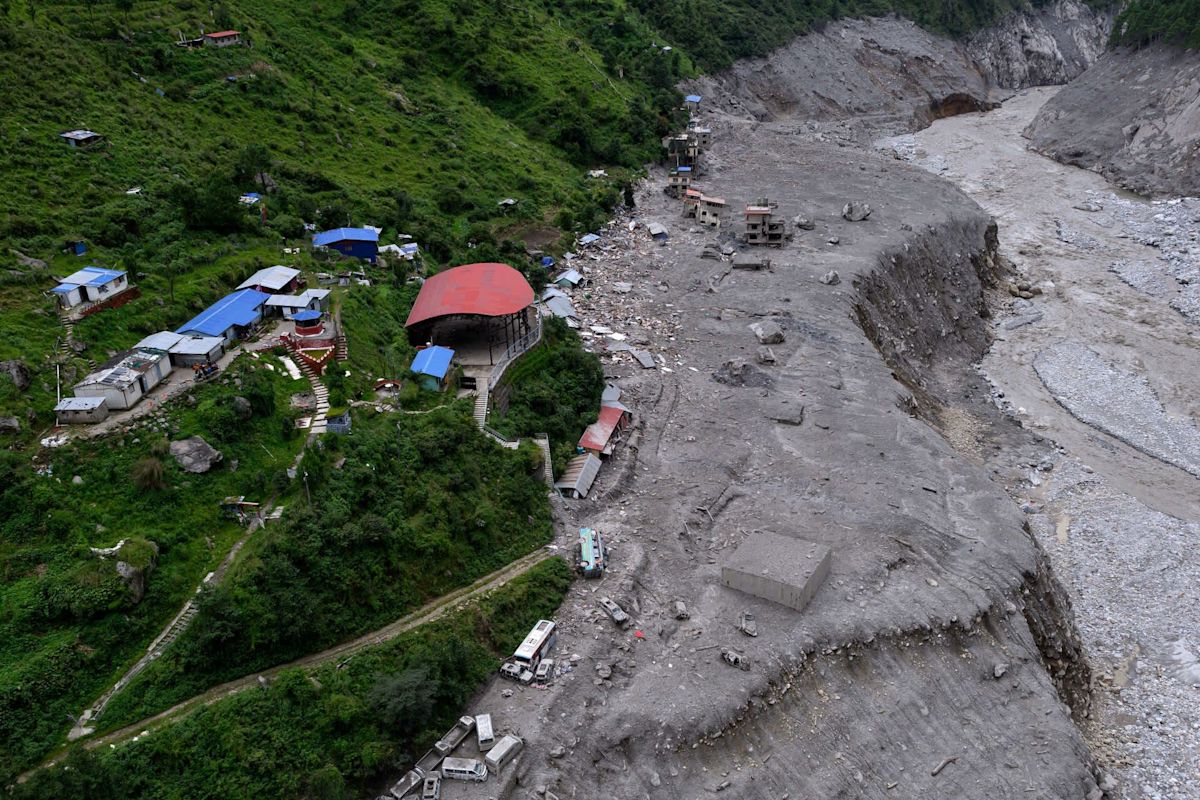
Deadly Mountain Collapse Near Nepal-Tibet Border
A catastrophic mountain collapse near the Nepal-Tibet border resulted in over 1,300 fatalities and left thousands missing. Researchers believe that rising temperatures and glacier retreat are contributing to the frequency of such disasters.
What Happened
On August 26, nearly 7 billion cubic feet of rock and ice collapsed, plunging into a river below and creating a mud-filled surge that traveled at speeds up to 100 mph. The mass was equivalent to filling 100 football stadiums, leading to the destruction of villages many miles downstream.
Why This Occurred
As glaciers melt, mountain slopes can become unstable due to:
- The release of loose silt and rock.
- Weakened ground from thawing permafrost.
- Meltwater seeping into bedrock cracks.
Mark Carey from the University of Oregon highlights that glacial loss destabilizes slopes in unpredictable and catastrophic ways.
Challenges in Prediction
The Himalayas’ numerous glaciers are located in remote areas, making constant monitoring challenging. In contrast, some regions like Juneau, Alaska, have effective monitoring systems to predict glacier-related flooding.
Preventative Measures
Preparation is crucial. Successful interventions have been seen in:
- Peru’s efforts to manage high-risk glacial lakes.
- Emergency evacuations in Switzerland.
Scientists are exploring tools for enhanced warning systems, such as adapting earthquake detection networks to identify glacier-driven disasters.
Future Outlook
As glaciers are at a tipping point, rising temperatures are expected to lead to an increase in incidents like the reported collapse. Awareness and monitoring are key to mitigating risks associated with melting glaciers.
Learn More
- Higher Glacial Lakes are increasing flood risks.
- Global Damage to Glaciers is often irreversible.
- A Cascading Crisis from glacier melt threatens agriculture and water supplies.
Monitoring and preparedness are essential as mountain ice continues to diminish.


