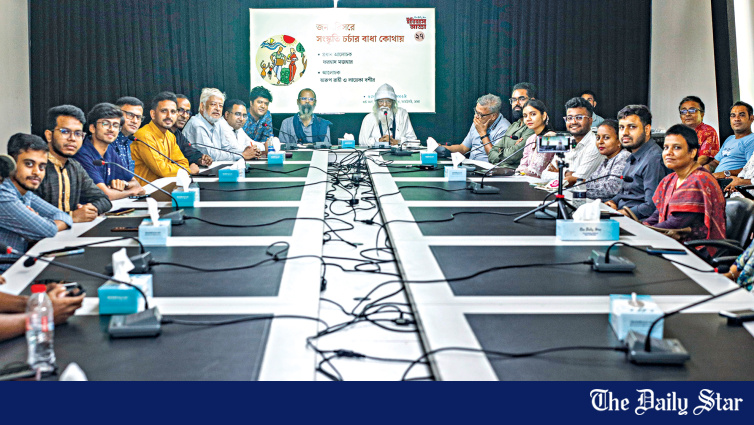
The discussion highlighted the multifaceted cultural crisis in Bangladesh, emphasizing the struggle over understanding history, identity, and the interplay between culture and religion. Key speakers called for deeper engagement with these issues beyond simplistic narratives, stressing the need to explore Bangladesh’s unique post-colonial context.
Researcher Arup Rahi pointed out that many cultural debates are constrained by colonial frameworks and urged a critical examination of democracy within the country’s capitalist structure. He highlighted the diverse interpretations of Islam throughout history and criticized the polarized views that hinder meaningful discussions about culture and religion.
Farhad Mazhar, a poet and philosopher, advocated for recognizing the distinction between public opinion and philosophical truth, emphasizing the importance of coexistence amidst disagreements. He underscored that cultural practice intertwines with political elements and calls for a nuanced understanding of the socio-historical context.
Artist Layeka Bashir expressed concern over the declining presence of cultural practices in daily life, recalling how communal musical expressions have dwindled. She noted societal fears around culture being perceived as a threat to religion and attributed the decline in cultural engagement to decreasing reading habits and intellectual curiosity.
The discussion encapsulated a call for revitalization in cultural practices and a deeper understanding of how societal dynamics shape these challenges. Moderated by journalist Emran Mahfuz, the event served as a crucial platform for addressing these pressing cultural issues in Bangladesh.