NASA’s “Interworld Slingshot Resource Surveys”
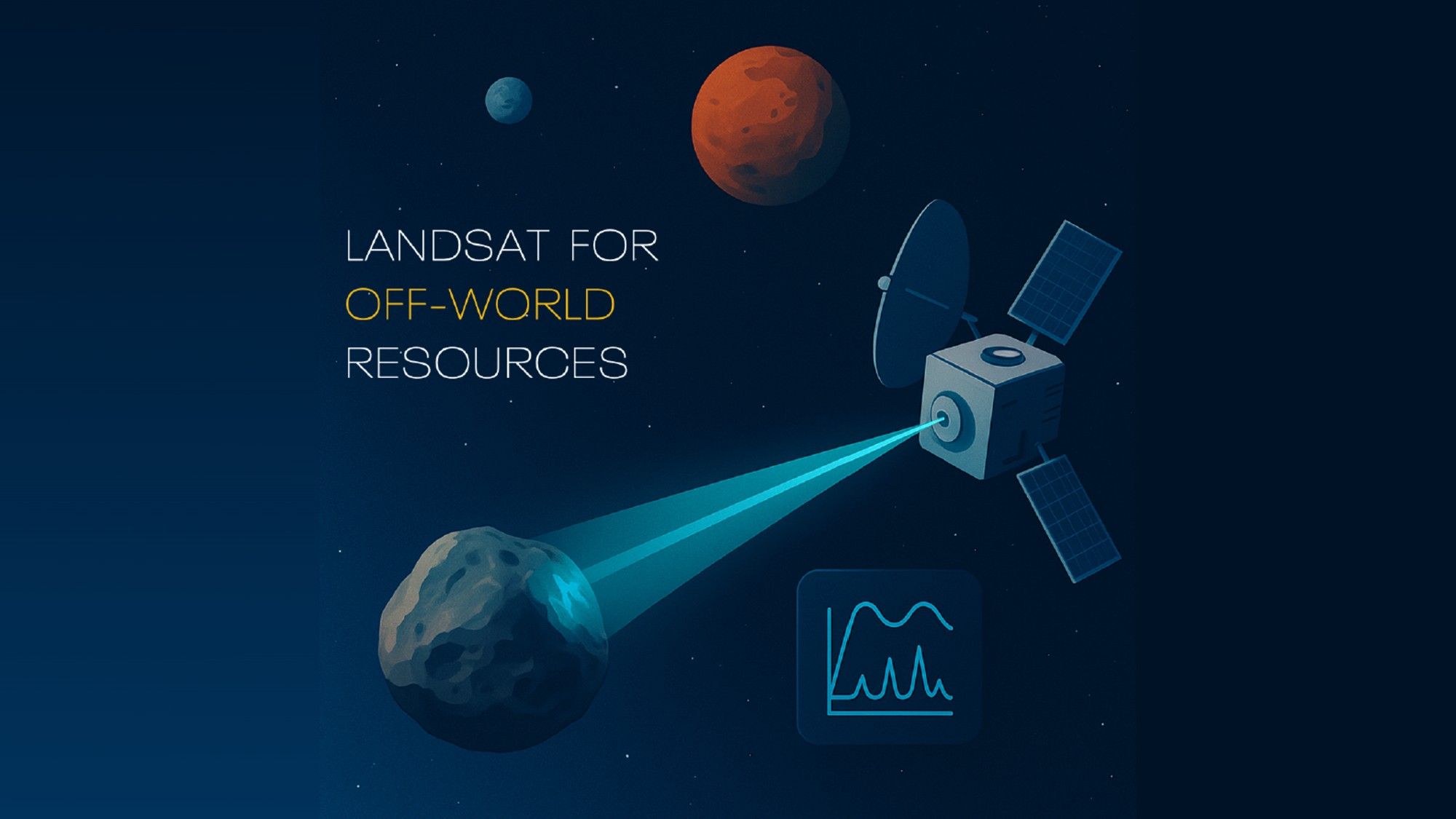
NASA is venturing beyond Earth with its new project, Interworld Slingshot Resource Surveys, which aims to apply the successful model of Landsat satellites—known for monitoring minerals and climate changes—to explore resources on other celestial bodies, including the Moon.
The Mission’s Goals
The project serves as a Phase 1 study for a future Discovery-class mission, focusing on the feasibility of using a small spacecraft to survey various destinations like the Moon, near-Earth asteroids, and Mars’ moon, Phobos. Principal investigator Pablo Sobron, a researcher from the SETI Institute, emphasizes the necessity of identifying valuable resources before establishing a lunar base, particularly as the U.S. strives to secure access to resources such as helium-3.
Methodology
The Interworld Slingshot concept will leverage Raman spectroscopy, a technique that analyzes reflected light to determine mineral composition. This technology has proven effective at close range, such as during NASA’s Perseverance mission on Mars, but the aim is to adapt it for use from several kilometers away, ideally between 30 to 50 kilometers (19 to 31 miles).
Overcoming Challenges
The project is aware of the challenges posed by distance, as diagnosing materials via Raman scattering can be difficult—the technique produces only about one photon in ten trillion. Sobron mentions the risk associated with potential misplacement of mining efforts, stressing the need for precise data before making significant investments.
Funding and Future Prospects
The NASA Innovative Advanced Concepts (NIAC) program has awarded the project up to $175,000 for the initial study, with intentions to seek additional funding in the future for a more extensive investigation.
This initiative represents a significant step towards not only understanding resources beyond Earth but also ensuring that future exploration efforts are both economically and strategically viable.