The Proposal for a U.S. Space Academy
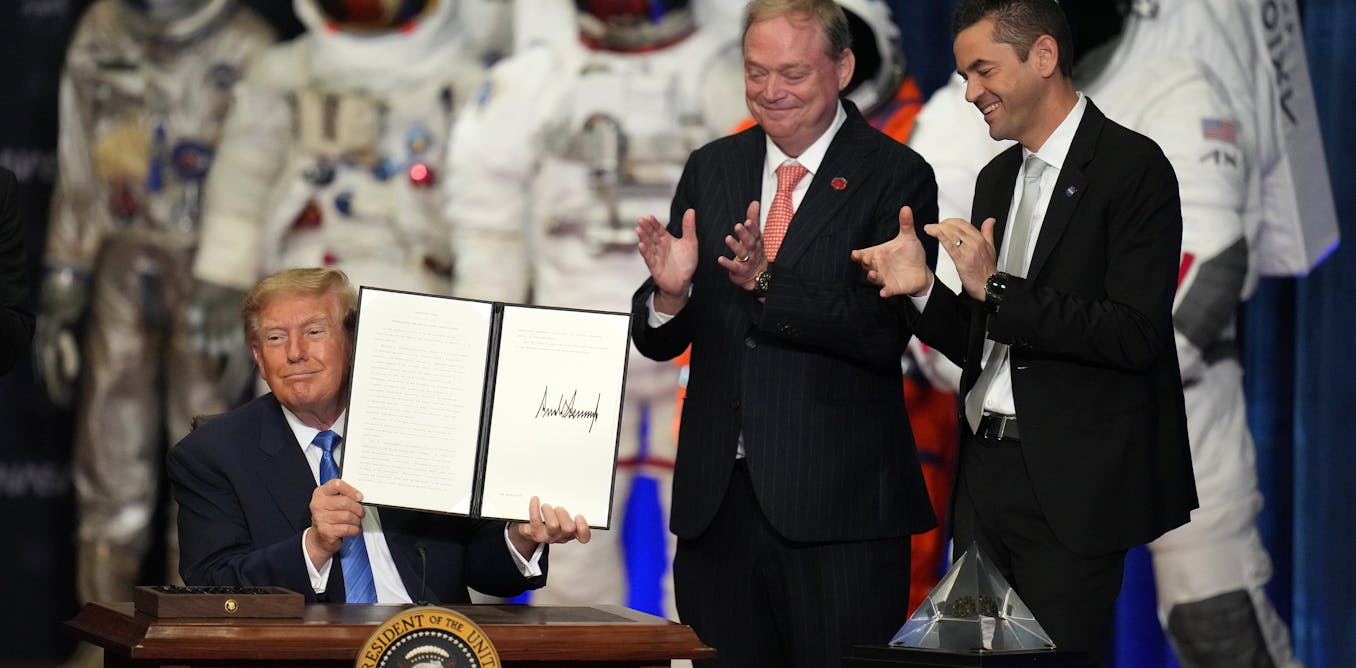
During a visit to NASA’s Johnson Space Center on August 28, 2026, President Donald Trump signed an executive order aimed at creating a United States Space Academy. This new initiative is designed to function similarly to military academies, focusing on training future leaders in space exploration and related fields.
Historical Context
Trump’s actions supporting space exploration during his presidency include establishing the Artemis program in 2017, which aims to return astronauts to the Moon. He also initiated discussions around a dedicated military branch for space, resulting in the creation of the Space Force in 2019. His continued interest in space is evidenced by the recent announcement of the Space Academy.
In his speech, Trump emphasized that the Academy would serve both NASA and the U.S. Space Force, reflecting a dual focus on military and civilian applications of space expertise.
Structure and Oversight
While the executive order does not immediately establish the Academy, it creates a commission led by Jared Isaacman, the NASA administrator, tasked with assessing the feasibility of the initiative. The commission will include high-ranking officials from the Department of Defense and the Office of Management and Budget.
The order states the goal of the Academy is to cultivate a cadre of leaders equipped to advance U.S. interests in space, marking it as a unique federal institution distinct from military service academies.
Open Questions and Challenges
Several significant questions arise regarding the Space Academy:
-
Military and Civilian Relationship: Concerns have been raised about the relationship between the Space Academy and military operations. Historically, U.S. policy has kept civilian and military space efforts separate. The potential blending of these realms may provoke debate regarding the role and training of Academy graduates.
-
Curriculum Development: The curriculum for the Academy remains unclear. Will it prioritize military training or focus on scientific exploration and civilian applications? The balance between these aspects is crucial.
-
Funding Requirements: Establishing a new federal academy will require congressional approval and significant funding. Initial estimates suggest that a new academy could cost billions per year, which poses financial hurdles, especially since NASA often faces budget cuts.
-
Selection Process: Questions about how students will be selected and what degrees will be offered at the Academy are pivotal. This information will determine the Academy’s operational framework.
Implications
The establishment of a U.S. Space Academy could be pivotal, especially as the importance of space-based activities increases in various aspects of life, from communication networks to navigation systems. This Academy could train future professionals in the space sector, enabling them to tackle challenges in both civilian and military contexts.
However, the proposed Academy raises fundamental issues regarding the clarity of military versus civil space operations. Clear distinctions are essential in light of rising tensions with potential adversaries in space, to avoid misinterpretations of U.S. intentions.
The concept of a Space Academy should also be evaluated against existing educational programs in civilian universities. Opportunities for collaboration with commercial space organizations could further enrich the Academy’s offerings.
As this proposal unfolds, addressing these challenges and refining the mission of the U.S. Space Academy will be critical to its success and legitimacy within the broader context of U.S. space policy.