NASA’s Nancy Grace Roman Space Telescope Mission
The Nancy Grace Roman Space Telescope has embarked on a mission to explore the mysteries of dark matter, dark energy, and the evolution of the Universe.
Launch and Journey
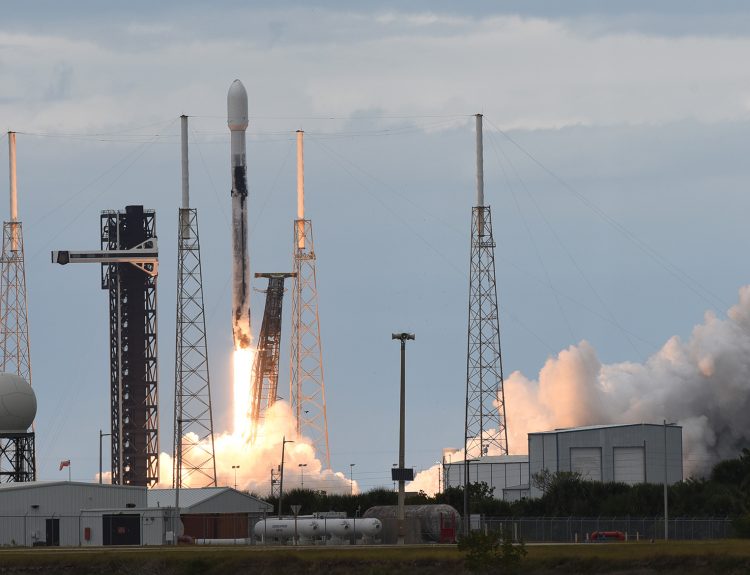
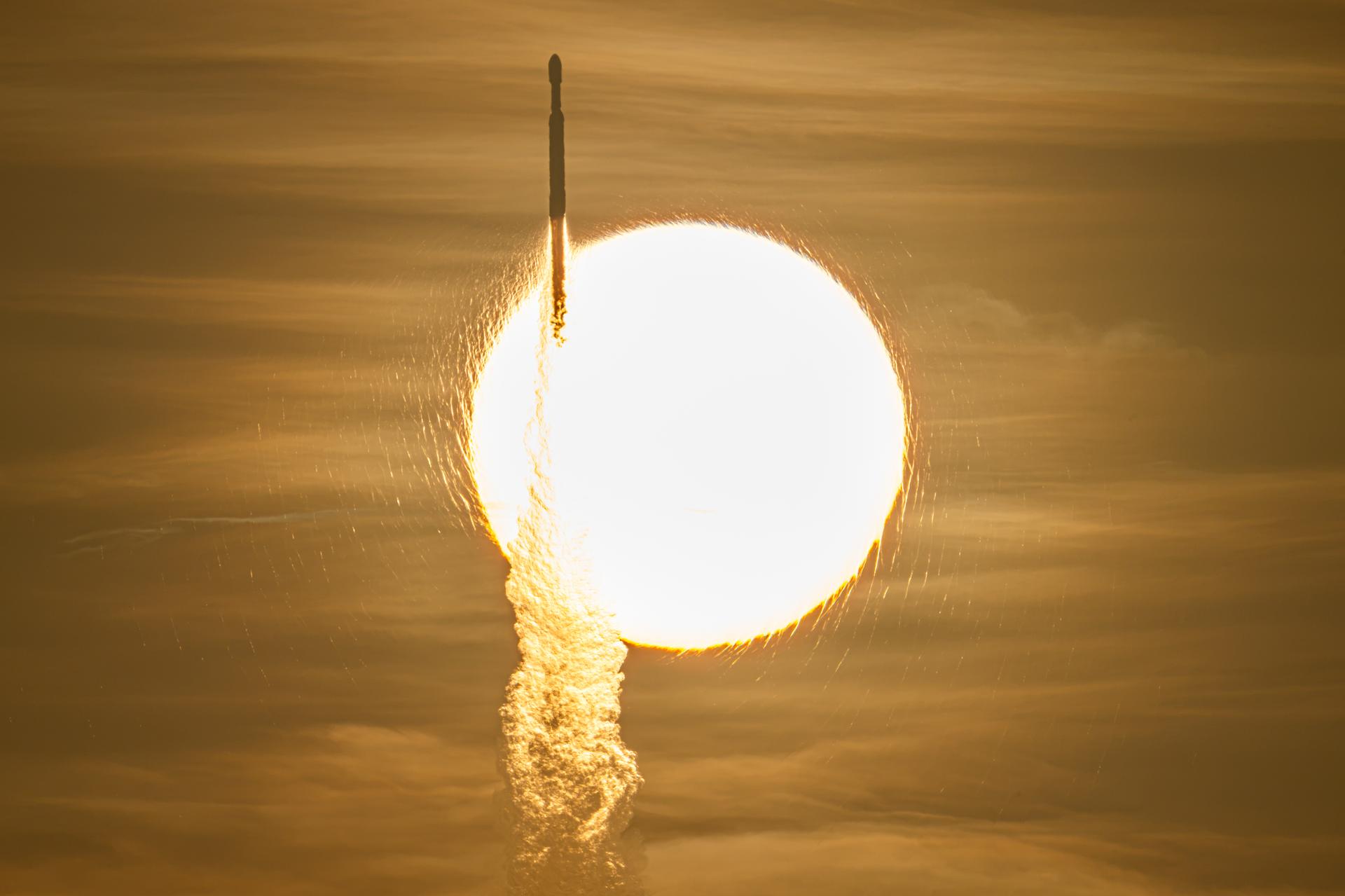
The mission launched from NASA’s Kennedy Space Center in Florida on a SpaceX Falcon Heavy rocket at 7:26 am EDT on Sunday. It’s currently on a three-month journey to its operational position around the second Sun-Earth Lagrange point (L2), approximately one million miles from Earth. Telemetry was received seven minutes post-launch, and the telescope separated from the Falcon Heavy 31 minutes into the flight. It has successfully deployed its solar panels and lower sunshade.
NASA Administrator’s Statement
NASA Administrator Jared Isaacman described the mission as a significant success, noting, “Roman is exactly the kind of success story we want to see across NASA.” He highlighted that the mission was delivered ahead of schedule and on budget, representing years of dedication from the NASA workforce and industry partners.
A New View of the Dark Universe
The Roman Space Telescope aims to revolutionize our understanding of the dark Universe, focusing on the elusive concepts of dark matter and dark energy.
- Dark Matter: Although not directly observable, its gravitational influence is detectable through effects on galaxies and cosmic structures.
- Dark Energy: This even more mysterious force is believed to drive the Universe’s accelerating expansion.
The telescope will generate extensive maps of galaxies and assess how cosmic structures evolve over time, ultimately examining current models of dark matter and dark energy to determine if new physics are required.
Surveying the Sky at Unprecedented Speed
Equipped with a Wide Field Instrument featuring a 300-megapixel infrared camera, the Roman Telescope can survey the Universe at approximately 1,000 times the speed of the Hubble Space Telescope.
- Data Transmission: The mission anticipates transmitting around 1.4 terabytes of data daily, marking the highest data rate for a NASA astrophysics mission.
Advanced technologies such as AI, machine learning, and citizen scientists will assist in processing these vast datasets for significant discoveries.
Roman’s Journey to L2
After launch, Roman utilized NASA’s Near Space Network for communication before switching to the Deep Space Network. Critical deployment milestones still await, including the activation of its high-gain antenna and aperture cover, as well as the performance of its first trajectory correction.
Technological Demonstration
The telescope will also activate its Coronagraph Instrument, aiming to enhance the direct imaging capabilities for future telescopes exploring exoplanets. Roman will initially target Jupiter-sized worlds to test this technology.
First Images Expected in 2027
Weeks into its journey, NASA plans to activate the Wide Field Instrument. The commissioning period will focus on calibrating the telescope and testing its instruments, with the first images anticipated in early 2027.
Broad Scientific Impact
While the missions primarily target dark matter and dark energy, Roman’s observations will extend to galaxy formation, cosmic evolution, and exoplanet research. The vast astronomical dataset generated will provide researchers with extensive resources for years to come.
Conclusion
The successful launch of the Nancy Grace Roman Space Telescope marks the beginning of one of NASA’s most important astrophysics missions, equipping scientists with powerful tools to delve into the mysteries of the dark Universe and understand the cosmos’s evolution.