The Mumford family’s journey highlights a growing trend among Australian families who are seeking alternatives to traditional schooling and conventional living. Inspired by the increasing cost of living and the flexibility offered by remote work, they have embraced “worldschooling,” an educational approach that combines travel and learning in diverse cultural settings.
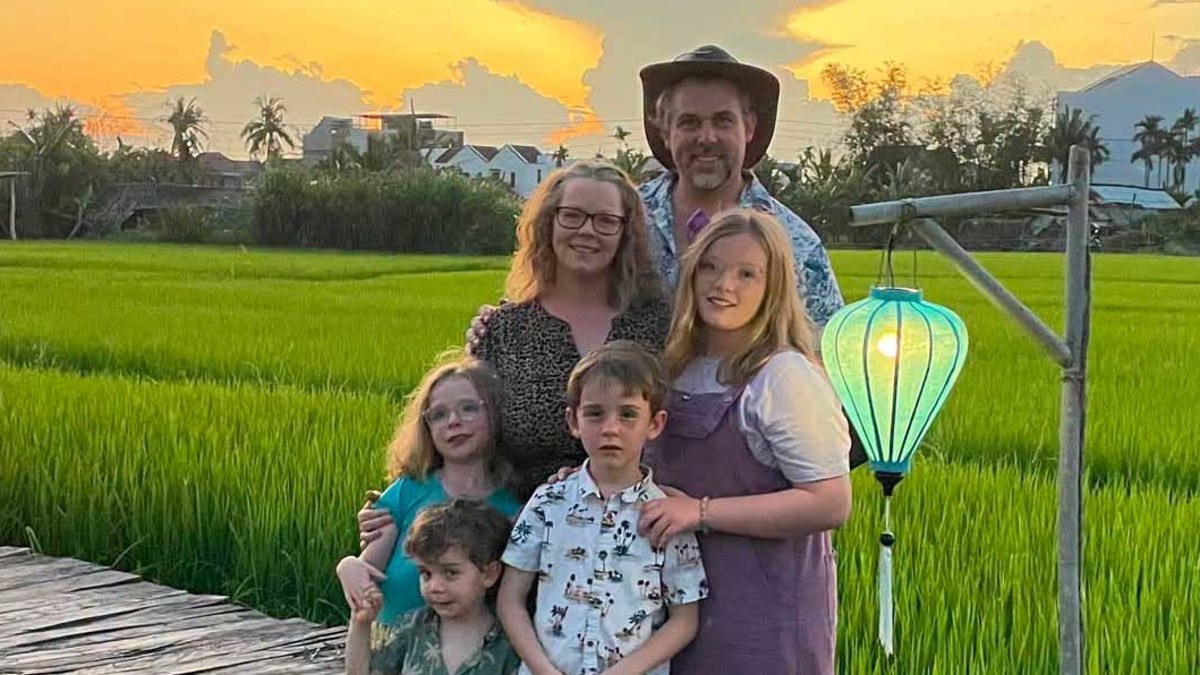
Brad and Nicky Mumford, initially from Adelaide, embarked on their adventure two years ago, transitioning from a hectic lifestyle filled with demanding jobs and financial pressures to a more enriching experience teaching their children about the world. They began with a caravan trip across Australia, which evolved into an extended stay in central Vietnam, where they continue to educate their children through real-world experiences, like exploring local history and community participation.
Another example, Bethany and Rio Butler from Queensland, are worldschooling their two children while running a creative business that supports family retreats globally. Their experiences reflect the core benefits of worldschooling: facilitating cross-cultural friendships and fostering creativity.
Aileen Abbott, who recently entered homeschooling, expressed profound changes in her children’s well-being since leaving the traditional school system. She sees worldschooling as a way to prepare her children for an unpredictable future, emphasizing skills like problem-solving and creativity over rote memorization.
These families are part of a broader movement of approximately 40 million digital nomads worldwide. Through social media, communities develop that encourage families to share their experiences and provide peer support, helping to make worldschooling a feasible option for many.
Ultimately, despite the romance of traveling the globe, these families understand that real life—complete with its challenges—follows them wherever they go, but the choice to prioritize their children’s education and family time ultimately guides their decisions.