In an effort to protect their community, residents of Douglas County, Kansas, are taking proactive measures against potential data center developments. This agricultural region aims to fortify its land against what they perceive as a significant threat to their way of life. Similar strategies are being adopted by other communities as they prepare to confront the challenges of data centers encroaching on their lands.
By Julie Zenderoudi, an editorial intern at The New Lede. She previously worked for Canada’s public broadcaster, CBC News, producing interview segments for national broadcasts and explainer videos. Her work has appeared in Slate, Offrange, Prism, The Brooklyn Paper, and elsewhere. Originally published at The New Lede
A group of residents in Lawrence, Kansas, has banded together under the name “Data Center Watchdogs.” Meeting weekly at their local library, they are gearing up to combat what they believe poses a threat to their small college town, which is encircled by farmland.
Their primary concern is the potential establishment of a data center in Lawrence or the broader Douglas County area. Currently, there are no applications for data center constructions in Douglas County, yet proposals loom in neighboring towns. The watchdogs assert that an organized resistance, along with insights from similar advocacy efforts, could deter developers from pursuing these projects altogether.
“We have a very strong culture of preserving our prime farmland,” noted Nancy Thellman, a former county commissioner and farmer residing on the outskirts of Lawrence.
Douglas County, located about an hour from Kansas City, is rich in farmland, complemented by the Kansas River. Situated along the river’s curve is a 515-megawatt coal power plant, a feature that data centers often seek due to their substantial requirements for land, water, and energy to operate servers.
“We have virtually everything a data developer could desire,” Thellman added.
Kansas is not isolated in this challenge. As tech giants like Microsoft and Google expand their AI capacities, the demand for data centers, which consume a considerable amount of electricity, has skyrocketed. According to the FracTracker Alliance’s U.S. Data Centers Tracker, the country currently houses over 500 data centers, with an additional 159 either under construction or approved, plus 739 proposed projects waiting in the wings.
Proponents often tout the economic benefits of data centers, citing job creation, capital investment, and tax revenues. A study from Georgia Tech released in March 2026 revealed that communities welcoming data centers could experience a 3.5% increase in jobs, a 5% boost in wages, and a 2% rise in household income, with metropolitan areas reaping more substantial gains than rural ones.
That said, Daniel Yue, the study’s lead author, noted that rural counties can still gain from tax revenues or infrastructure investments, contingent on the specific tax incentives applied. “One of the main advantages… is the tax revenue from companies’ ongoing capital expenditures,” Yue explained, who is also an assistant professor of Information Technology Management at Georgia Tech.
As one of the Douglas County Data Center Watchdogs, Thellman emphasized the community’s apprehensions regarding the possible ramifications of data centers, such as loss of farmland, water depletion, and noise pollution from the centers’ cooling systems.
Another major concern is that the energy demands of these facilities might compete with local residential and commercial energy needs, potentially driving up costs.
Data centers devoted to AI can consume as much electricity as 100,000 households, according to the International Energy Agency. Goldman Sachs has forecasted that global power demand for data centers will increase by 50% by 2027 and may soar by as much as 165% by the decade’s end.
The Trump administration has been proactive in promoting data center expansion, with an Executive Order signed last year aimed at hastening the buildout of these infrastructures by reducing federal regulatory hurdles.
Recently, Trump criticized New York Governor Kathy Hochul for enacting the nation’s first statewide moratorium on new hyperscale data centers.
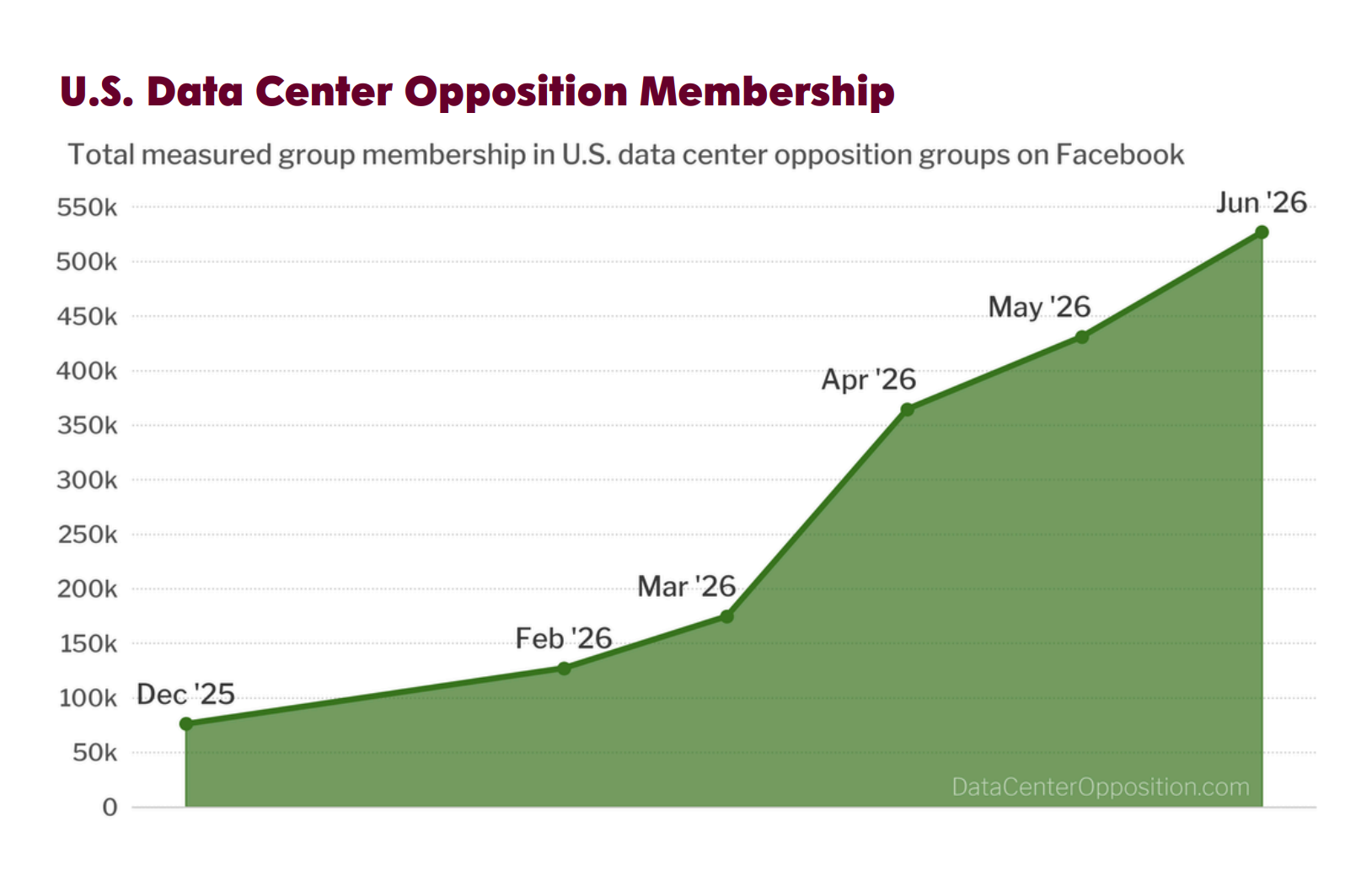
In response, communities across the nation are organizing their resistance. There are currently over 430 local Facebook groups, totaling more than 525,000 members, opposing data centers, according to the Data Center Opposition Report.
In 2025, Kansas enacted a bill that offers a 20-year state and local tax exemption for specific data center projects. Many attribute the surge in data center proposals to Senate Bill 98, which has resulted in six active proposals in the state, as tracked by Cleanview.
Thellman quoted advice from a guidebook by organizers in De Soto, Kansas, stating, “If you don’t have an active application filed in your community yet, you probably will, so prepare for it now and inform them they are not wanted before they arrive.”
“We see neighboring communities engaged in fierce battles,” Thellman remarked.
Lessons from Nearby Communities
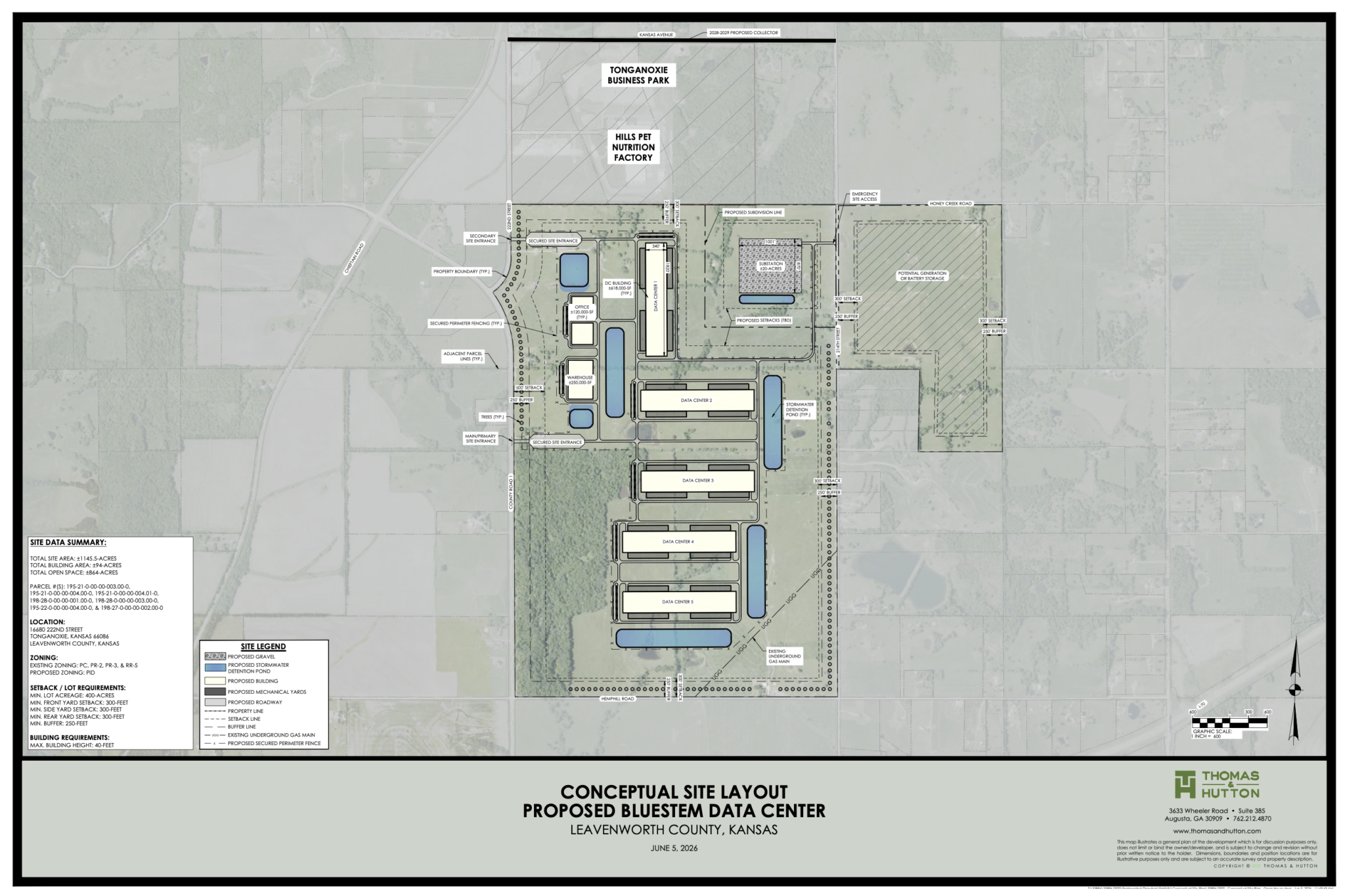
Approximately 30 minutes northeast of Douglas County, one of the largest proposed data centers in the nation is under consideration. Cloverleaf’s Project Bluestem would occupy close to 1,000 acres in Leavenworth County, equivalent to about 750 football fields.
Located just south of Tonganoxie, Project Bluestem has prompted Leavenworth County commissioners to impose a 90-day moratorium on data centers, advocated by the Tongie Data Center WatchDog Group.
Jim Karleskint, an organizer with the Tongie Data Center WatchDog Group and a former Kansas House of Representatives member, expressed his concerns, stating, “It would devastate Tonganoxie as we know it. The noise generated would disturb schools and nursing homes.”
Dee Karleskint, Jim’s wife, is similarly alarmed about the potential impact of noise on local wildlife.
A study by the University of Michigan indicates that noise pollution can adversely affect birds in terms of behavior, physiology, and reproduction. Although the study did not specifically examine data centers, Natalie Madden, the lead author and policy analyst at Defenders of Wildlife, noted that the effects would be comparable. “Data center noise could have similar impacts on birds and wildlife as other industrial sources,” Madden stated in an email.
The Karleskints have attended meetings in Douglas County, exchanging knowledge and strategies with residents there. “We must unite to learn from one another; this is vital when facing billion-dollar corporations,” Jim emphasized.
In De Soto, Kansas, construction is already underway for a 2.9 million square-foot data center. Initially proposed as a 1.14 million square-foot project by Beale Infrastructure last August, the project’s size has nearly doubled, causing frustration among local residents.
“I understand the concerns residents have when they realize the development is larger than initially envisioned. Such concerns are valid,” De Soto Mayor Rick Walker explained in an email.
Walker clarified that the design presented last year was a “preliminary concept,” and noted, “the development agreement was not meant to approve a site plan or a maximum building size.”
He also assured that the estimated electrical capacity for the project remains around 600 megawatts.
According to the city of De Soto, this project is anticipated to generate more than $300 million in municipal revenues over a 25-year period via various channels like payments in lieu of taxes, franchise fees, local sales taxes, and property taxes once the tax incentives expire.
Beale Infrastructure representatives claimed that “the project is set to create thousands of construction jobs and approximately 50 permanent full-time positions for each phase, with salaries averaging over $75,000 annually.”
Nevertheless, some residents remain skeptical about the balance of benefits over risks. “Where is the data on what these projects could potentially do to our community?” questioned Dally Holloway, a resident who is active in opposition efforts.
Holloway leads a growing national Facebook group named “Say NO to data centers,” with around 175,000 members, advocating against projects at local, state, and federal levels.
What started as a platform for her to share local information has transformed into a nationwide movement. “I initially aimed to rally my community, but soon, people from all over the country sought my guidance,” she revealed.
Holloway has created various resources, including guidebooks and pamphlets, to aid others in similar battles against data centers. One of her guides is titled “Getting Started: A Quick Guide to Community Coalition Building,” which outlines steps for forming effective coalitions and suggests attending local zoning and development meetings.
Holloway remains focused on Kansas, especially with the state’s gubernatorial race approaching this November. Her group is actively seeking pledges from candidates to ensure that communities retain a significant role in the approval process for projects with long-term impacts.
Weighing Economic Incentives
Thellman does recognize the potential economic advantages of data centers. “Some rural areas are truly in need of such opportunities.”
“Many of the adverse impacts might be alleviated through proper regulations and negotiations, potentially bringing substantial benefits to our region,” Yue stated.
Yue noted that data centers can create jobs during the construction phase and offer opportunities for local electrical and mechanical engineers to maintain the facilities.
Nonetheless, residents like Jim Karleskint are doubtful that the 20-some jobs required by Senate Bill 98 would suffice. “Sure, construction jobs might come up, but there will be very few permanent positions,” he argued, labeling the prospects as “a joke.”
When asked about the project, Cloverleaf Infrastructure Chief Development Officer Aaron Bilyeu pointed to publicly released information suggesting that Project Bluestem is “expected to create over 1,200 construction and long-term jobs within the next three years.”
Yue mentioned that numerous locations have initiated training programs to enhance job opportunities, citing Microsoft’s data center academies in partnership with various community colleges as a notable example.
Momentum on Moratoriums
Just last week, city officials in Lawrence approved a two-year pause on large-scale data center projects.
The previous land development code in Lawrence permitted data centers in certain industrial sectors, allowing projects to advance rapidly without public scrutiny. Now, any proposed data center must undergo a public review process.
The Douglas County Data Center Watchdogs voice concerns that their struggle is far from over, as no similar moratorium exists for Douglas County, meaning a data center could still potentially be established just outside the city limits.
Beyond advocating for a moratorium in Douglas County, Thellman’s group is also pushing for a statewide pause similar to New York’s and the repeal of Senate Bill 98. “They might believe they are fostering economic development, but this approach is shortsighted given the potential long-term impacts on local communities,” Thellman reflected.
Despite their distinct battles, Thellman, Karleskint, and Holloway stay connected to support one another, discovering shared experiences and challenges along the way. “I have developed a deeper understanding of communities nationwide than I ever imagined, forming bonds both at the heart and on the financial front,” Thellman concluded.
Featured illustration by Alex Hinton