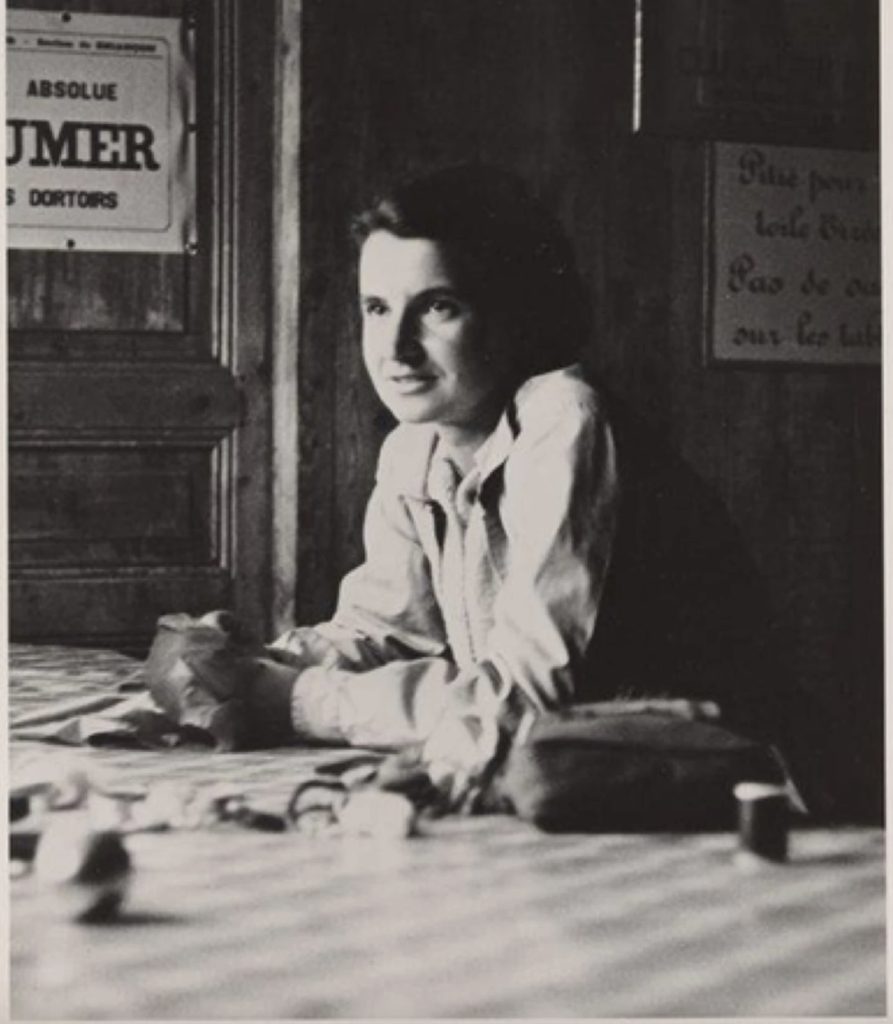
Remembering Rosalind Franklin: The Missing Nobel Prize
In our previous discussion, we explored notable Nobel Prizes that were not awarded in Medicine or Physiology, and I vowed to revisit the subject. One key omission from that conversation was the Nobel Prize that was never given to Rosalind Franklin, whose groundbreaking work provided the critical data that revealed the helical structure of double-stranded DNA, the very foundation of genes.
The Conventional Narrative
The familiar narrative goes something like this: One afternoon in early 1950s Cambridge, the jubilant duo of James Dewey Watson and Francis H.C. Crick strolled into The Eagle pub, proclaiming that they had uncovered “the secret of life.” However, we now realize that this portrayal likely oversimplifies the reality of their discovery, which involved intricate models of adenine-thymine and guanine-cytosine base pairs essential for forming the DNA double helix. In 1962, they shared the Nobel Prize for Physiology or Medicine with Maurice Wilkins, further validating their groundbreaking structure. The correct identification of DNA’s structure ignited a revolution in molecular biology that continues unabated more than 70 years later.
Yet, as with any scientific achievement, key contributions were overlooked. Watson, Crick, and Wilkins were significantly aided by the pioneering work of those who came before them, including Rosalind Franklin. Contrary to the belief that stemmed from Watson’s own account in his semi-autobiographical work, *The Double Helix* (1968), those closely following the events were well aware of each individual’s contributions to the understanding of DNA’s structure.
Franklin’s Crucial Contributions
In his book, Watson recounted how he instantly grasped the importance of Photograph 51, an x-ray diffraction image taken by Franklin herself. He claimed that just one glance at it led him to the realization that DNA was helical, despite his limited understanding of x-ray diffraction techniques. However, this assertion raises eyebrows among historians. As Matthew and Nathaniel point out, Franklin had previously presented at a seminar that both A- and B-DNA were large helices with the phosphate backbones on the outside and the bases pointing inward, sharing fundamental parameters that Watson and Crick later applied to determine the structure.
The “famous” Photograph 51 was unlikely to have provided Watson with a sudden epiphany about DNA’s helical structure. During that time, few doubted that DNA was helical, as Franklin had already informed many of her peers about this during her presentations.
A Collaborative Spirit
Additionally, Matthew and Nathaniel discovered references to a talk at the Royal Society featuring Crick, Watson, Wilkins, and Franklin discussing DNA’s structure. They even found an unpublished TIME magazine article that presented the discovery as a collaborative effort between the King’s College team—comprising Wilkins and Franklin—and the Cambridge team of Watson and Crick. This article reflected a much more equitable approach and was prepared in collaboration with Franklin.
After the release of *The Double Helix*, both Wilkins and Crick raised objections to Watson’s portrayal of Franklin, albeit quietly. Subsequent revelations have illuminated Franklin’s pivotal contributions to deciphering the “secret of life.” Among these was a report showcasing the assistance she provided to Watson and Crick while they were struggling to make sense of their findings, underscoring the significance of her data. So, what led to the overshadowing of Franklin’s vital role?
Rosalind Franklin’s Legacy
Hannah Franklin, Rosalind’s great-niece and a PhD student at the Francis Crick Institute and University College London, reflects on her aunt’s complex legacy. “She didn’t suffer fools gladly, likely developing a rather harsh view of Watson early on. People often misinterpret her demeanor as coldness, overlooking her warmth and genuine passion for science. Her significant contributions to viruses and coal and carbon were overshadowed by her experiences at King’s, where she was excluded from the senior common room due to her gender.” This exclusion exemplified the informal, privilege-laden conversations in which she could not partake, limiting her collaborative opportunities.
In retrospect, it becomes evident that Rosalind Franklin was an equal collaborator in the discovery of DNA’s structure. Her niece emphasizes that Franklin should be remembered not merely for her struggles but for her substantial impact on science and the compassionate person she was.
A Modern Reflection
A recently published article in the *Journal of the History of Biology* critically examines Franklin’s Photograph 51. The authors refute the claim that Franklin failed to recognize the photograph’s importance. On the contrary, they assert that she purposefully captured that image, aware that it could yield key data about DNA’s helical structure. The analysis reveals she had already computed those parameters using an earlier photograph and refined her approach for the publication-worthy Photograph 51.

Unrecognized Contributions
The unanswered question remains: Why was Rosalind Franklin excluded from sharing the Nobel Prize with Watson, Crick, and Wilkins? The succinct explanation is that she passed away from ovarian cancer in 1958 at the young age of 37. Had she lived longer, it is plausible that two Nobel Prizes could have been awarded for DNA—one in Chemistry to both Maurice Wilkins and Rosalind Franklin for establishing DNA as a helix, and another in Physiology or Medicine to Watson and Crick for elucidating the double helix’s functional subunits.
The longer narrative illustrates the challenges faced by women in science. For instance, a former colleague of mine was the first woman to achieve tenure in her department at a prestigious medical school, a milestone reached only after external pressure criticized institutional blindness toward gender bias. Thankfully, progress has been made since those days.
Final Thoughts
For those interested in immediate reactions to *The Double Helix*, I recommend Peter Medawar’s review in *The New York Review of Books* (28 May 1968), aptly titled “Lucky Jim.” Medawar’s critique elucidates how Watson’s self-centered narrative often dismissed the contributions of those who preceded him. He highlights that a lack of historical awareness among scientists can lead to significant misunderstandings and rapidly deteriorating fortunes—for both the field and its participants.
In conclusion, Rosalind Franklin’s role in the discovery of DNA’s structure cannot be overstated. She deserves recognition not only for her scientific accomplishments but also as a pioneer who faced considerable obstacles. It is essential to remember her contributions to science and serve as a reminder of the importance of inclusivity and acknowledgment in research collaborations.
Thank you for taking the time to read. Until next week, stay safe and engaged!
Notes
- One of those giants was the scientist who corrected Watson regarding the incorrect structure of a nucleotide he was using during his model-building phase, essential to fitting the pieces of the model together.
- Watson authored the first textbook on molecular biology, which has greatly influenced the field and remains a classic.
- My only interaction with James D. Watson left me bemused, as he regaled us with tales from his Cambridge days rather than focusing on the scientific discourse at hand.
- Special thanks to RK for sending the latest article on Rosalind Franklin’s work—I might have missed it otherwise.