As discussions of a potential US-Russia detente resurface, it’s pertinent to revisit the ambitious objectives outlined in the 2019 RAND report titled Extending Russia: Competing from Advantageous Ground. This examination may provide crucial insights into the evolving geopolitical landscape.
Recently, there has been considerable chatter regarding agreements between the US and Russia, notably surrounding Nord Stream, diesel exports, and new pressures on Zelensky that may affect intelligence-sharing protocols. This raises the question: are these moves merely pragmatic stratagems to provide respite for Ukraine and its western allies, or do factions within the Blob genuinely seek to reestablish Russian energy channels to Europe to alleviate the oil crisis while maintaining pressure on Iran? Regardless, the overarching objective of destabilizing Russia appears enduring.
Indeed, recent research on American strategy toward Russia underscores this idea. One notable publication is the June report from the U.S. Army War College, which builds upon the RAND report but focuses specifically on Europe. According to this report, the US intends to sustain its nuclear umbrella while Europe is tasked with supplying troops, funding, and resources for US interests. This strategy appears to prepare for proxy warfare, learning from past miscalculations in Ukraine.
A systematic “steel porcupine” strategy in Ukraine could have strengthened NATO’s deterrence capabilities.
This responsibility now seems to be shifting towards Europe, which is expected to absorb significant Russian assaults while engaging in a prolonged air war aimed at weakening Russia. While this may sound implausible, European elites don’t appear to share this skepticism.
Also of note is Secretary of State Marco Rubio’s recent speech in Athens, which advocates for a European nationalism aligned with imperial interests, a topic we discussed here.
For those unfamiliar with the RAND paper or those needing a refresher, we’ll outline its primary economic strategies and geographical pressure points while comparing them with current realities. To begin, RAND proposed the following:
…a series of nonviolent initiatives that could exploit Russia’s vulnerabilities, exerting pressure on its military, economy, and domestic political standing, both at home and internationally. These actions are considered elements of a campaign to weaken the adversary, pushing Russia to compete in areas where the US holds an advantage, leading to overextension or a decline in domestic and international prestige.
Now, let’s delve into the specifics:
Oil and Gas Revenue
The objective:
…increasing US energy production along with imposing trade and financial sanctions on Russia is likely to put more stress on Russia’s economy and defense spending. Moscow relies on oil export revenues to support government operations, including military actions abroad and domestic social services. Thus, restrictions on oil revenues could force Russia into tough choices beyond those already faced.
This strategy has seen limited success. Even before the US’s unsuccessful campaign against Iran, which disrupted oil supplies globally, Russia managed to find markets for its oil, particularly in populous nations like India and China. Moreover, European nations continued purchasing Russian oil, albeit through intermediaries at inflated rates, and natural gas, albeit in less efficient liquefied forms.
While Ukraine and NATO’s actions targeting Russian refineries have had some impact, Moscow has been able to retaliate effectively. Ultimately, the real casualties of this energy war appear to be European nations, which are now facing rising costs. Despite the US’s ascent in energy production, economic challenges loom as inflation, shortages, and dwindling reserves threaten global stability.
The ramifications of this strategy have become apparent on the political landscape, particularly as the Trump administration sought to negotiate an increase in Russian diesel exports. This initiative, however, has encountered resistance and is unlikely to offer a meaningful resolution amidst the broader chaos.
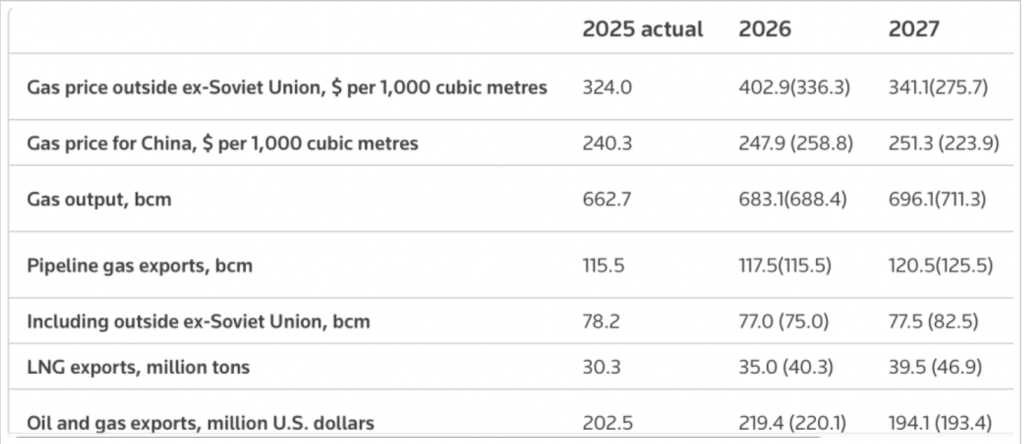
In summary, the strategy aimed at crippling Russian energy consumption has primarily created shortages and price hikes without significantly destabilizing Moscow’s government, which has shown consistent resilience even in the face of European efforts to halt Russian gas imports by 2027.

The RAND report argues that Russia lacks true allies and can be easily isolated. However, many countries have interests—primarily energy—that prevent them from completely severing ties with Moscow, resulting in a complicated economic relationship that continues to thrive outside of Europe.
Cost-Imposing Measures
The objective:
Potential avenues for a cost-imposing strategy against Russia include investments in long-range cruise missiles and anti-radiation systems, as well as remotely piloted aircraft, should production costs allow for significant quantities. These initiatives would exert pressure on Moscow to enhance its defensive systems, incurring considerable costs.
However, evaluations indicate that Russia currently possesses an effective arms industry capable of producing advanced weaponry at competitive costs—far surpassing many of its Western counterparts. A nation that once sought economic collaboration with the US and Europe has evolved into a robust military force. While this shift has strained Russian resources, it pales in comparison to the burdens the EU faces.
European nations are ramping up military expenditures as unrest spreads across the bloc. Events in France serve as a case in point. As discontent reached a tipping point, President Macron has focused on military success rather than addressing the domestic turmoil.
À bord de la frégate multi-missions Auvergne, j’ai assisté au premier tir du nouveau missile balistique M51.3 depuis le sous-marin nucléaire lanceur d’engins Le Vigilant.
Félicitations à tous les acteurs de cette réussite exceptionnelle.
Notre dissuasion nucléaire nous protège et continuera à nous protéger.
— Emmanuel Macron (@EmmanuelMacron) October 6, 2026
Looking ahead, Europe may experience turbulent times as political leaders remain dedicated to militarizing societies. A recent statement from Stop ReArm Europe highlights this tension:
“Thousands of students across Europe are rising up to resist militarization and conscription. Nearly 20 million children in the EU face the risk of poverty or social exclusion while the governments are poised to commit €7 trillion to military spending by 2035.”
The US, while seemingly in a better position compared to Europe, also faces crises of trust, rampant inequality, failed imperial endeavors, and an economy at risk of collapse. Although its GDP may surpass Russia’s, the latter can effectively adopt defensive measures while appearing to maintain societal cohesion.
All in all, the West demonstrates greater instability compared to Russia, an alarming revelation given that even RAND asserts that “Russia’s greatest vulnerability in any competition with the United States lies within its economy.”
Geopolitical Measures
The goals:
A direct approach to extending influence over Russia involves elevating the costs of its foreign commitments. George Kennan, the architect of containment, indicated as early as the 1940s that the Soviet Union was overextended, contending that the military, economic, and political expenses of maintaining its empire would inevitably contribute to the system’s reform or collapse.
In contrast to the old Soviet Union, Russia’s current commitments are significantly more limited and its domestic populace more homogeneous. The RAND report outlines potential US moves to elevate Russia’s foreign obligations:
- Supplying lethal aid to Ukraine.
- Restoring support to Syrian rebels.
- Encouraging regime change in Belarus.
- Exploiting tensions between Armenia and Azerbaijan.
- Shifting focus to Central Asia.
After witnessing millions of casualties and massive expenditures, one could argue that Russia has indeed been overstretched. However, the ultimate outcome of this conflict remains ambiguous; it’s possible that the region will endure prolonged suffering and violence.
The US has historically provided backing to certain factions, leaving Moscow to manage a diminished presence in the region.
While the US has attempted to influence Belarusian politics, it has yet to make substantial progress in achieving this goal.
In an interesting twist, the US has substituted Moscow as a mediator, seeking to facilitate trade routes that bypass Russian oversight.
In acknowledgment of changing dynamics, TRIPP and other emerging trade routes have become increasingly essential.
Despite ambitious plans, resistance emanating from Moscow and Tehran complicates progress regarding US initiatives in the region. As seen with Armenia’s pivot away from Russia, local actors are also balancing their own national interests amid global upheaval.
Nonetheless, the potential downside for these nations in aligning with the West’s agenda against Russia is significant, prompting many to consider their economic futures carefully. History has shown that actions contrary to national self-interest may surface, driven by a desire to inflict hardship on Russia.
Other avenues for exerting geopolitical pressure also exist, as noted by RAND, including enhancing NATO’s relationships with countries like Sweden and Finland, as well as addressing contested claims in the Arctic. These initiatives have already begun to unfold. Despite ongoing discussions regarding a ceasefire and attempts to influence Zelensky’s positions, it is likely that pressure will persist across various arenas. However, as indicated in reports, these strategies depend heavily on the sacrifices of “allies.”
Despite this ongoing pressure, signs are scant that Russia is on the verge of a governmental crisis. In fact, it appears to be emerging stronger, contrary to the expectations of those seeking to overextend it.
Optimists cling to the notion that all will unravel once Putin departs from the scene. A recent piece in Foreign Affairs argues that the specter of succession haunts Russia, hinting at turmoil. Such arguments fail to recognize that Putin is comparatively moderate, with many in Russian leadership advocating for a more aggressive stance toward perceived threats. If a successor were to take power, the risk of escalating conflict could skyrocket.
This outcome, ironically, may be viewed as an achievement for some, as it might achieve the intended goal of “overextending” Russian capabilities.