Solar Orbiter Unveils Secrets of the Sun’s Magnetic Field
Date: 08/10/2026
Views: 1,548
Likes: 28
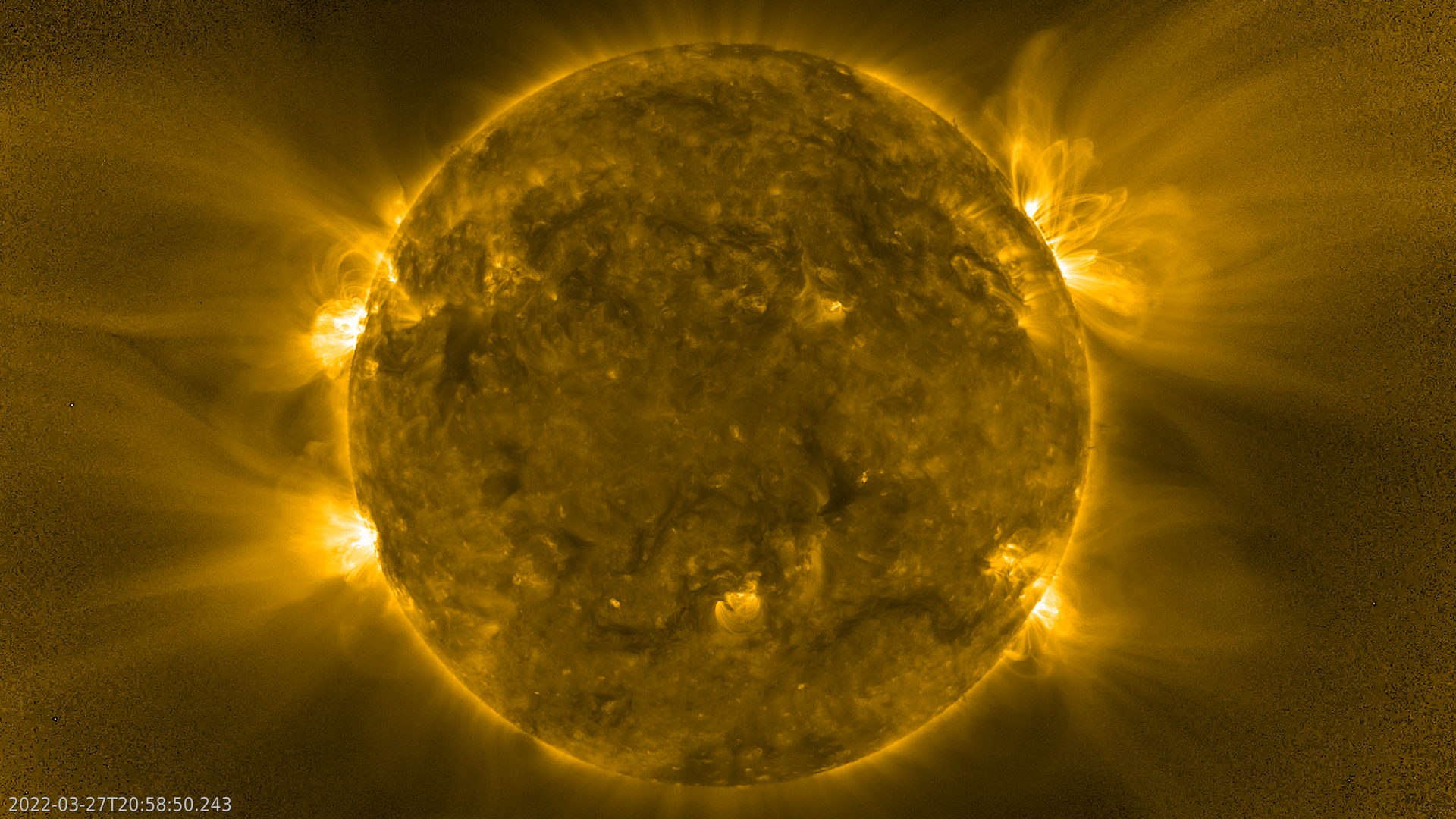
The European Space Agency’s Solar Orbiter has successfully explored an S-shaped kink, known as a ‘switchback’, in the solar wind’s magnetic field. This groundbreaking discovery sheds light on the origins of these peculiar structures and deepens our understanding of solar magnetism, which plays a critical role in generating hazardous solar storms.
The Sun’s magnetic field is turbulent and dynamic, guiding the continuous stream of charged particles—known as plasma—into space. While switchbacks are often observed near the Sun, their formation processes remain largely debated. A prior ESA report had confirmed the S-shaped nature of these switchbacks, with Solar Orbiter now elucidating their source.
Jesse Coburn from CNRS/LPP, France, stated, “Solar Orbiter flew through a very large switchback, allowing us to sample particles that have tell-tale fingerprints of their origin.” Using its Solar Wind Analyser (SWA), the spacecraft detected a unique combination of charged oxygen and carbon particles, indicating they formed within hot magnetic loops at the Sun’s surface.
Competing Theories of Formation
Two primary theories exist regarding how switchbacks and solar wind originate. The analysis suggests that the particles found are indicative of a process called interchange reconnection. This process occurs when sections of the Sun’s magnetic field with varying properties interact, allowing trapped plasma to escape.
Co-author Stephanie Yardley of Northumbria University emphasized signs of alternative theories involving waves and turbulence, which govern switchbacks once they traverse into space. “Our findings indicate that both processes operate at different stages in a switchback’s lifecycle,” she remarked.
Implications for Solar Research
To achieve this groundbreaking discovery, researchers employed in situ observations from Solar Orbiter’s SWA, supplemented by images from NASA’s Solar Dynamics Observatory. Their innovative model linked the solar plasma measurements to data, revealing the switchback’s solar source with remarkable detail.
Understanding switchbacks has broader implications, shedding light on how the Sun heats its atmosphere and accelerates particles into solar wind. This research not only contributes to our knowledge of solar phenomena but also has significant implications for our planet’s safety from extreme space weather events.
Daniel Müller, ESA Project Scientist for Solar Orbiter, commented on the importance of Solar Orbiter’s unique attributes in making such discoveries. “Our understanding of these dynamics is crucial for protecting space-based infrastructure from solar storms.”
For more insights, you can read the full paper titled “On the Coronal Origin of Magnetic Switchbacks in the Solar Wind” published in Nature Astronomy.
For further inquiries, please contact ESA Media Relations at media@esa.int. Explore more about Solar Orbiter at ESA.


