The Rise of DNA Computers
What You’ll Learn:
- DNA computers, while not as fast as silicon-based machines, excel in energy efficiency, storage, and parallel processing.
- A new study demonstrates a DNA computer that utilizes “energetically favorable” states for calculation with minimal heat input.
- In a single droplet of water, trillions of DNA strands cooperate, forming a structure that represents the computational result.
A Brief History of Computing
The evolution of computing showcases machines of various forms, from the Harvard Mark I, a monumental five-ton computer from WWII, to the Micro Mote, which is about one millimeter in size.
The DNA Computer Breakthrough
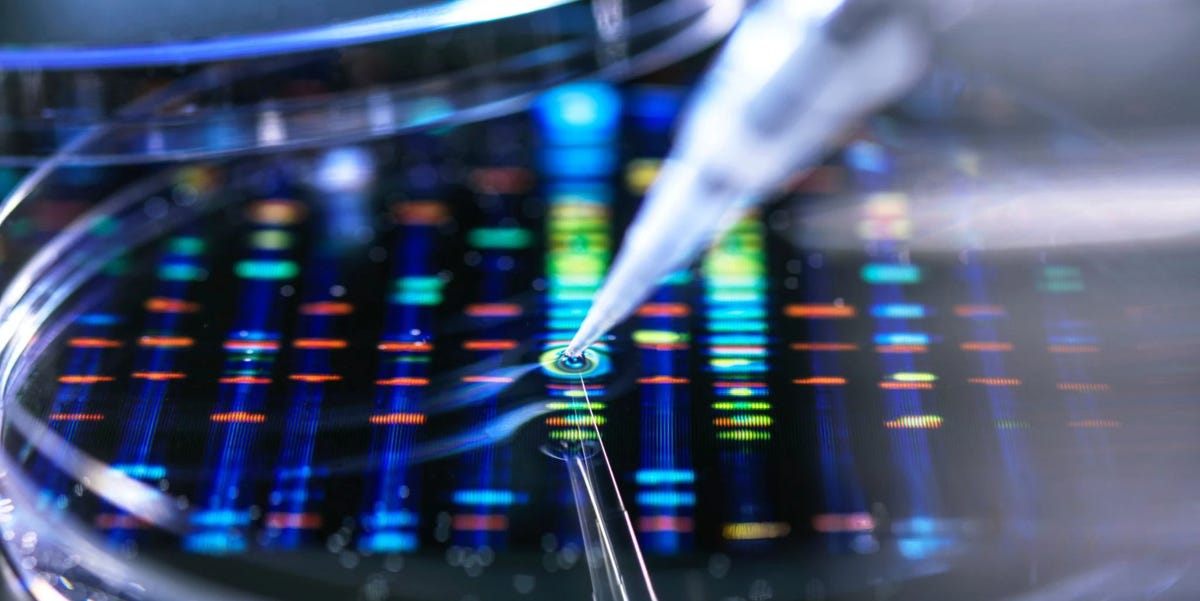
While most computers today depend on silicon, DNA computers leverage the building blocks of life to perform calculations. Researchers at Maynooth University in Ireland recently developed one of the fastest DNA computers to date. According to their findings published in Nature, this machine uses billions of DNA strands suspended in a droplet of water.
“The molecules interact, form a structure and that structure is the answer,” stated Damien Woods, senior author of the study. The key innovation lies in that the system can find solutions without needing ongoing energy inputs.
How Does It Work?
The DNA computer, referred to as a Scaffolded DNA Computer (SDC), consists of basic components typical of a biology experiment: water, salt, short DNA strands, and a longer DNA scaffold. Instead of requiring continuous energy, it utilizes a physics principle where DNA strands naturally interact to form a low-energy state, which minimizes mismatches between strands. The scaffold serves as the computational substrate.
Performance and Potential
In tests involving 700 calculations, the DNA computer achieved a 95% success rate. Simple problems could be solved in a matter of seconds, while complex ones might take hours. However, speed isn’t the DNA computer’s primary strength compared to silicon.
“The reaction happens fast in the test tube, but not as fast as silicon,” commented Tristan Stérin, co-first author of the study. Despite this, the new SDC is claimed to be the fastest DNA computer yet.
While DNA computers may not replace conventional devices like smartphones and laptops, they present remarkable advantages in electrical efficiency, parallel processing capabilities, and data storage. For instance, a tiny amount of DNA can theoretically hold a trillion CDs’ worth of data.
The Future of Computing
Current research signifies that the fundamental building blocks of life—DNA—could reshape our understanding of computing. “This is blue skies science,” Woods remarked, pointing to an uncertain yet promising future.
In summary, while DNA computers won’t surpass traditional computers in all areas, their unique benefits could significantly influence specific fields, paving the way for innovative computational methodologies.


