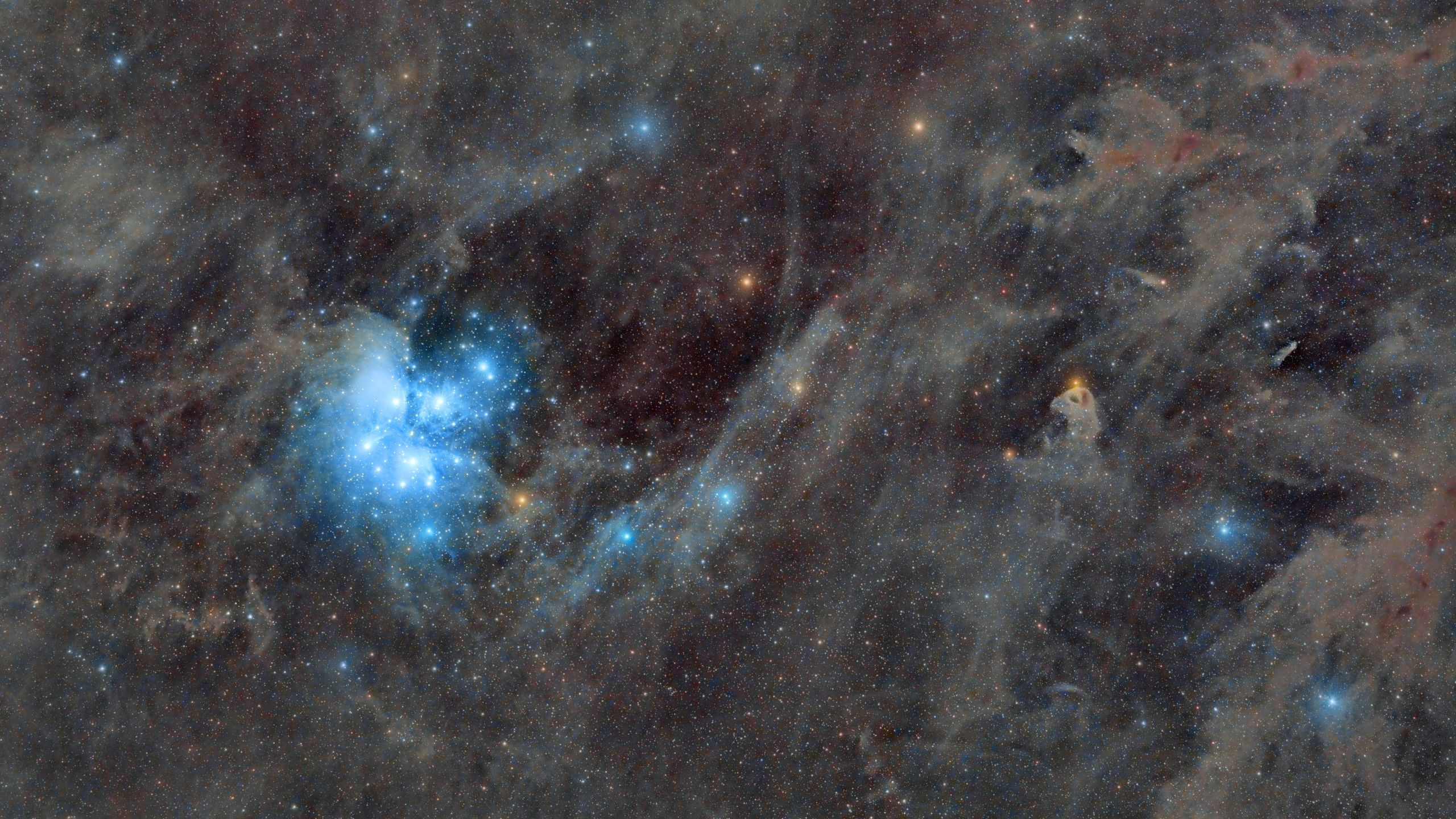
As September winds down, stargazers can look forward to a special sight on the night of September 30. An 80% illuminated waning gibbous moon will be positioned near the Pleiades (M45) open cluster. While the Pleiades is usually bright and clear through binoculars, the brightness of the moon will create challenges with glare, making the faint blue reflection nebulosity harder to see.
To locate the cluster, find the bright moon and look close by for the compact star grouping. Even from moderately dark locations, the Pleiades is typically visible to the naked eye, though binoculars will enhance the experience.
This moment offers a fun visual challenge. Try to identify the cluster’s most prominent members—Alcyone, Maia, Electra, Taygeta, Merope, Asterope, and Celaeno—along with their mythological parents, Atlas and Pleione. You might use “averted vision,” looking slightly to the side of your target, to spot some of the fainter stars more easily.
If the moon’s brightness becomes overwhelming, position yourself so that an object like a house or tree blocks the lunar disk, allowing you to observe the stars in relative darkness.
For photographers, capturing a time-lapse sequence over several hours can create a mesmerizing view of the moon’s movement across the sky, alongside the glittering backdrop of the Pleiades.
Enjoy the celestial display!


