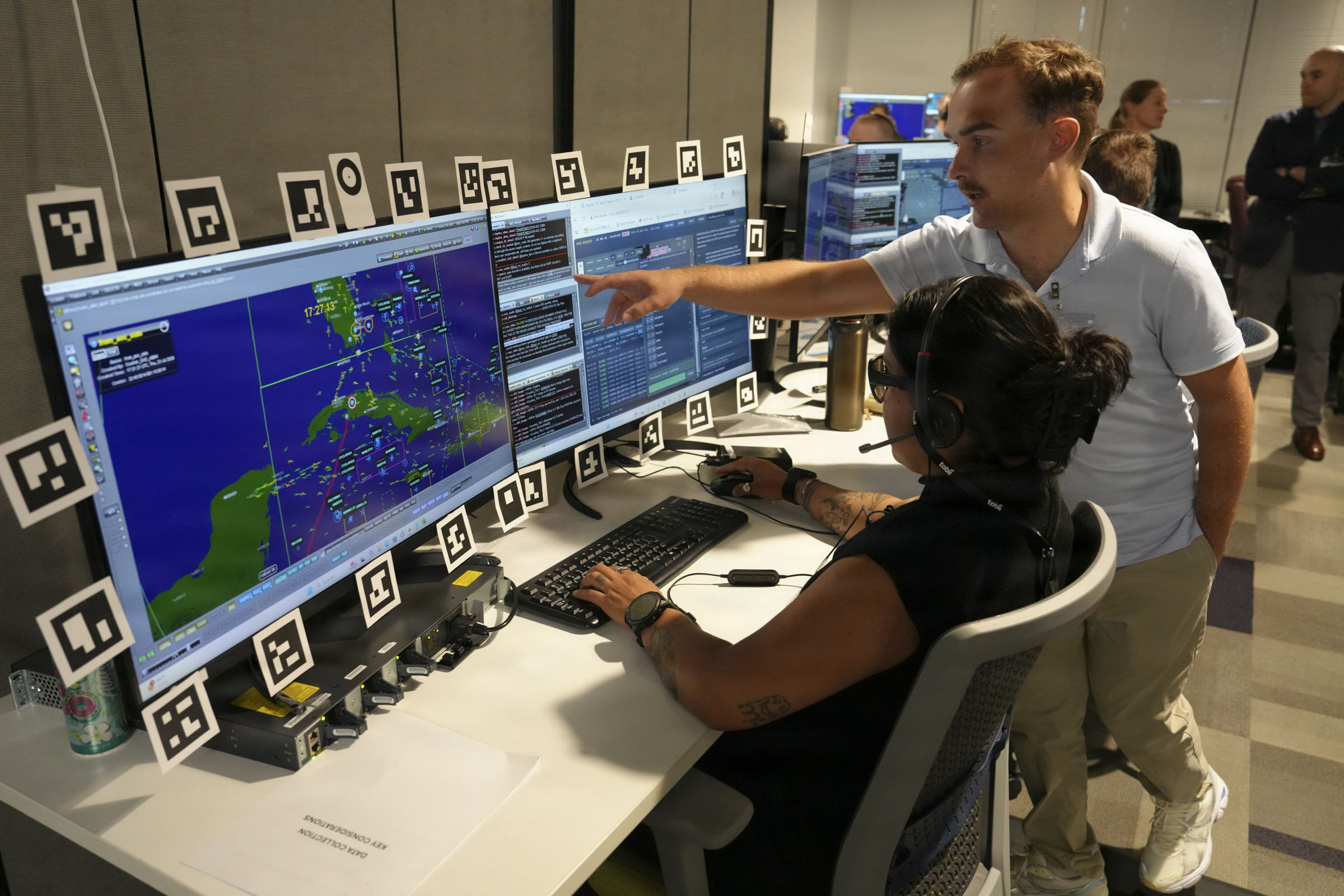
The recent two-week experiment, part of the Decision Advantage Sprint for Human-Machine Teaming series, tested the integration of Airmen and Guardians with artificial intelligence to enhance command and control (C2) in complex scenarios. Conducted at the USAF’s Shadow Operations Center-Nellis from July 13-24, the experiment involved a Space Force crew and Air Force battle managers working with industry software developers. This iteration was notable for being the first led by a Guardian.
Participants engaged with realistic operational scenarios, assessing software capabilities and measuring metrics such as decision-making speed and accuracy, heart rates, and cognitive workload. The goal was to evaluate how effectively human-machine teams could optimize decision-making under intense pressure.
Key insights include:
- Real-World Challenges: Scenarios were designed to reflect actual military complexities, including changing rules of engagement and logistical obstacles.
- Data-Driven Analysis: The experiment utilized biometric data to map attention and cognitive thresholds, informing future training and interface design.
- Focus on Game Theory: The emphasis shifted from straightforward decisions to complex, ambiguous problems requiring proactive analysis.
The findings aim to quantify cognitive workload relief and trust in AI, ultimately enhancing battle management systems. The experiment not only provided research insights but also served as a proving ground for new tactics and technologies before broader implementation.
The overarching goal is to merge cutting-edge technology with the skills of warfighters, ensuring an operational advantage in future conflicts.


