Weekly Update from the Curiosity Rover Team
Date: Friday, September 11, 2026
Reported by: Catherine O’Connell-Cooper, APXS Strategic Planner and Payload Uplink/Downlink Lead, University of New Brunswick, NB, Canada
This week, the Curiosity team held two planning days (Tuesday and Friday), as Monday was Labor Day in North America marking the end of summer holidays. We’ve recently celebrated several significant milestones:
- 14th “Landiversary” on August 6
- Surpassed 1-kilometer elevation mark
- Reached our 5000th sol (Martian day) in early September
Looking ahead, our next big event will be the 15th anniversary of launch on Nov. 26.
Current Trek: Valle Grande
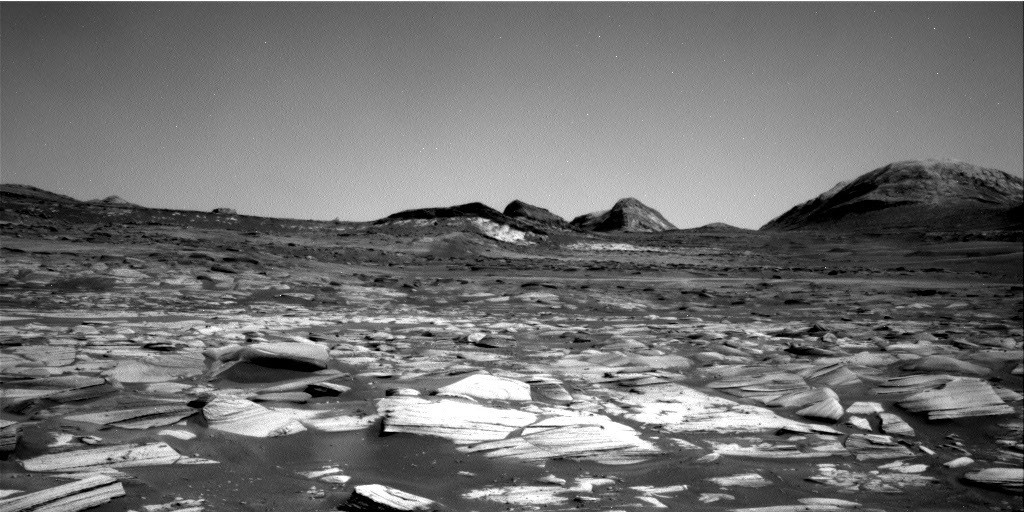
We are currently exploring an area referred to as “Valle Grande.” Recently, we climbed over what appears to be an “erosional supersurface,” and are now traversing a subtly banded area. The bands range from 25 to 200 meters in diameter, exhibiting different morphology, including variations with sand and rocky outcrops.
Terrain Overview
This week’s terrain is marked by sparse outcrops that are often nodular and surrounded by sand.
-
Tuesday’s Investigations:
- The APXS and MAHLI units investigated nodular bedrock at sites named Cerro Armazones and Monte Melimoyu.
- ChemCam performed LIBS on dark-toned nodules at Tuta Huallpas and another float rock Acllahuasi.
-
Friday’s Findings:
- After a 60-meter (about 200 feet) drive, we discovered predominantly sandy terrain with one intriguing rough-textured outcrop. Investigations are planned using:
- MAHLI: Yungay and Chiu Chiu
- APXS: Chiu Chiu
- ChemCam LIBS: Puya Raimondii and a smoother area named Liolaemus Tacnae.
- After a 60-meter (about 200 feet) drive, we discovered predominantly sandy terrain with one intriguing rough-textured outcrop. Investigations are planned using:
Imaging and Environmental Monitoring
The ChemCam long-distance imager and camera teams captured near-field images and larger mosaics of the surrounding buttes, Mishe Mokwa and Cordillera, along with perspectives of the small butte, La Linea. Additionally, mosaics documenting the scuff at Chocolatal and the Sullivan Field sand field were created, celebrating Robert Sullivan’s legacy in Martian sand studies.
The environmental team conducted a full schedule of monitoring activities, including dust-devil movies and images analyzing atmospheric dust.
Looking Ahead
Navcam and Mastcam acquired images of our future path. The subtle bands observed will be fascinating to examine in greater detail as we approach.
This overview emphasizes our ongoing exploration and the dedicated efforts of the Curiosity team in advancing Mars science. Stay tuned for more updates as we continue our journey!


