China’s AI-Driven Research: An Experiment in Central Planning
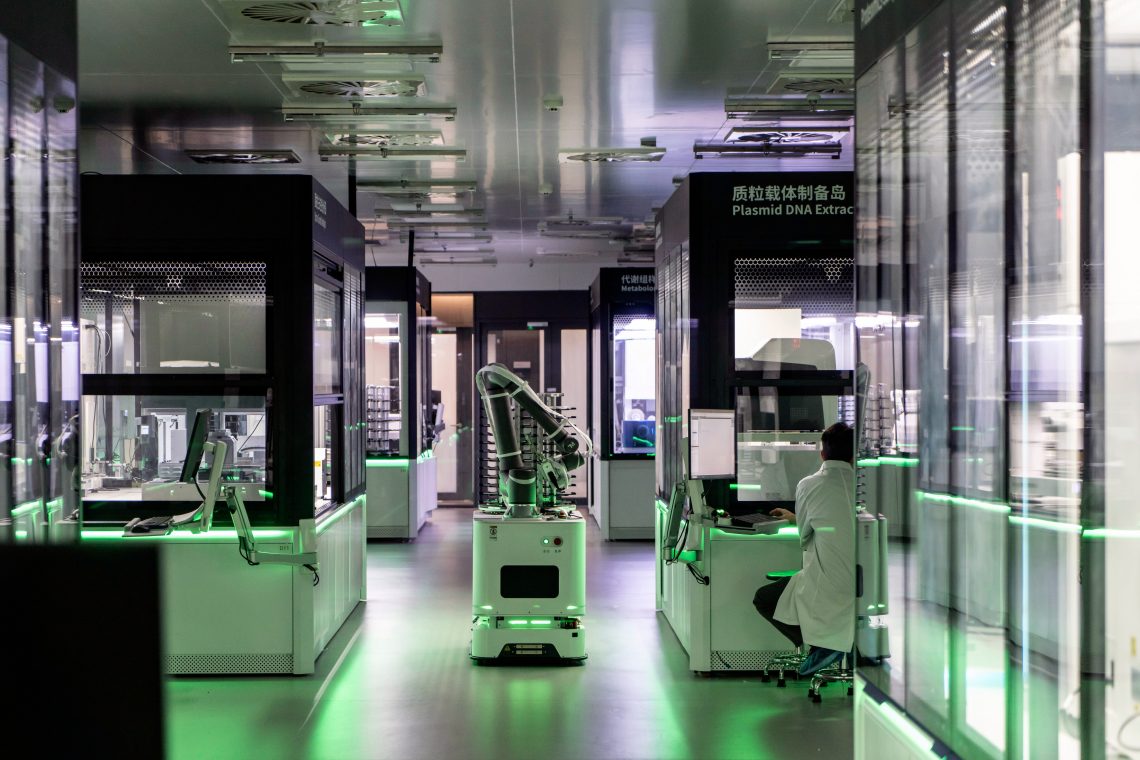
Beijing is leveraging artificial intelligence (AI) to revolutionize its research landscape, aiming to determine whether centralized planning can be effectively complemented by advanced technological solutions. The Chinese government is embedding AI agents and automation within scientific research, setting predetermined targets while navigating the inherent uncertainties of scientific discovery.
In a Nutshell
- AI Integration: The aim is to enhance scientific research through AI technologies.
- Centralized Targets: Government-defined goals may limit exploration and creativity.
- Accelerated Progress: While advancements may occur, they may not lead to groundbreaking innovations.
- Listen to Our Podcast: For deeper insights, check our AI-powered podcast here.
The Challenge of Centralized Discovery
Centralized systems have historically accelerated advancements in defined sectors like nuclear technology and vaccines. However, the unpredictable nature of scientific discovery poses significant challenges. Scientific breakthroughs often arise from intellectual competition and unconventional ideas that cannot be easily directed by governmental bodies.
The Risk of Conformity
By focusing on measurable outputs—like publication counts or patent records—centralized systems may unintentionally stifle creativity and speculative research. Researchers might find themselves aligning their work to satisfy institutional evaluations, leading to less innovative outcomes.
AI as a Potential Solution
While AI can help streamline the research process and broaden the scope of investigations, it can also reinforce existing centralized structures if models are trained on uniform datasets aligned with governmental targets. The real question lies in whether AI can enable a more diverse range of explorations rather than merely accelerating existing pathways.
China’s Infrastructure and Capacity
China’s expansive research establishment supports the integration of AI, with coordinated national infrastructures aimed at connecting universities, state laboratories, and tech industries. However, this centralized approach may inhibit deviation from governmental objectives, potentially limiting the spectrum of scientific inquiries.
Current Developments
- National AI Initiatives: The “AI plus education” plan highlights a coordinated approach to harness AI in research and education.
- Municipal Programs: Initiatives in cities like Beijing and Shanghai further strengthen this strategy.
Expected Outcomes
Most Likely: Selective Acceleration
AI could enhance productivity within defined fields, allowing for faster advancement in materials and engineering while still relying on centralized decision-making.
Somewhat Likely: Accelerated Conformity
AI might exacerbate existing weaknesses, leading to homogenized research outputs that lack true innovation.
Least Likely: Centralized Success
In a more optimistic scenario, AI could effectively reduce uncertainties related to scientific objectives, resulting in significant advancements across diverse fields.
Conclusion
China’s experiment with AI in a centrally directed research system presents a unique case study on the balance between governmental efficiency and the unpredictability of human creativity. Outcomes may reveal whether centralized systems can harness advancements in technology without stifling the breadth of scientific exploration.


