Study on Galah Cockatoos Suggests Birds Enjoy Flying
Introduction
As a child, Jorg Massen often wondered whether birds flew for pleasure. Now a behavioral biologist at Utrecht University, he explored this question using a unique setup at Avifauna Bird Park, where birds have the choice to fly freely.
The Experiment
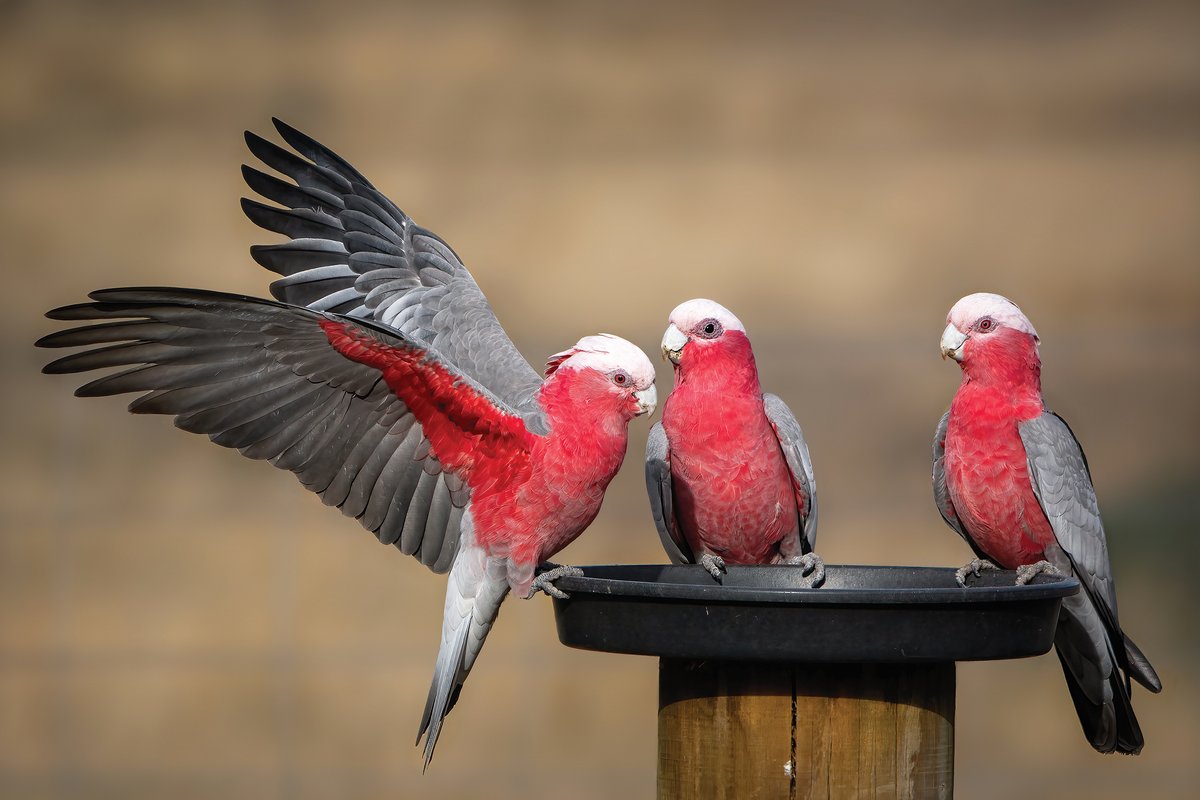
At Avifauna Bird Park, birds can leave their aviaries during specific periods without penalties or rewards. Massen and his team observed 17 pink-and-gray Galah Cockatoos, which naturally travel long distances for food. Remarkably, the Galahs choose to fly during nearly all 20-minute periods available to them.
Findings
The research, published in Behaviour, indicates that the birds exhibit behaviors associated with enjoyment: after flying, the Galahs engaged in more foraging, scratching, and crest-raising—actions interpreted as signs of excitement. An optimism test showed that the birds were more hopeful about finding their favorite treat after periods of flying compared to being grounded.
Hormonal Responses
Unexpectedly, the expected decrease in the stress hormone cortisol after flying was not observed. Massen noted that the stress response could have been influenced by increased physical exertion.
Interpretations
While researchers are cautious about attributing feelings to animal behavior, the data from this study lend support to the possibility that Galahs enjoy flying. Mendl, an animal behavior researcher, suggests that if these birds have conscious experiences, it could mean they derive joy from flying.
Conclusion
Massen posits that flight is an “ethological need” for Galahs, emphasizing a shift in animal welfare perspectives towards fostering natural behaviors that enhance animals’ well-being. The study provides intriguing insights into animal enjoyment and the importance of allowing animals to act on their natural instincts.