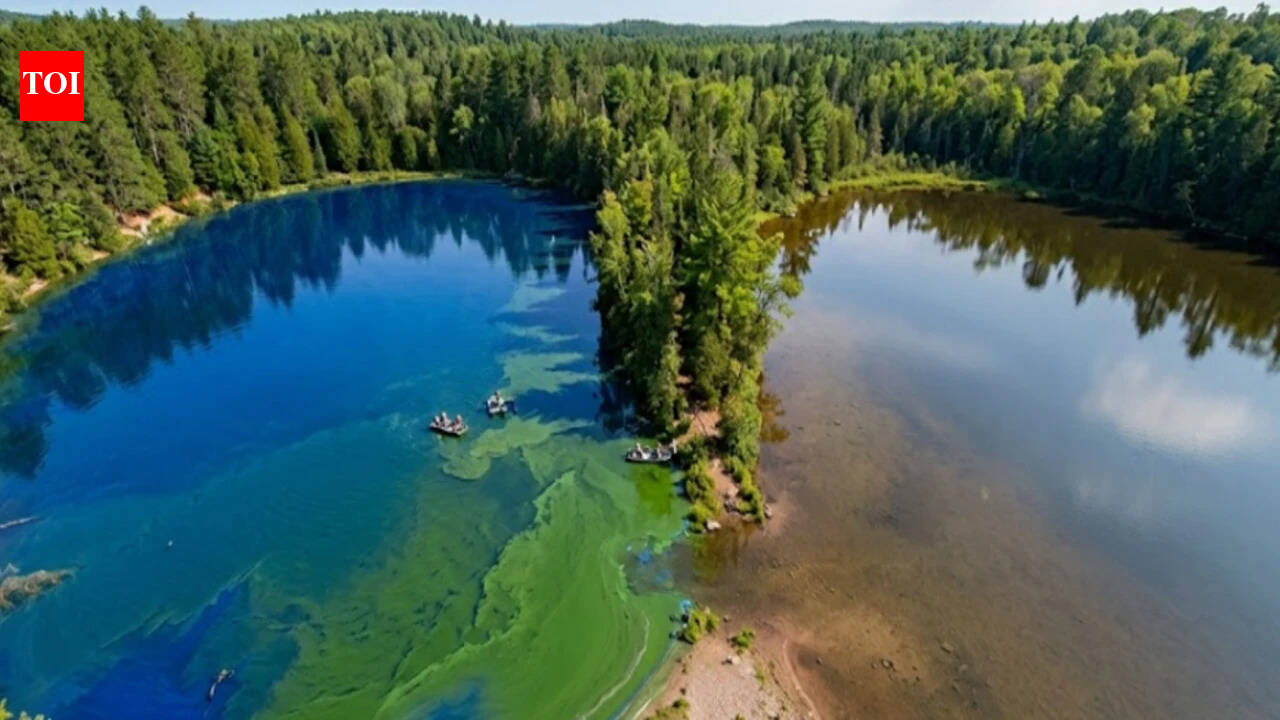
Research on Peter Lake: Algal Bloom Experiment
In the summer of 2024, researchers conducted an experiment on Peter Lake in Michigan’s Upper Peninsula to explore how much stress a lake can endure before experiencing an algal bloom. This involved dyeing the water with a non-toxic dye called Aquashade to block sunlight, followed by the deliberate addition of fertilizer, simulating nutrient runoff that typically triggers algal blooms.
Key Points of the Experiment:
- Purpose: The experiment aimed to understand the resilience of lakes and whether shading could prevent algal blooms.
- Methodology:
- Peter Lake was dyed blue to reduce light penetration.
- Paul Lake was left as a control to gauge the impact of the treatment.
- After dyeing, fertilizers were added.
Findings:
-
Unexpected Results:
- Contrary to expectations, rain washed away the blue dye, and Peter Lake eventually turned green due to algal growth.
- This emphasized how quickly natural conditions can undermine experimental controls.
-
Historical Context:
- The lakes have been used for ecological studies since the 1980s as part of the Cascade Project.
- Previous studies on these lakes have identified early warning signs of algal blooms, supporting the idea that managers could take preemptive actions.
-
Insights Gained:
- The experiment illustrated how challenging it is to manage light levels in natural bodies of water.
- Researchers concluded that while controlling nutrient inputs is critical, attempts like dyeing lakes might not be practical solutions.
-
Core Conclusion:
- Nutrient levels remain the primary driver of algal blooms. The study advocates for ongoing management of nutrient sources like fertilizers and sewage to prevent blooms effectively.
Visual Representation
This research underscores the complexities of environmental management and the need for careful consideration of various ecological factors.