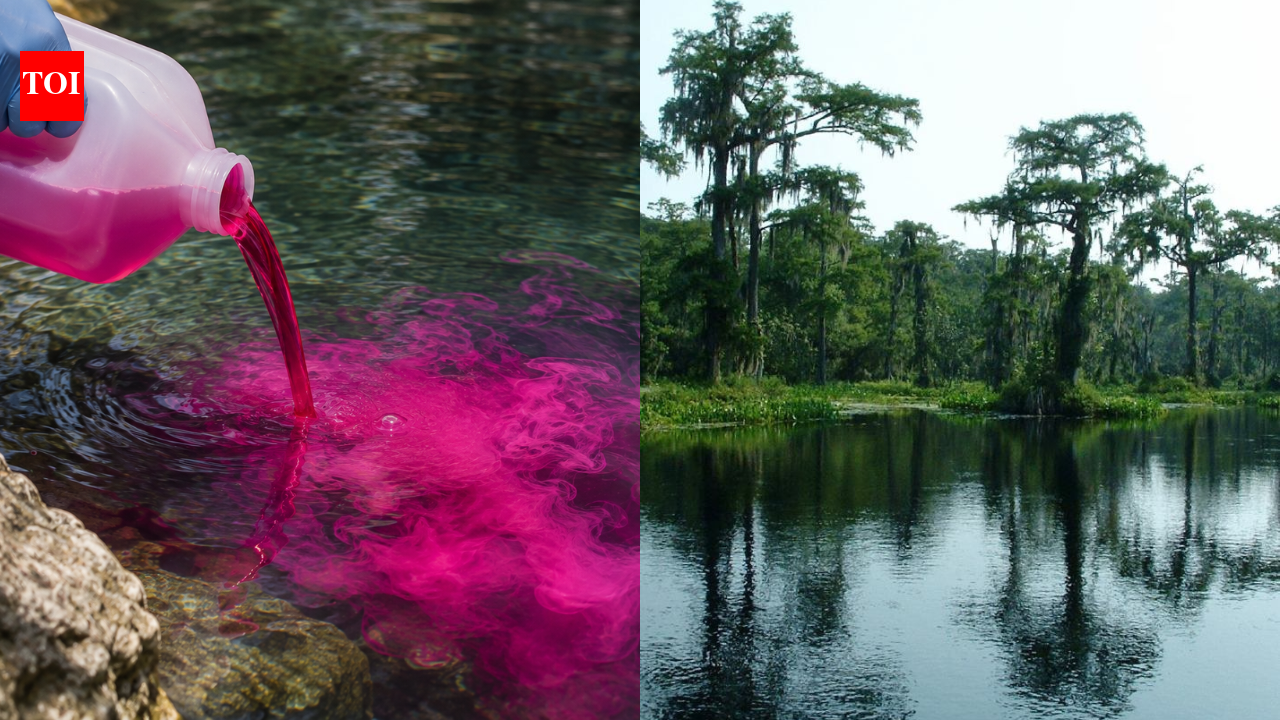
In a fascinating study, researchers injected pink Rhodamine WT dye into a sinkhole beneath Florida’s Lake Jackson to trace underground water movement. This experiment demonstrated that water could flow from Lake Jackson, located approximately 19 miles north of Wakulla Spring, through the hidden limestone aquifer, as the dye was detected at Wakulla Spring 35 days later.
The study highlighted the complexities of water flow in karst systems, where water can move rapidly through larger fractures while other portions may spread through the surrounding limestone. The researchers measured an average flow speed of about 0.8 kilometers per day and found that the dye appeared at various springs, revealing a branched conduit system beneath the surface.
Key findings include:
- Connection Established: The dye tracing confirmed a link between Lake Jackson and several springs in Wakulla County, although only a small portion of the dye reached Wakulla Spring itself.
- Water Mix: Most of the dye dispersed within the limestone matrix rather than traveling directly to the spring.
- Implications for Groundwater Studies: The results underscore the importance of understanding groundwater movement, especially concerning potential contaminants.
These insights are crucial as they can guide efforts in managing this vital water resource, which also serves as drinking water for nearby communities.