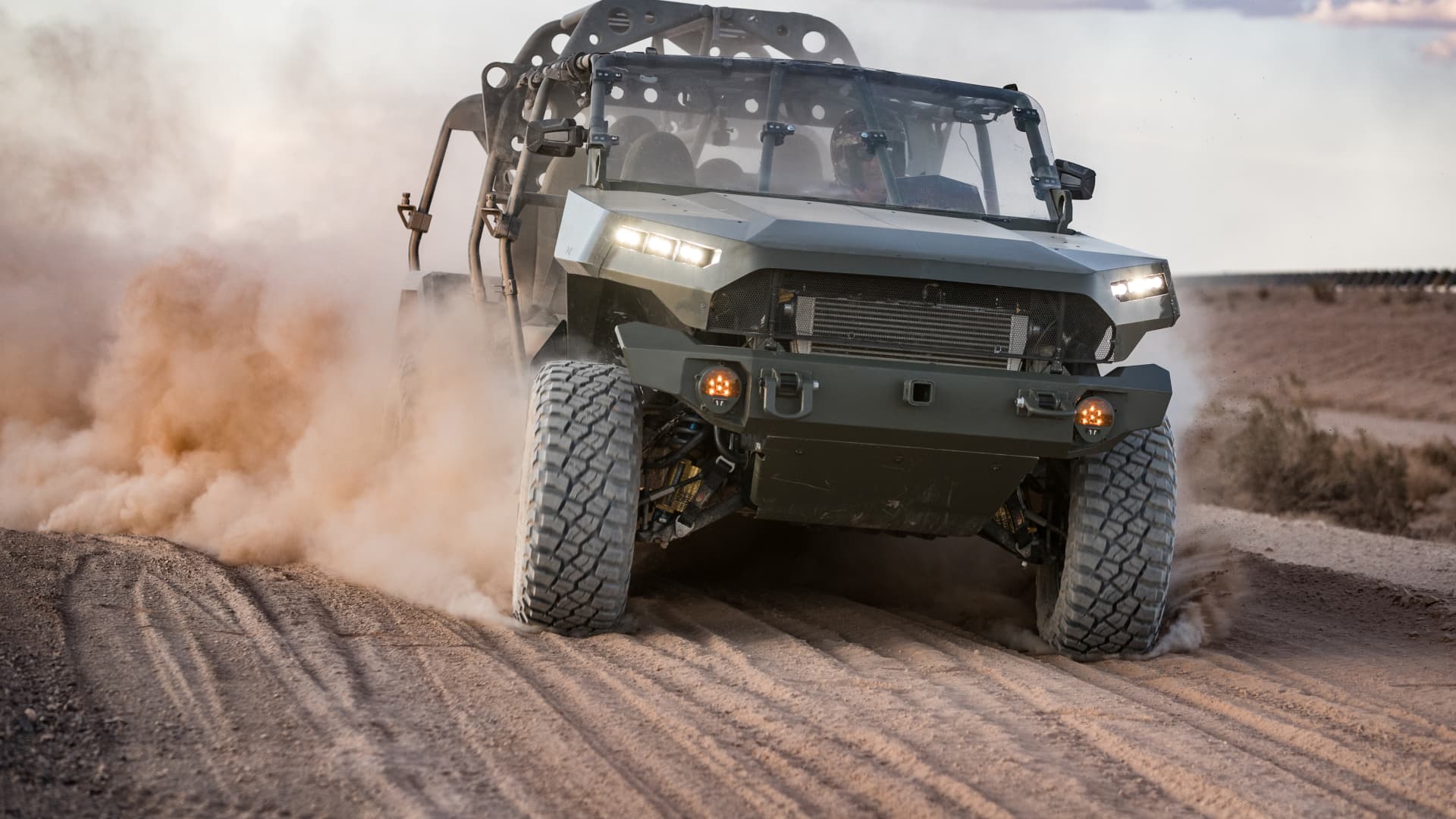
The GM Defense Infantry Squad Vehicle is built on the Chevrolet Colorado ZR2 framework and tailored to meet U.S. military needs. In a competitive landscape, General Motors (GM) and Ford Motor have shifted their rivalry from traditional auto sectors to military contracts and energy solutions.
After the Trump administration encouraged U.S. firms to leverage their manufacturing capabilities for military purposes, Ford has joined GM in pursuing military contracts, primarily focusing on vehicles. Both companies are also diving into the energy storage market as consumer energy expenses rise, capitalizing on their electric vehicle (EV) technology. Analysts suggest that these sectors might offer fresh growth avenues for the automakers, who have previously struggled with the transition to all-electric vehicles.
The global energy storage system market is projected to increase significantly, which could fill gaps left by lower-than-expected EV demand. Both GM and Ford have invested in battery production facilities to meet this anticipated requirement. While GM currently does not have a standalone energy storage solution, it is exploring opportunities including sodium-ion battery technology.
In defense, GM has a head start over Ford, having revived its defense operations in 2017 and securing contracts for infantry squad vehicles, with potential revenues reaching $700 million by 2026. Ford, while less vocal about its defense initiatives, has formed partnerships for a British Ministry of Defence project, aiming to replicate its commercial successes in the government sector.