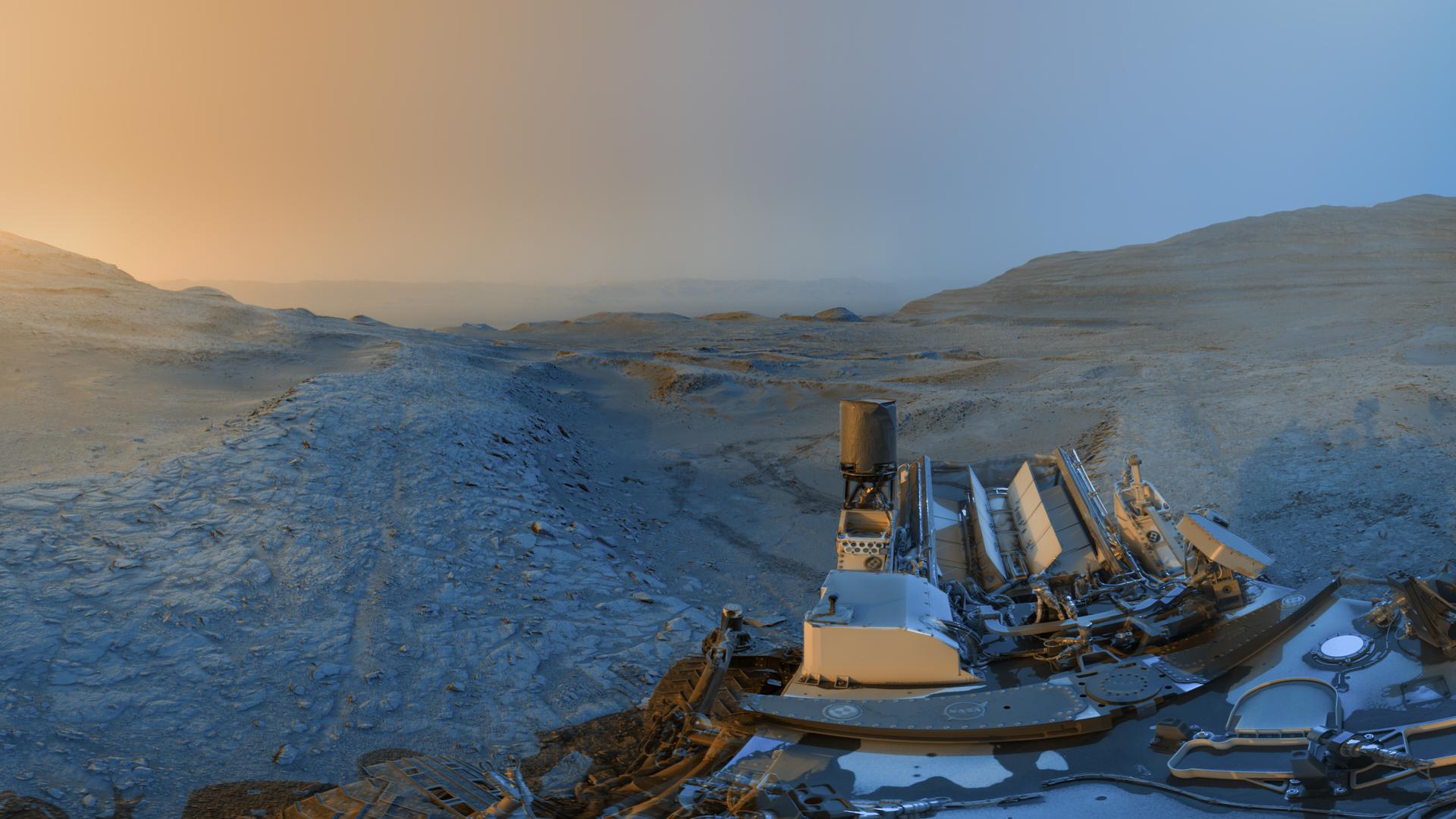
Characterization of Present-Day Weather, Climate, and Radiation Environment on Mars
Science
The Martian atmosphere exhibits considerable variability influenced by seasonal changes and daily cycles, primarily due to atmospheric dust. This dust plays a crucial role in affecting the Martian water cycle, regulating radiative balance, and influencing circulation patterns across different spatial scales. Year-over-year atmospheric variability is particularly pronounced on Mars, driven by complex interactions between dust dynamics, solar radiation, and perhaps uncharacterized feedback mechanisms. Global circulation on Mars intricately transports dust, water vapor, and other trace gases, although the intricacies of these transport mechanisms, especially at smaller scales, remain poorly understood. Additionally, ionized particles in the upper atmosphere interact with Mars’ magnetic field, linking atmospheric dynamics with geological and possibly even biological processes. Understanding the differences between Martian and Earth-like atmospheric dynamics will advance our comprehension of atmospheric behavior under diverse conditions.
Planetary Protection
Understanding lower atmospheric circulation is essential as it can transport dust and potential microbial life across the planet. This forward contamination poses a risk during human exploration, as invasive biota may be unintentionally spread to remote regions. Consequently, it’s vital to study weather-driven transport processes to accurately gauge contamination risks, helping to distinguish between native and introduced life forms during future excursions.
Preparation for Humans
Successful entry, descent, and landing on Mars hinge on precise knowledge of atmospheric conditions such as density and wind patterns, particularly for accurate pinpoint landings. This necessitates routine global monitoring of various atmospheric parameters, including wind, pressure, and temperature. Furthermore, comprehending upper atmospheric conditions and space weather will inform the radiation exposure that astronauts may face in Martian orbit or on the surface. Enhanced dust characterization and the capability to forecast local and regional weather will be crucial for crewed missions, ensuring astronaut safety and protecting sensitive equipment and infrastructure.


