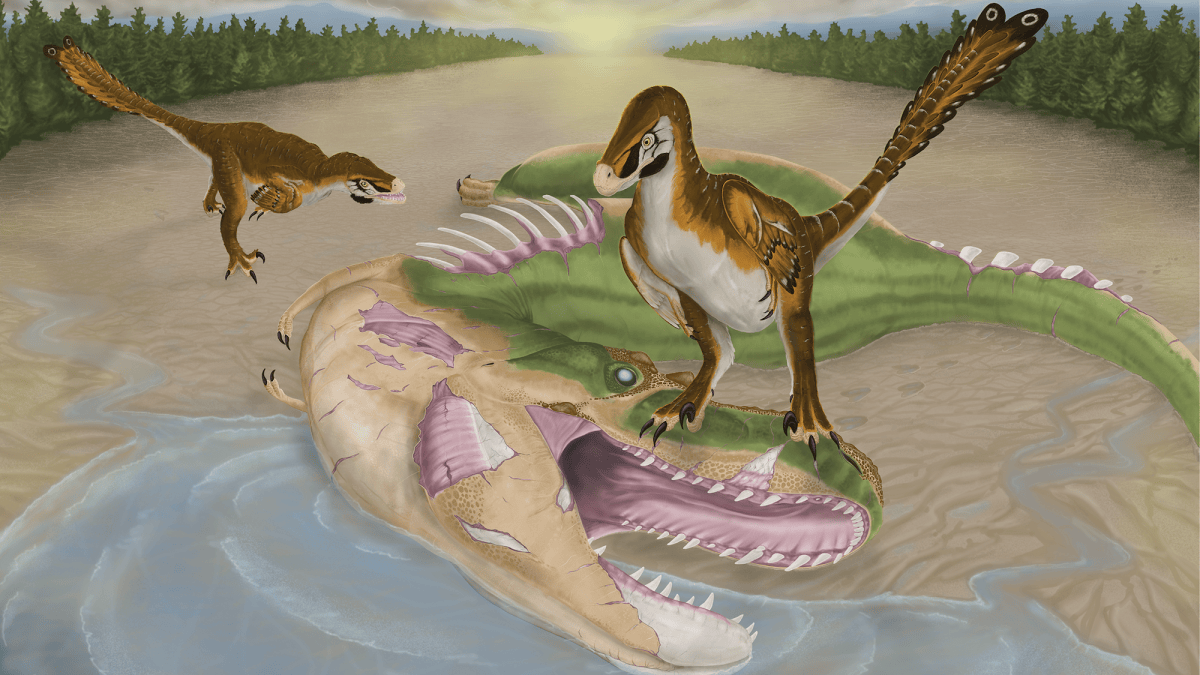
The recent study highlights a fascinating discovery involving the fossilized jaw of a young Albertosaurus, a dinosaur that lived approximately 73 to 67 million years ago. The bitemarks found on its jaw suggest that smaller scavenging raptors, possibly from the dromaeosauridae family, may have fed on this much larger predator shortly after its death.
Paleontologists noted that there was no evidence of the jaw healing, indicating that the marks were made at or around the time of death. This challenges the typical predator-prey dynamics we associate with large dinosaurs, suggesting that even formidable predators like Albertosaurus faced threats from smaller raptors.
Alternatively, there’s a possibility that the bitemarks were made by a younger Albertosaurus, leading to the darker suggestion of cannibalism—an event that, while common in evolutionary history, is rarely documented in the fossil record.
Overall, whether from a raptor or a young relative, this discovery illustrates the complex dynamics of the prehistoric food chain.


