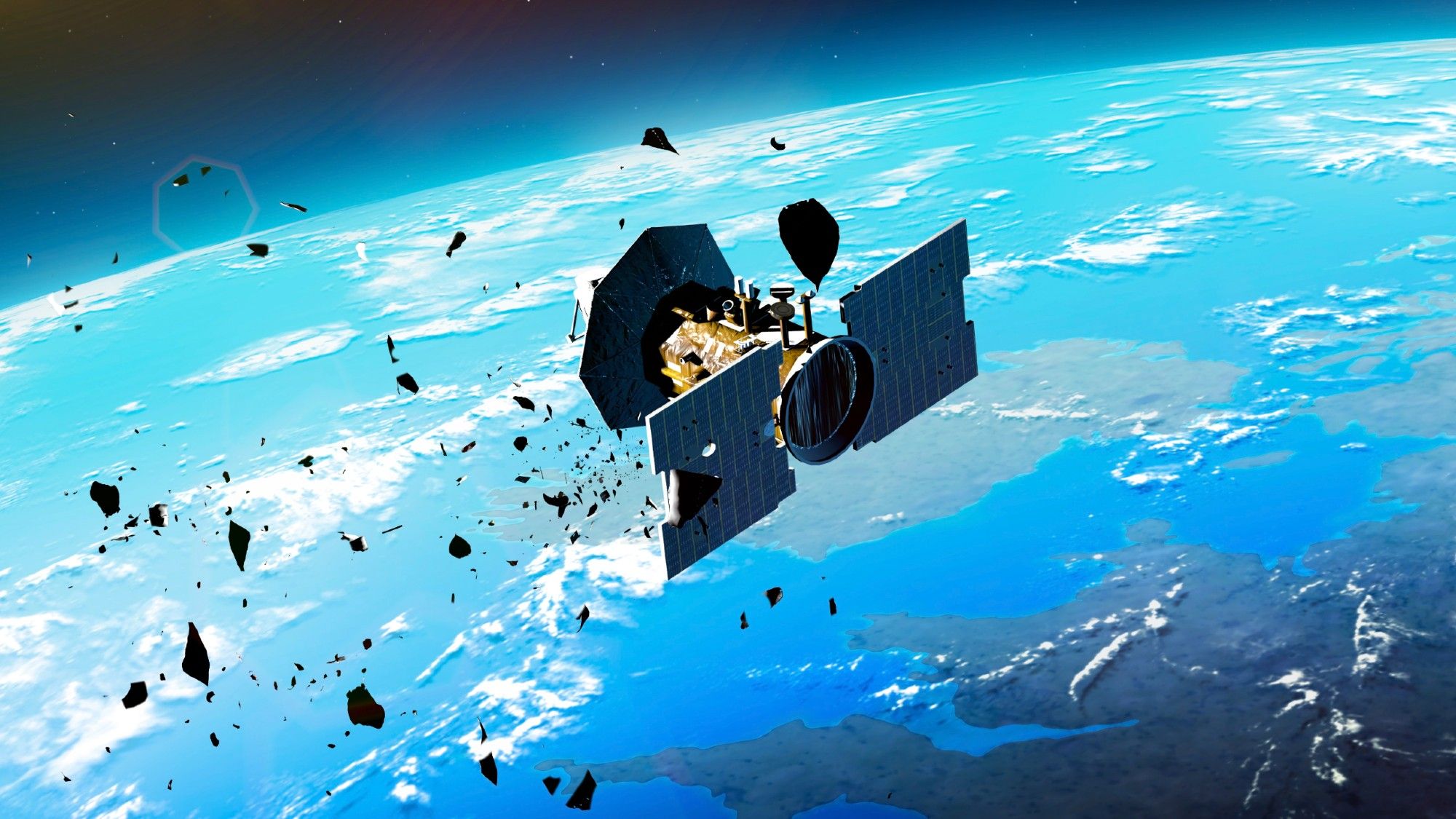
An old Soviet satellite, the Meteor 2-7, has recently fragmented in low Earth orbit, highlighting a growing concern over space debris. Detected by the company LeoLabs, the breakup event resulted in several fragments being identified near the historical weather satellite, which was launched in 1981.
This incident follows a pattern of recent fragmentation events, including a U.S. spy satellite (USA 32) that disintegrated in September 2026, and a Chinese rocket body in late August 2026. Experts suggest these occurrences indicate an escalating risk for satellite collisions as the population of orbital debris increases. Jim Shell, an orbital debris expert, noted that Meteor 2-7 previously broke apart in March 2004, emphasizing that the altitude where it disintegrated is one of the most congested with debris.
As more satellites are placed in orbit, the potential for collisions grows. In 2026, the European Space Agency reported tracking over 44,000 pieces of debris, up from 16,000 in 2005, marking a significant increase. The velocity of these fragments makes even the smallest ones capable of causing considerable damage upon impact with operational spacecraft.
Additionally, satellites often need to perform avoidance maneuvers to escape potential collisions. For instance, SpaceX data revealed that each Starlink satellite had to conduct over 40 such maneuvers annually to avoid collisions. Experts believe it’s only a matter of time before an operational satellite is involved in a collision, irrespective of these preventive actions.
Despite these warnings, private companies and governments are actively planning to launch tens of thousands of additional satellites each year, contributing to an already crowded low Earth orbit. The increasing danger of space debris has also been illustrated in real incidents, such as damage to China’s Tiangong space station due to orbital debris, which temporarily left its astronauts without a safe return option.


