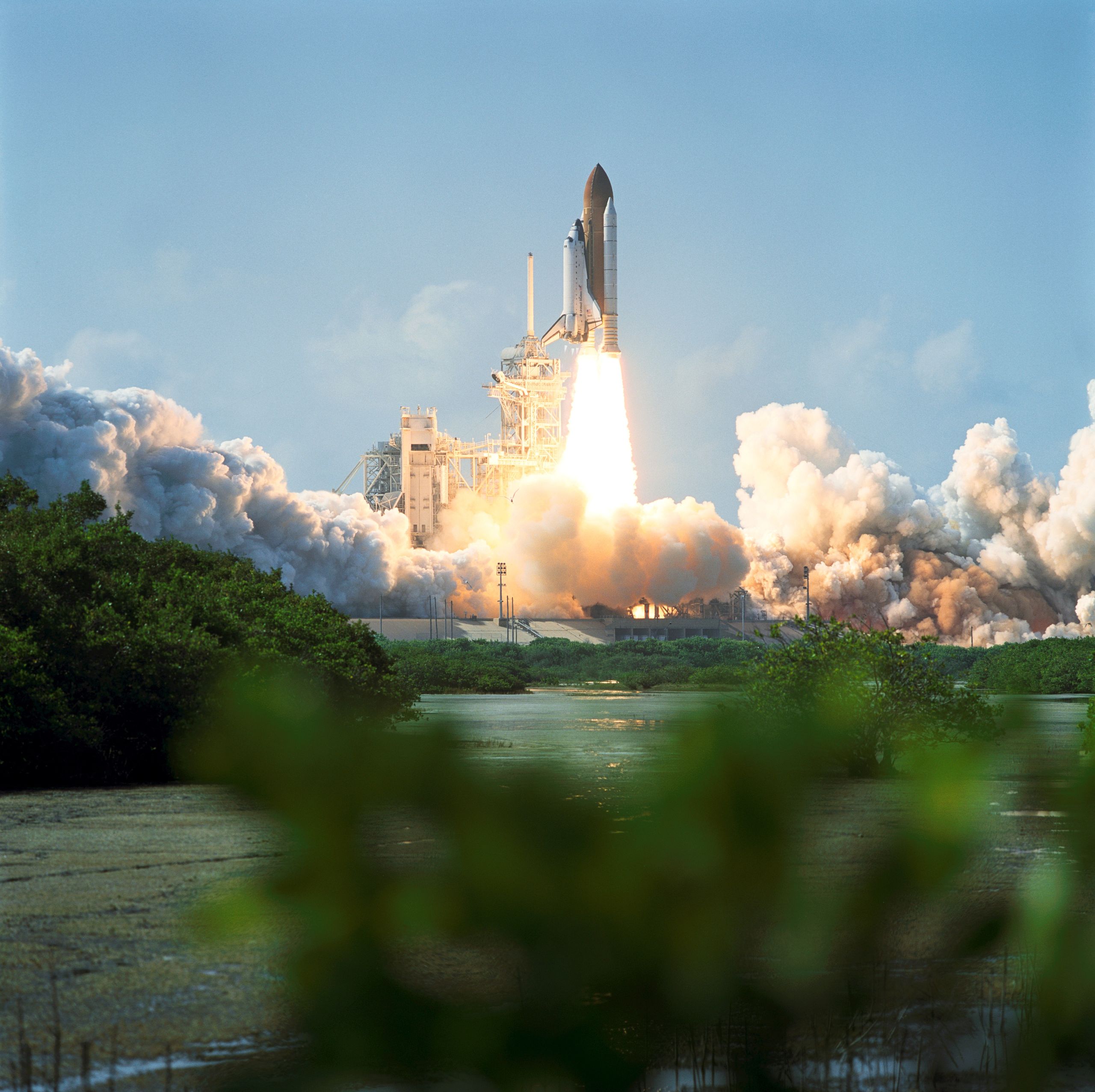
On October 7, 2002, the space shuttle Atlantis launched from Kennedy Space Center on mission STS-112, delivering the S1 truss segment to the International Space Station (ISS). This truss is essential as it provides structural support for the station’s thermal control system. During its launch, a piece of insulating foam broke off the external tank, striking the rocket booster and leaving a significant dent. Fortunately, this did not affect the STS-112 mission, although similar incidents had catastrophic consequences during the Columbia shuttle disaster just a few months later.
NASA revised the shuttle’s design after these launch concerns, enhancing safety protocols to prevent similar incidents. The STS-112 mission lasted 11 days, and its main goal was to install the 28,000-pound S1 truss on the ISS’s central truss framework. This truss contains a large ammonia-cooled radiator to regulate the station’s temperature.
The crew for STS-112 included commander Jeffrey Ashby, pilot Pamela Melroy, and mission specialists Sandy Magnus, David Wolf, Piers Sellers, and Russian cosmonaut Fyodor Yurchikhin. They conducted several spacewalks to install the truss and its associated systems, delivering about 1,800 pounds of cargo to the station while returning an equal amount to Earth.


