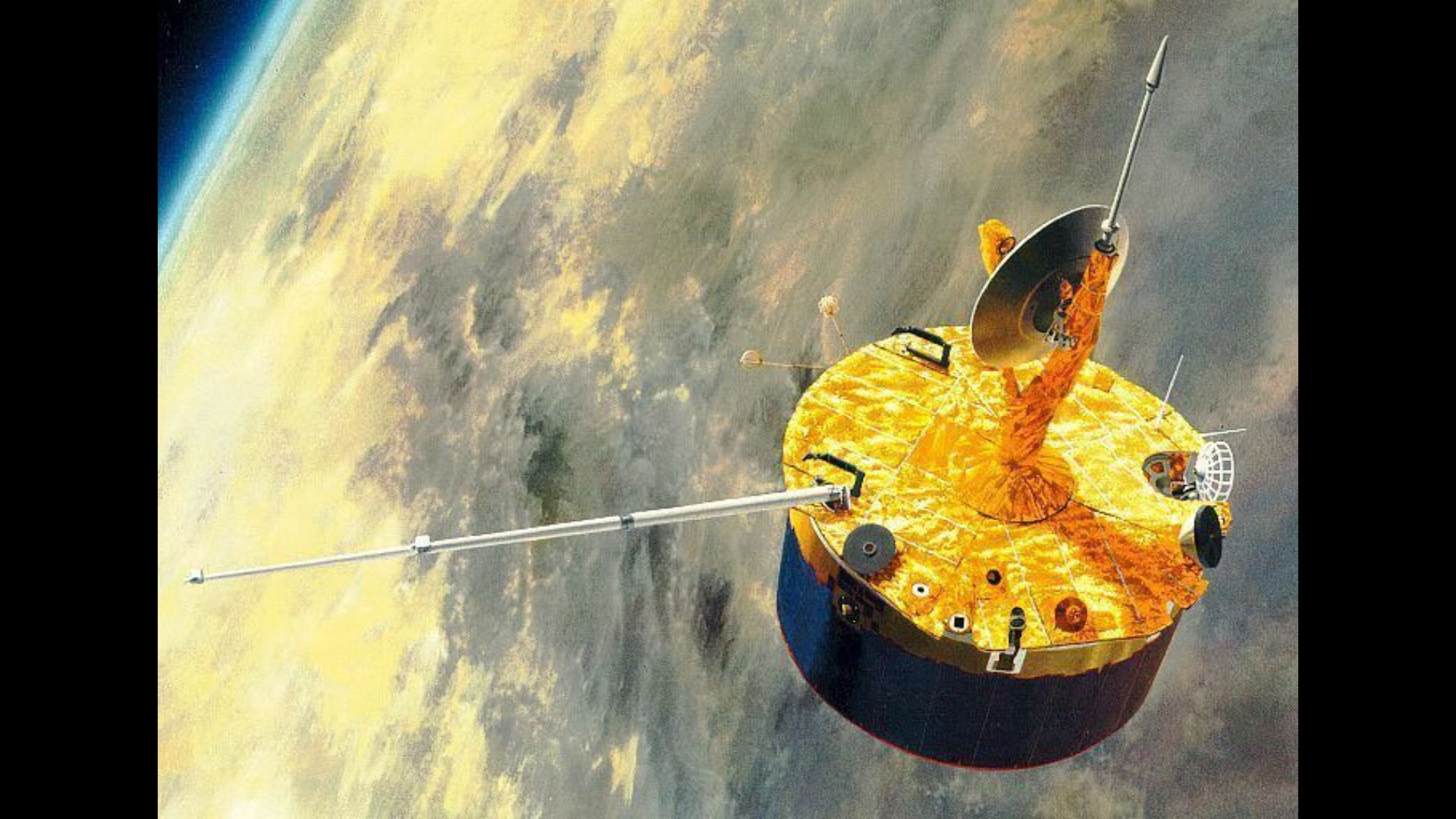
On October 8, 1992, NASA’s Pioneer 12 spacecraft, also known as the Pioneer Venus Orbiter, burned up in the atmosphere of Venus after spending 14 years studying the planet. It investigated Venus’s atmosphere, ionosphere, and magnetic field while also capturing data about the solar wind.
Pioneer 12 made significant contributions to planetary science, including a close observation of Halley’s Comet and mapping 93% of Venus’s visible surface at a resolution of 47 miles. Its results revealed a smoother and rounder Venus compared to Earth, with the highest point, Maxwell Montes, surpassing Mount Everest.
The spacecraft carried 16 instruments and orbited Venus at about 99 miles up, taking more than 23 hours to complete a single orbit. Before it eventually disintegrated due to lack of propellant, Pioneer 12 was able to reactivate its mapping radar in 1991, long after being switched off in 1981. This mission marked a significant milestone, making Pioneer Venus 1 the first American spacecraft to orbit Venus.
The findings of the Pioneer missions have continued to inform our understanding of Venus and other planetary atmospheres to this day.


