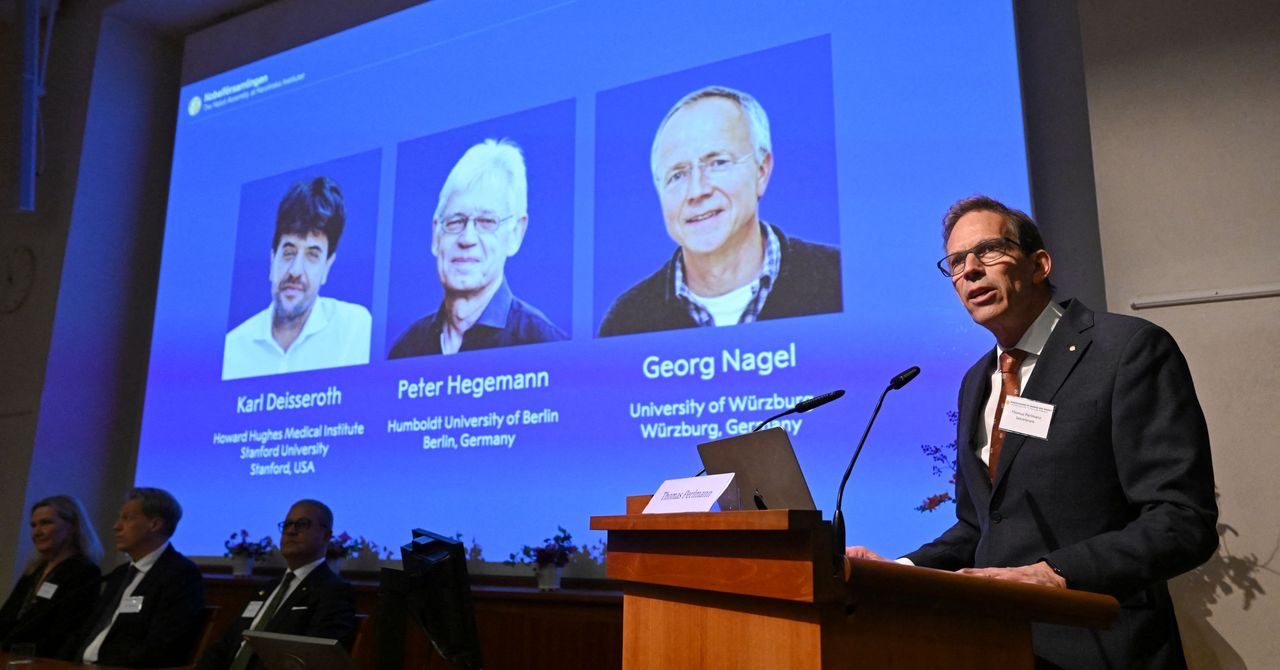
The Karolinska Institute awarded the 2026 Nobel Prize in Medicine to Karl Deisseroth, Peter Hegemann, and Georg Nagel for their groundbreaking work in optogenetics. This innovative technique enables scientists to manipulate individual nerve cells using light, facilitating unprecedented studies of brain function and neurological disorders.
Per Svenningsson, chair of the Nobel Committee for Medicine, emphasized that optogenetics allows for detailed mapping of the brain, unlocking possibilities that were previously unimaginable. This method exemplifies the convergence of biological disciplines, as the foundational research originated in microbiology.
Peter Hegemann’s exploration into the light-detecting capabilities of the alga Chlamydomonas led to significant findings. His research revealed that this single-celled organism possesses an “eye spot” containing retinal, a light-sensitive molecule, which generates electrical signals in response to light—much faster than humans can perceive light.
Hegemann hypothesized that the light detection mechanism in Chlamydomonas was simpler than that of human vision, proposing the presence of a light-responsive protein channel. Despite initial skepticism, subsequent advances, including the complete DNA sequencing of Chlamydomonas by Japanese researchers, enabled the identification of relevant genes.
Georg Nagel played a crucial role in validating the function of these genes by inserting them into frog eggs, which then produced the light-sensitive proteins. This groundbreaking advancement in optogenetics has opened new avenues for understanding the brain and treating neurological disorders.


