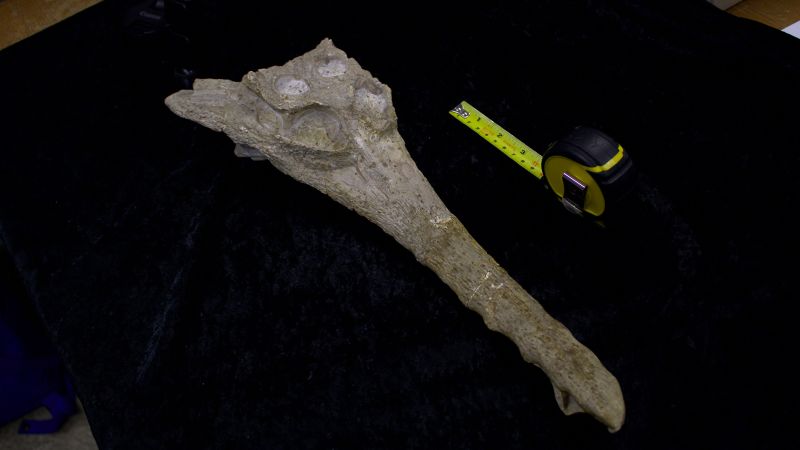
New Crocodilian Species Discovered in Egypt
Paleontologists have identified a new crocodilian species named Herugavialis cairensis from fossilized remains discovered in the Mokattam Formation of northern Egypt, dating back about 45 million years. This formation, known for preserving prehistoric marine fossils, contributed to the construction of significant ancient structures like the Great Sphinx.
Connection to Ancient Egypt
Interestingly, one of the key fossils—a nearly complete skull—shows similarities to the Sphinx, specifically its missing snout. This resemblance led researchers to name the new genus after Heru, the Egyptian god associated with the Sphinx. The discovery helps fill gaps in the evolutionary history and diversity of gharials, a group of crocodilians with complex ancestries.
Insights from the Fossils
The study, published in the Royal Society Open Science, reveals that Herugavialis is one of six gharial species from the Mediterranean during a 43-million-year period. Modern gharials, such as the critically endangered Indian gharial and the false gharial, have a lineage that spans the globe.
The fossils included the skull and five others initially classified incorrectly. Using advanced techniques like CT scanning, researchers determined that these remains represented a separate, previously unnamed genus.
Ecosystem Representation
Herugavialis is believed to have had adaptations for a fish-based diet, with long, pointed teeth and prominently protruding eyes, akin to modern gharials. The Mokattam Formation houses a variety of marine fossils, indicating a rich prehistoric ecosystem, potentially including turtles and other marine life.
This significant finding not only enhances our understanding of ancient predators in Egypt but also underscores the importance of reanalyzing museum collections for additional discoveries.
Conclusion
The identification of Herugavialis illustrates the complexity of crocodilian evolution and adds to the history of the region’s diverse fauna during the Eocene epoch, characterized by warmer global temperatures. Studies like this offer essential insights into the evolution and ecological roles of these ancient creatures.


