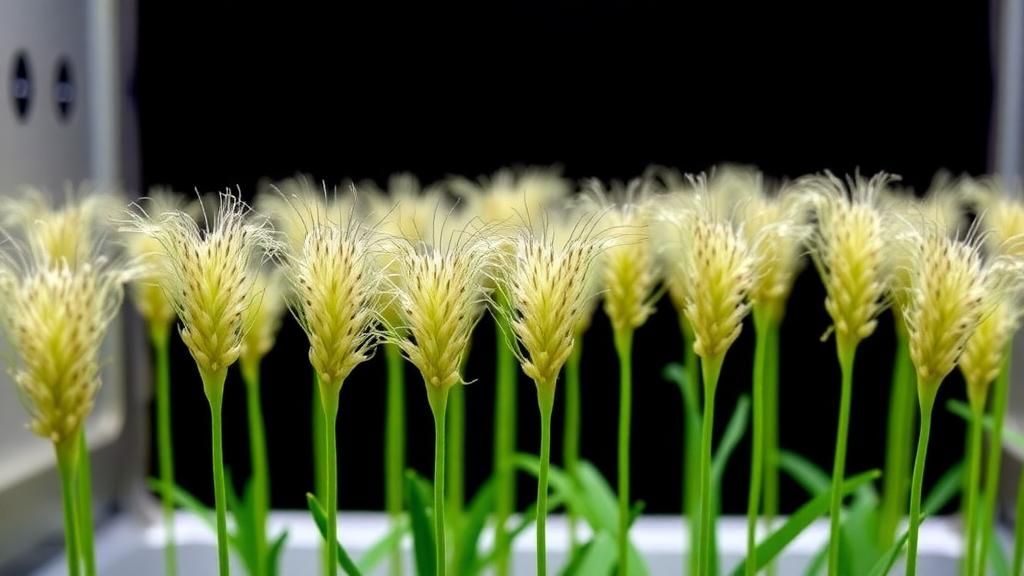
Research Summary on Taiwan Oil Millet
Subject of Research:
Development of a seedling-based tissue culture regeneration system for Taiwan oil millet (Eccoilopus formosanus) to enable genetic studies, crop domestication, and C4 photosynthesis research.
Overview
Taiwan oil millet, once a vital crop for Indigenous communities in Taiwan, has been largely neglected in scientific research. A dedicated team led by Kun-Ting Hsieh from National Taiwan University has made significant strides in establishing an efficient seedling-based regeneration system for this orphan crop. This breakthrough could transform Taiwan oil millet into a valuable resource for genetic studies and resilient agriculture.
Key Achievements
-
Regeneration System Development:
- Researchers successfully created a tissue culture system that utilizes seedlings instead of immature embryos, addressing existing bottlenecks in regeneration.
- This new approach achieved a remarkable regeneration efficiency of 97.9%, with the process from callus induction to mature plant taking only 12 to 14 weeks.
-
Scalability and Accessibility:
- The seedling-based method eliminates strict developmental-stage constraints, allowing for year-round experimentation.
- Researchers can store mature seeds and germinate them as needed, facilitating batch processing even in labs without extensive greenhouse facilities.
-
Cross-Species Knowledge Transfer:
- The team leveraged insights from established tissue culture systems in sorghum, adapting protocols for sterilization and callus induction, thereby reducing trial-and-error efforts.
Implications
-
Agricultural Resilience:
- Taiwan oil millet is suited to marginal environments, making it a potential key player in future food systems strained by climate change.
- Understanding its genetic traits could help improve food security by either enhancing the millet itself or transferring stress-resilient genes to other crops.
-
C4 Photosynthesis Research:
- With its C4 photosynthetic pathway, studying Taiwan oil millet could provide new insights into improving the efficiency of C3 crops like rice and wheat. This is crucial as global agricultural demands rise.
Future Directions
The established regeneration system lays the groundwork for genetic transformation and targeted genome editing in Taiwan oil millet. Further studies could identify genetic traits for resilience and efficiency, contributing to a renewed cultivation of this underutilized species.
Keywords:
Taiwan oil millet, Eccoilopus formosanus, tissue culture, plant regeneration, orphan crops, C4 photosynthesis, genome editing, crop domestication, seedling-based culture.
References:
Hsieh, K.-T., et al. (2026). Establishment of a seedling-based regeneration system for Taiwan oil millet (Eccoilopus formosanus) to support crop domestication and C4 biology. Plant Methods. DOI: 10.1186/s13007-026-01599-2.