South Side Science Festival Celebrates Community Engagement
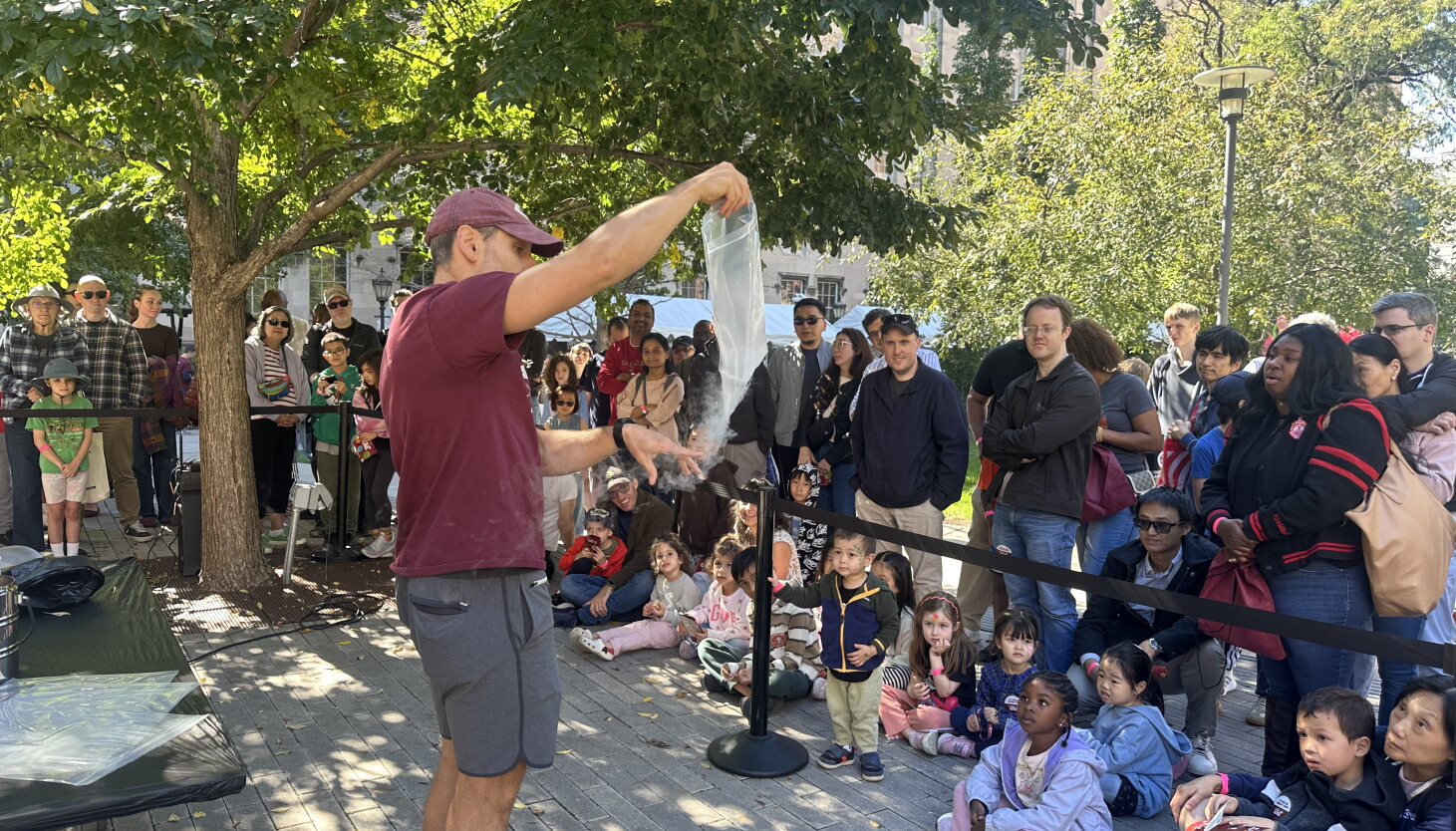
This past Saturday, the University of Chicago hosted its fifth annual South Side Science Festival, attracting thousands of children and adults eager to explore the wonders of science through a wide array of hands-on demonstrations.
With over 130 interactive activities across various disciplines, including biology, aerospace, and physics, participants engaged in games, conducted experiments, and posed their queries to professional scientists. The festival aimed to bridge the gap between the South Side community and researchers, reinforcing the message that science is accessible to everyone.
“We wanted to replicate [The Long Night of Sciences festival] but make it focused on our communities here on the south side,” said Maanasa Raghavan, an associate professor in the Department of Human Genetics and a founding organizer of the event. Raghavan expressed her belief that such engagement is vital in light of the polarizing views surrounding science and funding cuts, affirming the importance of their work through community involvement.
Fellow organizer Luke Dyer noted that the festival also responds to heightened mistrust in medicine following the COVID-19 pandemic, seeking to clarify ongoing scientific efforts at the university and address lingering public questions.
PhD student Michelle Bessiake, who has contributed to the festival for three years, highlighted the rewarding nature of volunteering. “These long, hard days of doing experiments — you come out here, you see what matters to people, it grounds us really,” Bessiake explained. She finds joy in witnessing attendees, especially children, grasping the significance of scientific inquiry.
Local resident Nijel Mottley brought his 4-year-old son, Remy, to nurture his burgeoning interest in science. “We need more scientists to solve these issues, and this kind of fosters that,” Mottley stated, underscoring the festival’s importance in inspiring the next generation of scientists.
This year’s festival not only sparked curiosity but also aimed to instill a sense of wonder about science in attendees of all ages, fostering a deeper connection between research and the community it serves.


