Overview of Extreme Debris Disks and Their Implications
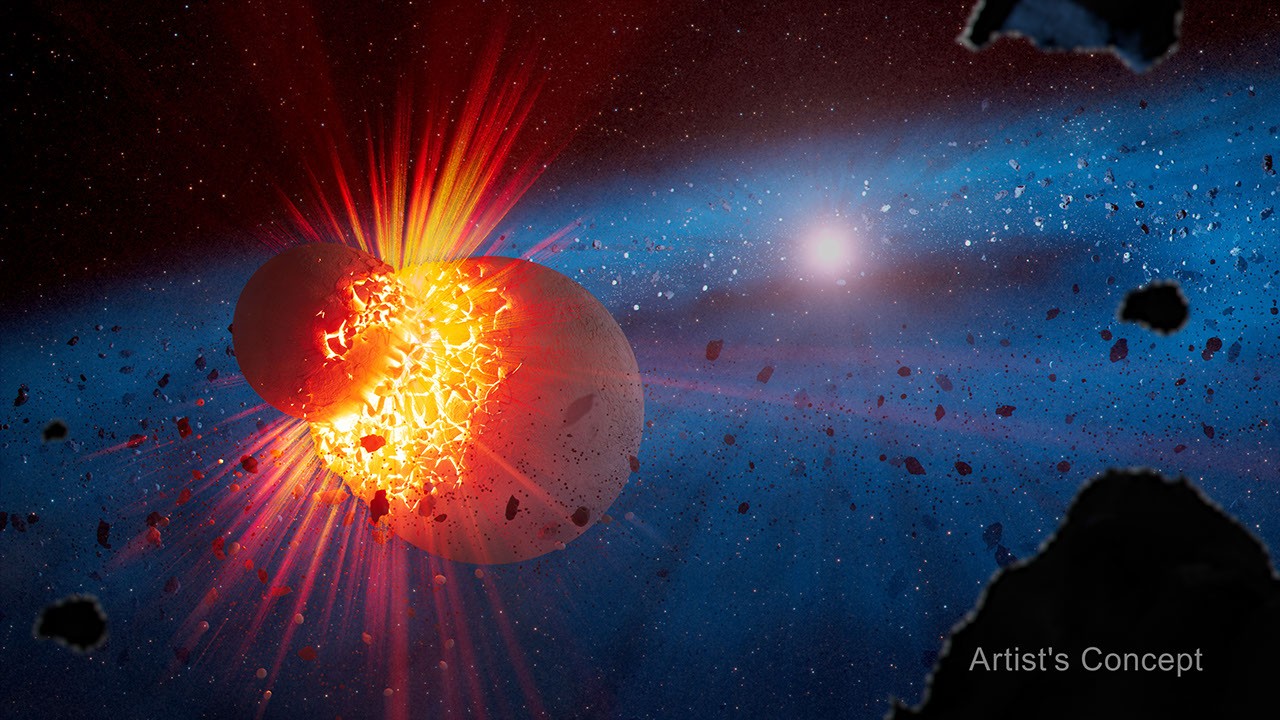
In the formative years of our solar system, a significant collision involving a Mars-sized object, known as Theia, resulted in the creation of the Moon from vaporized debris. This dramatic event reshaped Earth and provides a fascinating context for ongoing space exploration, including NASA’s Artemis program aimed at returning humans to the Moon.
Key Findings from NASA’s Observations
-
Understanding Young Stellar Systems:
- NASA’s James Webb Space Telescope has studied a type of young stellar system known as extreme debris disks. These systems display signs of energetic collisions that offer insights into their makeup and evolution.
-
Rare Phenomenon:
- Extreme debris disks, despite theoretical predictions suggesting otherwise, appear to be relatively rare, with only about 1% of young stars exhibiting signs of this phase.
-
Research Findings:
- A team led by astronomer Kate Su identified 21 extreme debris disks, combining data from the Spitzer Space Telescope and new observations with Webb.
- Extreme debris disks were found to have distinct characteristics:
- Smaller dust grains compared to other types of disks.
- High concentrations of warm dust.
- Irregular brightness variations.
-
Composition Insights:
- Disks were categorized into two types based on their mineral content:
- Silica-rich disks: Associated with high-energy impacts, likely from Mars-sized bodies.
- Silica-poor disks: Resulting from lower-energy collisions, such as those involving Moon-sized objects.
- Disks were categorized into two types based on their mineral content:
Implications for the Solar System
The findings enhance our understanding of how rocky planets form. They indicate that Earth may have experienced a similar extreme debris disk phase during its formation, shedding light on the early history of the solar system.
Future Research Directions
While the current findings are illuminating, astronomers acknowledge that there are still many unanswered questions regarding extreme debris disks. Continued observations will be crucial to further validate existing hypotheses.
Further Exploration
For those interested in delving deeper into the research and findings regarding extreme debris disks, NASA provides a wealth of resources on the James Webb Space Telescope and its ongoing investigations into the universe.
Visit the NASA Webb site for more information.


